When Things Fall Apart

When Things Fall Apart

I prefer matters in the classroom to move along pleasantly. Students listening to my directions the first time, papers being turned in on time, and the whole class period moving in a peaceful, cohesive movement would be ideal.

Yet it often when things fall apart that I am compelled to pray more than usual.

Which leads me to still desire the peaceful perfection which eludes while offering a begrudging gratitude for the ways difficulties stretch me. Why can’t the peaceful moments produce as much growth as the moments when I am fraying and grasping after grace? If only I could have a lovely, gentle day of teaching and return home saying, “That was a day of fruitful growth.” Instead, I encounter unexpected difficulties beyond my comprehension or control and I return home battle-weary saying, “I am going to need so much more grace to endure this.”

This week, I had some tense encounters with a student and I found myself at a loss for how to handle the anger which seemed directed at me and yet disproportionate to the impact I could have possibly made on the student. It has been a slow burn from the beginning of the semester, but it seemed to be close to bubbling over this week. During an open period, I found myself trying to unwind, rosary beads slipping through my fingers, as I wondered how I would endure the months to come. And while I didn’t come up with any easy solutions, I was seeing that regardless of the stress and tension this student was adding to my life, there was also the goodness of turning to the Lord in prayer. I didn’t think I needed an additional reminder that things are outside my control, but I seem to be overruled in the matter.

The kind, peaceable students who are a delight don’t generally make me fall to my knees, begging the Lord to offer His guidance and grace. It is the students who push my limits, annoy me to the point of insanity, and lash out at me with their own set of jumbled emotions that cause me to turn to the Lord, recognizing my inability to manage without Him.

A quote from St. John of the Cross came to mind the other day which says, “Where there is no love, put love–and you will find love.” I wrote this on my board and I am already finding myself staring at it, trying to will myself to put love into situations which seem to offer me no good will or pleasure.

Continue reading “When Things Fall Apart”

This is Life

This is Life

Every now and then, I need to remind myself that this is life. As I wrap up a long day teaching and heft a stack of papers into my work bag (where they will likely remain until I return the following day), I acknowledge that this is life. As I take a few quick days to visit a friend from college and enter into the swirl of activity which is life with young kids, I remind myself, “This is life.” And as the days of summer pass by far too quickly, I consider that this is my life.

Perhaps this stating of the all-too-obvious is something you don’t need to do. However, I find myself needing to do this at various times. It seems imperative to call to mind that I am living, that this is my life, and that I only have one chance at this. Sometimes this is a cause for concern, other times one of encouragement, and yet other times it is a good reality check. This is my life regardless of how different it is than what I expected and I need to make the most of this one chance.

If my life was filled with raising young children, I think it would be more obvious how time passes. Not that I would have all of this idealistic time to consider it, but children have the odd habit of growing, changing, and forcing you to acknowledge that they aren’t what they once were. As adults, this seems to be a bit harder to pay particular attention to since the changes are more gradual and can slip by quietly. So sometimes I need to call to mind that time is passing and, what’s more, that this time is precious and won’t come again.

Continue reading “This is Life”

What it says about me

What it says about me

The inner response I have to the actions of another has more to say about me than the other person. I think I came to this realization over the past couple of days and, like many realizations, was a bit disappointing to me even as it was illuminating. It would be far more preferable for the poor behavior or actions of the other to simply be an indictment of their own wavering character or their imperfections. I would feel far better if my students attitudes were able to remain just that and entirely removed from me.

However, in the course of wrestling with the rather petty and immature responses of teens this week, I have come to see that what is awakened in me is, unfortunately, saying something about me and is, generally, the only thing I can deal with in the present. Sure, this student was being intentionally disrespectful, but the disproportionate anger I felt inside was something which surprised me. And it is the only thing I can really, authentically engage with, despite the fact that as a teacher a list of corrections or punishments towards the student could be utilized.

With this realization in mind, I looked at how I had internally responded to the situation. It wasn’t necessarily what I did, but there is a certain truth in our private knee-jerk reactions or what rolls around in our heads when dealing with a troublesome issue. It made me a bit uncomfortable to see what arose when I was challenged, provoked, and dismissed. Then recently in class, I found myself projecting a Scripture passage on the screen for prayer time and my eyes and heart kept catching on, “When he was insulted, he returned no insult. When he was made to suffer, he did not counter with threats.” (1 Peter 2)

Continue reading “What it says about me”

Aim Higher

Aim Higher

For a while I would joke that I don’t pray for humility as a teacher because it comes to me whether I pray for it or not. And yet, just to prove that life isn’t always as humbling as I may need, the Lord decided to show me that when I pray for things (mostly, it seems, humility) that He delivers what I need, albeit not in the way I want.

On Ash Wednesday, I was listening to a Lenten reflection and prayed along to the Litany of Humility. It is a prayer I love and hate and, probably, need to pray more often. Right on cue, the Lord delivered a humbling situation the following day. A student was giving unsolicited advice about how I might improve his life by not assigning study guides or making him work on it (instead of the math homework he found more pressing) during my class period. I listened for a while, attempting initially to get him to understand that while he might not need it, there are other students who do. The conversation concluded when I recommended that perhaps he pursue a career in teaching since he would be able to be the perfect teacher for students. He, clueless perhaps to the implications because he isn’t really that cruel, commented that he didn’t want to be a teacher but was going to “aim higher.”

I sat there for a moment as a lighthearted moment grew sour.

He didn’t want to be a teacher (which I didn’t really expect to be the deep desire of his heart), but he wanted to “aim higher.”

And it was humbling.

I remembered, annoyed, that just the previous evening I had prayed the Litany of Humility. This is why I don’t pray that prayer, I thought, as I pondered what to do in the wake of a fifteen year old boy telling me my current career choice was way below what he hoped for himself. I sat there at my desk, pride bristling, wanting to offer one of a thousand caustic barbs barreling to the front of my mind. But I didn’t say any of them as I thought, But this probably why I need to pray this prayer more often.

If I were humble, I wouldn’t be annoyed by the careless words of a teenager. I wouldn’t want to offer a bit of my sharpened tongue. I wouldn’t, as a small form of revenge, sidestep answering a question he had on the study guide he just complained about yet which I had thoughtfully crafted as a way to help my students be successful.

And yet I all of these things happened. I was annoyed, I wanted to offer a biting word, and I chose not to give a straight answer to his question.

Continue reading “Aim Higher”

Invincible Patience

Invincible Patience

“O God, strength of those who hope in you, who willed that the Bishop Saint John Chrysostom should be illustrious by his wonderful eloquence and his experience of suffering, grant us, we pray, that, instructed by his teachings, we may be strengthened through the example of his invincible patience.”
(Collect from the liturgy for St. John Chrysostom)

As a teacher about a month into an academic year, I was immediately drawn to the line regarding the “invincible patience” of St. John Chrysostom. A gentle patience which cannot be overcome by the antics of teens, by the sudden zipped lips when a question is asked, by the attitude which can flow at the most unfortunate moments. I need that. I need a patience which goes far beyond what I naturally possess.

This year, I have some class periods where we get along pretty well, some where we are fine but not overly close, and one which will require some ‘invincible patience’ on my part. It isn’t that they are bad. In fact, on the first day, I walked into my room at the bell and they all sat completely silent in their seats. This silence, initially humorous and perhaps a little welcomed, soon became a source of tension. It becomes a real burden to have class lectures/discussions when no one will volunteer to answer anything.

Yet, despite my dislike for the situation, I can see that this could be the start of some needed growth within. I have found that when confronting their silence, or their disinterest, or the refusal to participate I have a hardness that arises in my heart. I want to be strict and tough. When they sit there, annoyed at me or annoyed at the reality of school, I want to layer on the sarcasm and I want to angrily cold-call students, refusing to relent when they squirm.

Instead, I have been trying to be intentionally gentle when the fallen part of me wants fiery justice. When they give me zero energy in the classroom, I have been striving to be unfazed, carrying on notes with gusto (for me, gusto for me), calling on students with a smile (instead of the grimace I feel within), and offering more energy than I feel at that point in the day with their attitudes. I was proud of myself for gently coaching a student through a question when this student has shown a bit of an unsavory attitude in previous days. When completing a group activity competition, I let myself encourage the group that I naturally felt most inclined to root against, taking their engagement with the activity as a good sign of things to come.

Continue reading “Invincible Patience”

Like A Lamb in the Midst of Wolves

Like A Lamb in the Midst of Wolves

In Luke 10, Jesus speaks of how He is sending His disciples, the few laborers for the abundant harvest, out like lambs in the midst of wolves. When I heard this at Mass several days ago, an image leapt into my mind which has been with me ever since. I imagined a little lamb, still with softly spun small coils of wool, walking down a path surrounded by wolves, growling menacingly at the tender lamb. Yet the lamb moved forward, head held high, and seemed unfazed by the danger that lurked around it.

I considered how vulnerable this lamb was, unable to defend itself from the predators and with little strength to offer on its own behalf. And I thought that perhaps that was exactly the point. Maybe this image of the lamb in the midst of wolves is exactly what Jesus desires for us. This little lamb is aware of its weakness and it is likely this knowledge of its weakness which is its greatest strength. If it fixated on the vicious wolves that surround it, the sheep could never move forward. It is rather gentle by nature, with no claws or sharp teeth to maim an attacker. The lamb surrounded by wolves finds its strength in knowing that the Shepherd will provide.

The moments or situations in life where I have known God placed me in a particular situation, and yet I felt wholly unqualified for the task at hand, are the situations where I have needed to rely entirely on the Lord. In this reliance, there is a strength that is given. I don’t know that I was a better teacher ten years ago, but I was far more likely to storm Heaven prior to a difficult class or to beg for guidance in the midst of students’ questions. It isn’t that I don’t ask for God to help me now, but I’m more confident in my own abilities than I used to be. Yet the littleness, the weakness I felt as a new teacher was also a source of strength. I’ve experienced the same in different ministries or experiences which forced me to offer the Lord unrestricted access, imploring Him to provide in the places where I saw an abundant lack.

Continue reading “Like A Lamb in the Midst of Wolves”

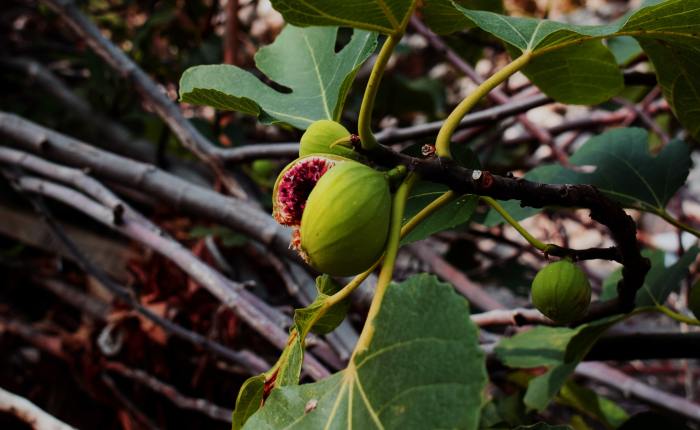
Though The Fig Tree Does Not Blossom

Though The Fig Tree Does Not Blossom

On one hand, I like to think of myself as rather mellow, a calm person who is generally unruffled. This seems true when I get to the end of the day and have no dramatic stories to tell. Instead of exhilarating experiences or woeful sorrows, I tend to have rather little to say about the day. In fact, sometimes it seems preferred when I arrive at the end of the day and there is no drama, good or bad, to recount. In these moments, I think I am a balanced, staid teacher who has completed her duties for the day.

Yet, on the other hand, I see that I can go through the gamut of emotions in a single week. I can feel frustration and rage at a student’s insolent response. I perhaps experienced sadness over a student’s hatred of the Church or a traumatic experience they have shared. Or maybe I have felt despair, a desire to give up and seek any other profession than the one I am currently in. In the course of a single week, I can plan for next year to be better and I can find myself searching random missionary positions or job postings anywhere else. I can be both sad to see my seniors graduate and uncertain if we will all make it to the end of the semester with our sanity and goodwill intact. It is in these moments, when I survey the emotional landscape of a preceding week, that I believe the calm affect is a total lie, one I tell myself in order to not pay too much attention to the ferocious swinging of the pendulum.

These experiences, of great, immoveable calm and tremendous swirling of feelings, cause me to wonder which is more me. Which one am I more truly? Or am I both? Are all humans simply both, some perhaps more one than the other? I think I’m steady, but maybe it is a steadiness born of fear to move. In a recent conversation with a friend, I was led to wonder what would make me leap into something new. If I refuse to move unless I know all of the answers, then I may always find it easier to be rooted.

My seniors have a sort of privileged position, even if wrought with uncertainty and stress. They must leap. Perhaps they won’t leap as far as they could, but they cannot remain where they are. We won’t take them back the following year and they cannot simply add another major as one could do in college. Next month, we will wrap up, wish them well, and then firmly close the door behind them, never to be opened in the same way ever again. Rarely does such a situation happen in life again and even more rarely would this situation be considered good.

They must leave.

And I?

Continue reading “Though The Fig Tree Does Not Blossom”

The Teacher’s Own Heart

The Teacher’s Own Heart

I read a few days ago that one of the most prominent failures of teachers is the failure to love and it was a quick jab to the stomach of my pride. Not to mention, it came from St. Augustine and isn’t so easy to dispel with excuses and circumstances.

But the psychological failures that Deogratias must most be on guard against is a failure in love. Deogratias must learn how to step outside of himself. He must learn to teach with joyful self-forgetfulness. The real difficulty lies not in questions of content, nor of technique, but in the teacher’s own heart. For when the teacher takes delight in what he says, that is, when he loves both his subject and his students, then students also will enjoy what he has to say.

St. Augustine” by Ryan Topping, p. 60

So…there’s that.

And I walked back into my classroom with a conscious realization that while I may do many things well, Augustine was right. I fail to love. I love some but not enough. I love in instances but not in entirety. And I couldn’t help but think that this teaching gig is a true preparation for Heaven (or parenthood…whichever comes first).

This teacher’s heart is the reason for this blog. It needed a space to search and question and ache over what happened in the classroom. And while many things in life have changed (and many things haven’t), I still find a need for this continued call for conversion. I need to be reminded that this heart is incredibly important and not just for myself, but for the young souls entrusted to my care.

Continue reading “The Teacher’s Own Heart”

A Life-Giving Intentionality

A Life-Giving Intentionality

In the first few weeks of school, I find myself swinging between this isn’t that bad and then suddenly falling into I’m not sure I can do this for an entire semester or an entire year. What I keep returning to is the knowledge that this year, perhaps more than ever, needs to be filled with intentional work-life balance and an abundance of good, life-giving things for me. It is always the desire and goal each year for those things to have a critical place and yet this year I think they need to be a desire turned into reality.

With everyone masked, I find myself trying to guess more and more what my students are thinking or how they are receiving the information presented. Not every student gives away their inner thoughts on their faces, but it certainly helps me know more about what is happening internally when I have an entire face to view and not simply a set of eyes.

I realize the same is true for them, too, when I re-watch videos of me teaching and I see how crucial the facial expressions were for the lesson. I don’t claim to have the most interesting face, friends, but the whole face is incredibly helpful when lecturing. Even though I was raised by a man who disciplined with his eyebrows, I cannot convey every emotion purely through raising or lowering my eyebrows. I attribute at least part of my excessive tiredness to this COVID-induced reality.

Continue reading “A Life-Giving Intentionality”

When They Say Thank You

When They Say Thank You

When it comes to “love languages,” I believe quality time is one of the top ones for me to give and receive. Words of affirmation, however, are not very easy for me to give and while I don’t mind/like to receive them, they don’t top the simple gift of spending time with someone.

The exception for this might come with students.

Over the course of teaching, I have had some very grateful students. Students who would thank me daily as they left the classroom or who wrote a nice Christmas card or who simply wrote my name down in their weekly journal under the list of three things they were thankful for that week. Sweet and considerate, some students will even apologize for the bad behavior of other students.

Generally speaking, however, teenagers are not the most grateful human beings. They are prone to complain when school involves schoolwork or when assignments have a due date. Things they cannot change, things that are pretty reasonable, and things that are simply a course of life are all fodder for criticism or complaints. Writing in complete sentences is even viewed as a form of punishment instead of a basic habit of the literate. The longer I teach, the more I am open to their feedback while also aware that essentially never will all students be pleased at the exact same time.

Knowing this, it makes the compliments all the more sweet when they arrive, which is perhaps part of the genius of the teenager. Since my position as a teacher is at times compared to that of a jailer or a dictator, when I hear specific words of gratitude from students, it means far more than they could possibly know. Knowing that 98% of the time I won’t be thanked makes the other 2% really sweet. I don’t think teaching is the only job where it seems like the people you work most closely with are the least grateful, but it is the job with which I have the most experience.

Continue reading “When They Say Thank You”