Farewell to a Pastor

Farewell to a Pastor

Jesus and the prophets spoke to the people of their times in ways that enabled the listeners to understand.  They used examples and situations that were relevant.  Growing up on a sheep farm, the numerous references to sheep struck me as particularly insightful.  Many of my classes have heard stories of how sheep aren’t the brightest and how fitting I think that is in relation to humans.  Yet for all the ways that sheep seem dim-witted, they have some great qualities that make them endearing.

Sheep are communal beings and generally move as an entire flock.  It was rare that simply one sheep would slip through a defect in the fence.  If one had escaped, it was likely that multiple had.  I have several memories of trying to separate a couple of specific sheep out of the flock and their attempts to remain with the larger group.  Yet their desire to be in communion with others, in their simple animal way, is something that is roughly mirrored in humans.  Even as an introvert, I know I need to be in communion with others.  I want to be alone at times and yet I find an intense joy in sharing life with others, too.

“Truly, truly, I say to you, he who does not enter the sheepfold by the door but climbs in by another way, that man is a thief and a robber; but he who enters by the door is the shepherd of the sheep.  To him the gatekeeper opens; the sheep hear his voice, and he calls his own sheep by name and leads them out.  When he has brought out all his own, he goes before them, and the sheep follow him, for they know his voice.  A stranger they will not follow, but they will flee from him, for they do not know the voice of strangers.” (John 10:1-5)

When the sheep would wander far out into the pasture, my dad would go to the gate with a couple of pails of corn, cup his hands to his mouth, and bellow, “Sheep!”  It wasn’t really a unique call in terms of words used, but his voice was unique to the sheep.  My brother could try to imitate it, but I remember going to the pasture on days I was responsible for chores and trying to yell in the deep pitch of my father.  Generally, they were unconcerned.  After calling and several enticing shakes of corn kernels in a bucket, they would lift their heads and begin to head in my direction.  As soon as my dad calls, they start running in his direction, at near full speed.  They know the shepherd’s voice.

“I am the good shepherd. The good shepherd lays down his life for the sheep.  He who is a hireling and not a shepherd, whose own the sheep are not, sees the wolf coming and leaves the sheep and flees; and the wolf snatches them and scatters them.  He flees because he is a hireling and cares nothing for the sheep.  I am the good shepherd; I know my own and my own know me, as the Father knows me and I know the Father; and I lay down my life for the sheep.” (John 10:11-15)

The word pastor literally means a helper or feeder of sheep.  For years, I only referred to my priests as “Father.”  And there is admittedly a beauty in that.  I love the filial sense of love and respect that is found in the relationship between a priest and his people, a father and his children.  Yet over the past couple years, I have found the term pastor increasingly meaningful.  I used to equate it only with Protestant churches and their ministers.  However, pastor means shepherd and I know the importance of the role of the shepherd.

In a world that is chaotic, the sheep need a shepherd to speak through the noise.  For the past three years, I have had the great gift to be led by my parish priest, my pastor, Fr. John.  He is a priest of my diocese, but I found myself quick to claim a closer association with him if possible.  Not simply a fellow member of the diocese, he was my particular shepherd, the one leading my parish community.   Continue reading “Farewell to a Pastor”

Wonderful Awe

Wonderful Awe

A couple of weeks ago, I sat at my dining room table with a couple of friends and discussed with awe the world around us.  In the midst of busy lives and increasing advancements, sometimes it is easy to take for granted things that should be amazing to us.  For a few hours, my friends and I moved from topic to topic, considering the world with great awe.

Wonder is the normal response to splendor.

Thomas Dubay, The Evidential Power of Beauty

This event struck me because of how easy it is to view the world in a tired, jaded way.  While I know a decent amount of theology, my knowledge in so many other areas is small and incomplete.  In day-to-day interactions, I take many things for granted.  Things that would astound me, if I paused for just a moment to acknowledge them.  So we conversed with wonder about the internet, smart phones, suspension bridges, wind turbines, time, and solar power.  It was a joy to consider what the human mind has conceived and how it is possible for us to create things.  A couple of months ago, I read a book about a watchmaker who would travel by train to another town simply to get the correct time from an astronomical clock for his town’s clock tower.  We were amazed that now we could just look at our watches or phones to know the time.

I have had multiple situations where I have discussed with others the beauty of things I do not fully understand.  The complexity of a single human cell, the vastness of the universe, and the splendor of mountains have all, at one time or another, been a topic of conversation and awe.  Yesterday, I flew across half the country in less than three hours.  The fact that flying is even possible helps bring wonder into a situation that can be consumed by impatience with security and airline rules.  I looked with curiosity at the mountain ranges that looked like large creases on a landscape far below me.  A patchwork quilt of farmland and mile after mile of straight country roads soon greeted me as I neared my destination.  I spent much of my flying time reading a book, but every now and then I would look and marvel at the world below and this plane far above.

It is troubling that in a universe replete with mind-boggling fascinations masses of people live dull and drab lives….Fully jaded men and women, old or young, marvel at nothing….To be listless, dull, bored, and lifeless is not only a miserable condition, it is an illness, a fact obvious to anyone who is intellectually alive.  To respond to reality and to appreciate it are normal; not to respond is abnormal.

Thomas Dubay, The Evidential Power of Beauty

This world that surrounds us is quite magnificent.  It is beautiful beyond understanding.  People laugh a bit at me when I profess the beauty of South Dakota.  And when I was in high school, I probably would have laughed at myself, too.  It was only after traveling around Europe during my semester abroad, that I began to see beauty in a multitude of places.  The scenery became glorious because everything was surrounded in a golden halo simply because it was European.

When I came home, I found myself wanting to pull over to the side of the road to take pictures of scenery.  I was surprised that a field of corn filled me with joy or that wide open prairies seemed as beautiful to me in South Dakota as they had in Austria.  My eyes were opened to see the beauty that can be found anywhere. Continue reading “Wonderful Awe”

The Shack: A Catholic Critique

The Shack: A Catholic Critique

Spoiler: If you haven’t read The Shack by Wm. Paul Young and don’t want to know anything about it that might take away from your initial experience, please be aware this post might not be for you.  I discuss elements of the story, but I don’t give it all away.

I recently finished reading The Shack and I found it to be, as a whole, a beautiful story of how God desires to enter into our most painful situations and transform them by His presence.  The way Young depicts the interactions within the Trinity caused me to stop and consider more deeply the perfect communion found within God Himself.  In fact, as soon as I finished The Shack, I picked up Fr. Michael Gaitley’s book The ‘One Thing’ is Three: How the Most Holy Trinity Explains Everything.  After reading about the communion of the Trinity in intimate detail, I was filled with a desire to learn more about our Trinitarian God.

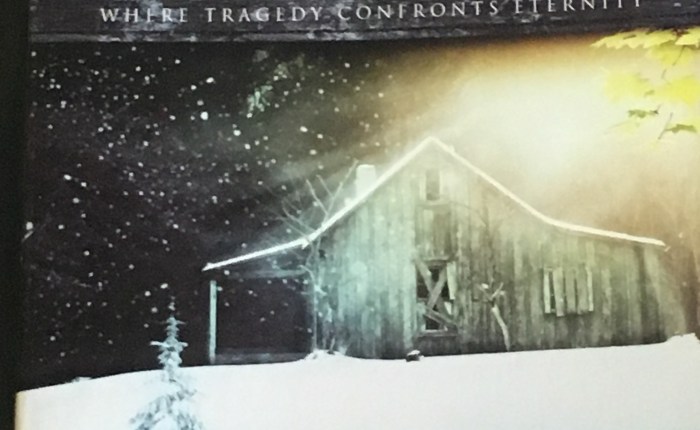
The general story line of The Shack is about a man named Mack who has experienced great suffering and loss.  He receives a note from God asking him to come to an old shack to spend the weekend with Him.  When Mack does this, he enters into an incredible encounter with the living God and grows in an understanding of each person of the Trinity.

The main aspects of Young’s story I found to be edifying.  It was simply some of the side details or conversations that made me wonder if he was critiquing Christianity as a whole or specifically Catholicism.  Or, at least, his perception of what the Catholic Church teaches or is.  There are a handful of elements that struck me as a direct rebuke of Catholicism.  The two I want to focus on are ritual and institution.

There is a beautiful section where God involves Mack in “devotions” after a shared meal.  Rather than producing a Bible to read from, Mack is surprised when Jesus reaches across the table, takes the Father’s hands, and speaking honest, loving words of adoration.  It reinforces the reality that devotion is entering into a loving relationship with God, not something that is merely rote or filled with words.  After another meal, Mack expects the same thing to happen.

“What about devotion?” asked Mack.
“Nothing is a ritual, Mack,” said Papa…

What is so wrong with something being a ritual?  There are a couple other places where ritual is portrayed as unsavory and in conflict with God’s desires.  I could agree with this if ritual meant that something was insincere or done merely out of habit.  However, that is not what a ritual has to be.  Sometimes rituals are the best way to enter into something that is far above us.  Like the Mass or marriage, we follow a religious ritual because we are connected to something bigger than just ourselves.

The Catholic Church is known for saying the same Mass over and over and over again.  My students will sometimes question why they need to go to Mass each week when it is simply the same thing they heard the previous week.  But if we understand the sacrifice of the Holy Mass as it actually is–the priest in persona Christi re-presenting the sacrifice of Jesus at the Last Supper and consummated on the cross at Calvary–then we would realize that nothing else would be a fitting memorial.

Yes, it is a ritual.  But Jesus also said “Do this in remembrance of me.”  Why reinvent the wheel every Sunday when Jesus has given us His very self and asks us to share in this sacrificial meal?  More than new praise and worship songs (which I appreciate in a specific context), the Mass prayed throughout the ages unites us to the earliest followers of Jesus Christ.  This isn’t a bad type of ritual, but rather a ritual that unites Christians across space and time. Continue reading “The Shack: A Catholic Critique”

Sacramental Records and Sacramental Beauty

Sacramental Records and Sacramental Beauty

I know sacraments aren’t a contest, but how many have you participated in or witnessed in a one week time period?

After I go to confession within the next couple days, I will be at five sacraments.  Five out of the seven sacraments of the Catholic Church.  That is a record for me, although I can’t tell you what the previous record actually was.

Last Friday, I went to ordinations for six priests for my diocese.  On Saturday, I attended the wedding of a couple friends.  Yesterday, I became a godmother for the youngest daughter of a couple with whom I am friends.  Interwoven over this week were several Masses and soon I will go to confession to bring the grand total of sacraments to five this week.

One of the beautiful aspects of the sacraments is how tangible they are for us physical creatures.  As I stood behind the mother at the baptism, I watched the priest sign the child with an aromatic cross of chrism.  She was claimed for Christ in a physical way so as to show the spiritual reality.  The water poured over her head, reveals the spiritual cleansing that is taking place even though we cannot see it happen.  Long after the scent of chrism has vanished, her soul will still be marked with an indelible seal, proclaiming her as a new creation in Christ.

At ordinations, I watched the bishop trace the hands of the men with chrism, consecrating their hands and lives to the eternal High Priest.  Beyond the chrism, there was the laying on of hands by the bishop and all their brother priests.  Placing their folded hands within the bishop’s hands, they promise obedience to the bishop and to his successors.  Called to conform their lives to the cross, they prostrate themselves before the altar of the Lord, the place where they will daily offer up the sacrifices of the People of God and make present the sacrifice of Jesus.   Continue reading “Sacramental Records and Sacramental Beauty”

Home: From Rabanal del Camino to South Dakota

Home: From Rabanal del Camino to South Dakota

Walking into my hometown parish church for Memorial Day Mass, my family settled into a pew and prayed for a few minutes before Mass started.  It wasn’t particularly early, but the quiet and stillness made it feel earlier.  The priest was praying from his breviary and other parishioners were in silent preparation for the greatest memorial feast.

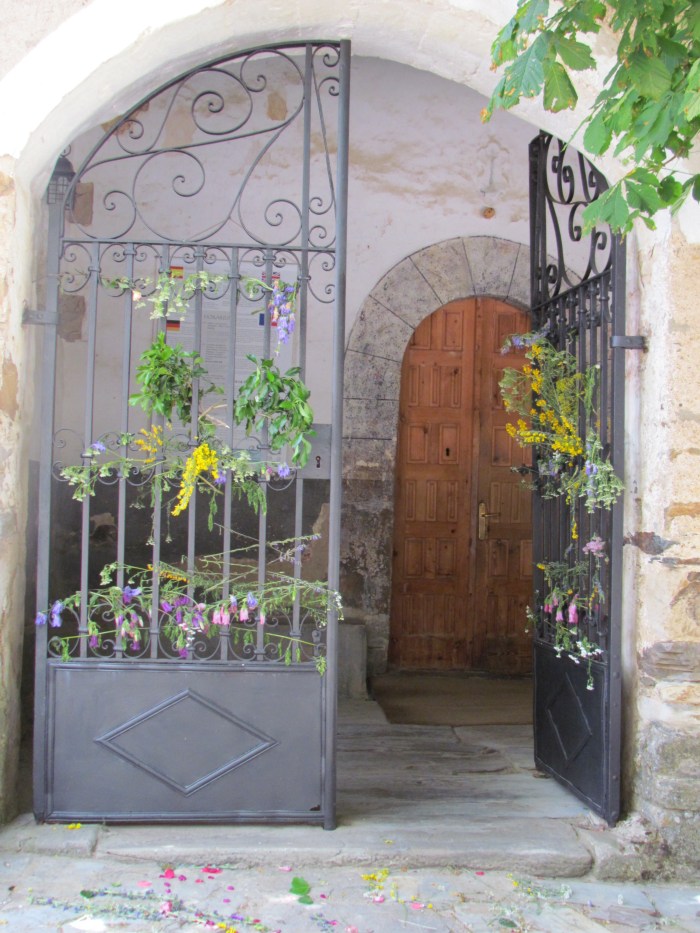
I was a bit surprised to find a Camino memory surface after a few seconds in the church.  The beauty of a still morning and entering a place I regard as a home, took me back to Rabanal del Camino, arguably my favorite spot along the Way.  Enticed by a sign outside the church saying there was a Benedictine Pilgrim Guest House, we stayed in Rabanal for a couple of days.  While brief, this was far longer than any other town we saw in Spain.

IMG_5256

After our first night at the guest house, we walked the short distance to the church for morning prayer.  The parish church was still and cool.  Choir stalls occupied the front of the church and those of us who stayed at the guest house quietly settled into them for our community prayer.  Simply having slept in the same town for two nights made me feel like a resident.  I watched pilgrims continue their walk and was filled with a strange joy that I was able to leave my backpack next to my bed.

IMG_5198

Early afternoon, we gathered for lunch in the monastery, prepared and served by the lovely Benedictine priest.  Even with a meal shared in silence, it was a tangible sensation of the familial in a country where I often felt as though I simply passed through.  In the evening, we gathered for Mass and then later for evening prayer.  Mass wasn’t an unusual occurrence along the Camino, but participating in Mass in the same church with a priest who recognized me was a novelty.

It wasn’t until we stopped walking that I was able to notice how much my heart longed for the familiar.  While I enjoy adventures, I also really love home.  Being a wandering stranger for weeks at a time was difficult for my homely heart.  When we spent a couple of days in one place, I was able to experience the joy of resting and the gift of the familiar.

One evening, after we had supper at the guest house, everyone staying there took a stroll through the streets of Rabanal.  Though I knew those outside my party for only two days, it seemed we were a little family, following after the Benedictine priest who had an endearing sense of humor and depth.  A French lady happened to see our group and simply joined us as we walked leisurely to the outskirts of town.  I didn’t blame her; it is something I would have wanted to do had I not already been in the group. Continue reading “Home: From Rabanal del Camino to South Dakota”

A Sunset’s Two-fold Gift

A Sunset’s Two-fold Gift

On the way back from my nephew’s baseball game, I attempted to distracted my niece and nephews by directing their attention to the sky.  It was sunset and the streaming colors changed minute by minute.  I pointed out the different colors and asked if they could see any others.  As the minutes passed on our drive home, I would sporadically stop and ask what other colors they could see in the sky.  They seemed intrigued by the way the colors would transform after only a short time.  It was also neat to hear them come up with different names to describe the precise shade of color we were witnessing.

At one point, one of my nephews talked about how the sky was like a painting.  Excited that they were no longer touching each other or complaining about being touched, I ran with this.  We spoke about how God is like an artist and how he creates these beautiful paintings each day.  They are never quite the same yet they greet us each morning and each evening.  My second oldest nephew is a big fan of math, so I gave him a few math problems to conceptualize how many sunrises/sunsets God has made.  He seemed a bit surprised to consider the thousands upon thousands of paintings God has blessed us with, just stretching back a couple of millennia.

Simple beauty is not lost on children, sometimes they (like us) just need to be directed to where they can see it.  A few colors splattered on the vast prairie skies can be an opening to recognize the way God works in the midst of our lives.  Whether or not I notice, God is pouring out His blessings upon me in new and varied ways each day.  Sometimes noticing it requires fighting nephews and an evening drive home.

This Is Us

This Is Us

I have a friend who once said that some things are cliché because they are true.  Phrases that seem trite and overused are sometimes the best way to say what we want to say.  They have become clichés because they express a truth like nothing else really can.

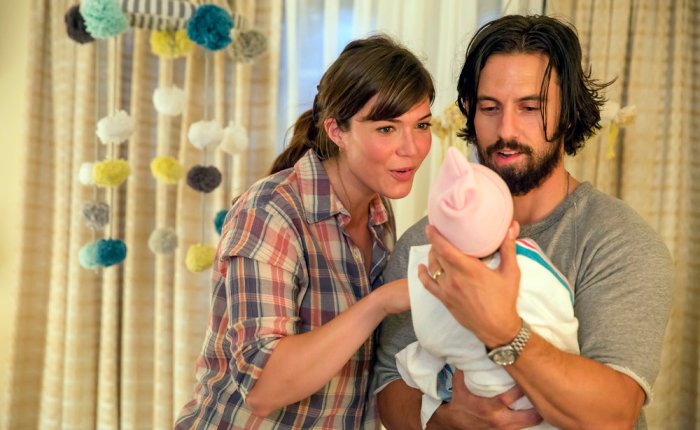
At times, I fight against what it seems a lot of people like or consider to be the best.  But sometimes, it is because it is actually good that so many people rave about specific things.  On Facebook, I’ve seen quite a few people talking about how much they loved the show “This Is Us.”  With the school year wrapped up, I decided to give it a try.

I don’t think a show has ever pulled at my heart as much as this one has.

I love how they portray the complexity of the human heart.  In this show, families are messy, imperfect, and crucial to our own identity.  As the show unfolds, perfect facades crumble to reveal that everyone is striving to get through life doing the best they can and making numerous mistakes along the way.  It is very human, which makes it simultaneously beautiful and frustrating.  Though the families can be chaotic, a theme interwoven in the show is the importance of family.  Whether they are blood relations or adopted family, the experiences we have in our homes shape how we interact with the rest of the world.

This Is Us- Season 1
THIS IS US — Pictured: “This Is Us” Horizontal Key Art — (Photo by: NBCUniversal)

In a world that seems to insist that families can be replaced with technology or friend groups, it is refreshing to see families upheld as the place where we grow, change, and become who we are.  Imperfect families, with parents fighting their own struggles and children feeling their own unique pains, are the places that shape us and show us how to love.  “This Is Us” doesn’t claim that all families are perfect or should be perfect.  I would say they are simply claiming that the role of family is irreplaceable.   Continue reading “This Is Us”

The Deepest Longing of Our Hearts

The Deepest Longing of Our Hearts

“I guess I don’t like the argument from desire because I’ve never felt a desire for something that can’t be satisfied on earth.”

As a melancholic who has nearly always longed for something beyond this world, I was a bit surprised by this admission.  My class was reviewing arguments for God’s existence and as we went over each one, I would ask a few students to share if they liked or disliked the argument.  Then they needed to voice why, perhaps the most difficult part of it all for them.

I wanted them to reflect on the arguments and see which ones they found personally compelling.  Each person is different and so I wasn’t too concerned if they liked all of the arguments or not.  Yet it is always interesting to me which ones they dislike and why.  Some other students voiced a dislike for the desire argument, but the declaration that they had never desired something beyond this world seemed foreign to me.

Melancholic that I am, I have always longed for perfection.  Ever since high school and college, that has translated into a longing for Heaven.  So as my students were voicing that they have never experienced this unfulfilled desire for something beyond this world, I was left wondering why they don’t have a longing that I never remember being without.

In my first year of teaching, I prayed frequently for death.  Not in a morbid way, but in a longing-for-home-and-yet-knowing-everything-around-me-is-temporary way.  The more I battled with my students over Church teaching, the more I wanted to be in a place of eternal Goodness, Truth, and Beauty.  Yet that was far from the first time that I had felt an unfulfilled desire.  Why are my students not experiencing this also? Continue reading “The Deepest Longing of Our Hearts”

Simple Witnesses: The Newly Canonized Fatima Visionaries

Simple Witnesses: The Newly Canonized Fatima Visionaries

May 13, 1917

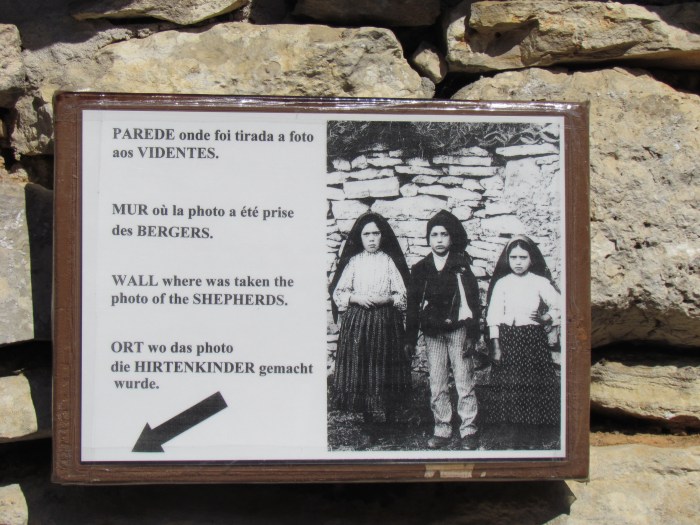
Our Lady chooses to reveal herself to three children tending sheep in the Cova da Iria.  Tenderly, she tells them to not be afraid and yet she asks them to sacrifice for the conversion of the world.  They are mere children, the oldest one is ten years old, but they agree to offer up their sufferings and sacrifices for love of Jesus and for the conversion of others.

That may seem abstract to many of us.  However, they are quick to concretize this request.  Whenever poor children ask for food, the three children give them their lunch.  As they tend to the sheep, they see how long they can go without water and offer this thirst to Jesus.  Little Jacinta finds out that she will die alone in a hospital in Lisbon and, although she is scared, she chooses to offer this trial up to Our Lady for the sake of others.

We can take as our examples Saint Francisco and Saint Jacinta, whom the Virgin Mary introduced into the immense ocean of God’s light and taught to adore him.  That was the source of their strength in overcoming opposition and suffering.  God’s presence became constant in their lives, as is evident from their insistent prayers for sinners and their desire to remain ever near “the hidden Jesus” in the tabernacle.

Canonization Mass Homily of Pope Francis, 5/13/2017

These sacrifices, though small in the course of human history, are monumental.  Children are shown to be capable of leading the way to holiness.  Their tangible witness is felt in particular in the place one would expect it: Fatima, Portugal.

IMG_6003.JPG

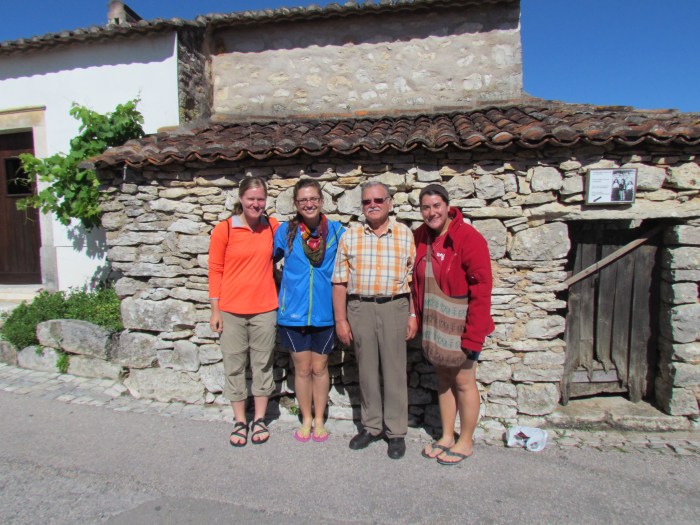
It has been a tremendous gift of mine that I have been to Fatima three times.  The picture above is from the most recent trip.  The man in the picture happens to be the nephew of St. Francisco and St. Jacinta Marto.  His father was their older brother, John.  Proud of his close relation, he showed us the page in Lucia’s book where she speaks about his father.

Each time I am in Fatima, I experience a great peace that comes from resting in a place that is so dear to my Heavenly Mother.  My birthday aligns with the anniversary of her first appearance in Fatima and so I have a filial devotion to this particular feast.  As I have read more about the children and how they fervently responded to her words, I have grown an even deeper love for Our Lady of Fatima and her little children.

May 13, 2017

In so many ways, their lives were insignificant.  Francisco and Jacinta were two children who fell victim to the influenza epidemic in 1919-1920.  Their lives were spent in poor circumstances in a town in Portugal for which few people cared.  While generally good children, they were not known to be perfect.  Yet on May 13, 2017, they were declared canonized saints in the Catholic Church.

Indeed, God created us to be a source of hope for others, a true and attainable hope, in accordance with each person’s state of life.

Pope Francis 5/13/2017

Continue reading “Simple Witnesses: The Newly Canonized Fatima Visionaries”

Build Up the Ancient Ruins

Build Up the Ancient Ruins

After finishing a silent retreat, I opened my Bible to where I had some papers sticking out.  I had marked this section because of the first three verses of Isaiah 61.  They were the Scripture verses my college women’s group considered “our” passage.  While they speak beautifully about the Spirit of the Lord and how it works in us, my attention was attracted to the following verse.

“They shall build up the ancient ruins,
they shall raise up the former devastations;
they shall repair the ruined cities,
the devastations of many generations.”
(Isaiah 61:4)

For the first time, I read this verse and realized the great hope attached to it.  I look at the world around me and I see a lot of things falling into ruin.  This isn’t the result of one generation but of many generations over the years, the buildup of human sin over the course of human history.  Yet here in Isaiah, the Lord is promising to re-build that which is ruined.  And Isaiah isn’t saying the Lord is going to do this all apart from us, but rather that He will use us to re-build and raise up new things.

I cannot help but think that this new life will come from the way the Spirit of the Lord will move.

The Spirit of the Lord God is upon me, because the Lord has anointed me to bring good tidings to the afflicted; he has sent me to bind up the brokenhearted, to proclaim liberty to the captives, and the opening of the prison to those who are bound; to proclaim the year of the Lord’s favor, and the day of vengeance of our God; to comfort all who mourn…

(Isaiah 61:1-2)

When we allow the Spirit of the Lord to work in and through us, He will re-build the broken world in which we live.  I see it already happening in small ways.  On the silent retreat, I was primarily surrounded by moms, several of them visibly pregnant with another child.  It is beautiful to think of how families will be strengthened and renewed simply by their mother’s dedication to her faith.   Continue reading “Build Up the Ancient Ruins”