
The Risk of Hope

The Risk of Hope

Hope is a risk.

When encountering difficulties, it is a good practice to turn to the Lord in prayer. And while there are many true sayings like “God is faithful” and “trust in God” and “God provides” and on and on, there is never a guarantee that God will act in the way that I want Him to act. It is true that God is all good and that He uses all things for good. It is also true that God has a more beautiful plan for our lives than we do. He is faithful, He is just, He loves us beyond measure.

And yet.

Shadrach, Meshach, and Abednego were still thrown into the fiery furnace.
Daniel was put in the lion’s den.
The Israelites wandered in the desert for forty years.
John the Baptist was beheaded for proclaiming uncomfortable truths.
Jesus was crucified.
Rome was converted by the blood of martyrs.
St. Joan of Arc was burned at the stake after a sham trial which declared her a heretic.
St. Jeanne Jugan was sidelined and isolated in the very religious community she started.
Bl. Franz Jägerstätter refused to fight for the Nazis and was imprisoned before being executed.
St. Carlo Acutis died as a teenager after a battle with leukemia.

It seems important to remember that in all of these situations, God provided.

For the first four men, there was a miracle which prevented them from dying in the manner their persecutors planned. But for so many throughout the ages, God’s method of bringing about the greatest good can only be seen in glimpses, darting around the edges of our comprehension as we risk being overrun by the sorrow and pain which is so easy to perceive. There are many things which will only properly be understood from the perspective of eternity, from the view which God has as He weaves lives together and pulls beauty from sorrow.

However, it can be too easy to just quit praying, declaring that it doesn’t matter if we pray because God does whatever He is going to do. We can simply be resigned, trying not to care too much either way, denying that we have feelings and instead insisting that all is as it should be.

Hope, in many ways, is the riskiest option. The challenging task of seeking the fulfillment we desire in the moment while remaining focused on the eternal. There are so many hopes I have in my life, so many desires I want the Lord to fulfill. And I often have very particular ways I would like the Lord to fulfill these longings. The question isn’t if God loves me or will provide or if He is good or if He should be trusted. All of those things are true. But it seems to be the task of a lifetime to entrust our desires to the Lord, knowing He may choose to work in a different way, and yet have hope that, come what may, all will be truly, eternally good.

Continue reading “The Risk of Hope”
His Yoke is Easy and His Burden Light

His Yoke is Easy and His Burden Light

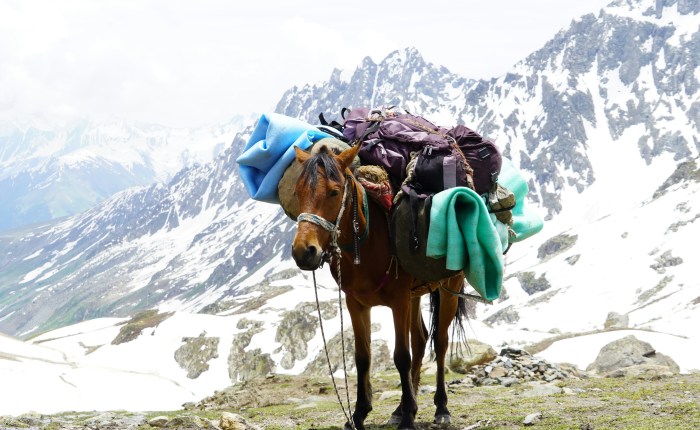
Come to me, all who labor and are heavy laden, and I will give you rest. Take my yoke upon you, and learn from me; for I am gentle and lowly in heart, and you will find rest for your souls. For my yoke is easy, and my burden is light.
(Matthew 11: 28-30)

His yoke is easy and His burden is light.

Over the past few weeks, I have wondered, “Is it really easy and light? It doesn’t feel that way.” I’m not certain it generally helps to consider that Christ suffered far more than I do. It isn’t a comparison game I want to play. Instead, various circumstances in life arise which can make us wonder how Jesus can say that what we are receiving in life is easy and light. The stress might not amount to the crucifixion, but it can still feel paralyzing. The pain might not compare to the scourging, but it can still feel crippling.

And yet Jesus always speaks what is true: His yoke is easy, His burden light.

Not that long ago, in a Bible study in prison, we were talking about this passage from Matthew’s Gospel. As different questions were asked, we spent a little time talking about a yoke and how it would look to be “yoked” to Jesus. The image that came to mind is one that stuck with me in the days that followed. I had mentioned that we step into the yoke/harness shared with Jesus and that He never abandons it, even if we run from the yoke. And I kept coming back to that image of Jesus faithfully shouldering the burden, while I so often long for escape and to slip out of the offered yoke.

Continue reading “His Yoke is Easy and His Burden Light”

I Desire a Heavenly Mindset

Last night, with the adventures of homecoming safely a week behind me, I found myself reminiscing about my own high school homecoming week.  It was quite easy to slip into romanticizing that time in my life because there is no risk that I will be caused to repeat it again.  My memories centered on the competition of the week, the class rivalries that emerged in full force, the class skits performed in which each teacher was fair game, and the exhilaration that filled the entire school for one precious week.  Throughout the week we would have games each day and the competition was fierce.  Seniors almost always won but it was the goal of each grade to produce an upset, one in which only obnoxious cheating would result in the triumph of the seniors.  My junior year was probably the most competitive.  The skits were hilarious and all of our favorite (and not-so-favorite) teachers were impersonated and analyzed.  (Note: As a teacher now, this is always a fear of mine when the students are given the chance to make fun of the teachers.  I sit in the gym, waiting anxiously, hoping that I wasn’t memorable enough or disliked enough to become the focus of students’ laughter.)  My junior year we won the “Olympics” and the triumph was palpable.  We gathered in our class sections in the gym bleachers and would chant our anthems. “J-U-N I-O-R…Junior, Junior, Junior!!!”  “0-8 0-8 0008”  The shouting echoed off the walls of the gym.  That memory is one of my favorites–the class anthems, the school spirit, the energy, the competition. 

I can almost trick myself into believing that that experience was high school.  It was not.  High school wasn’t traumatizing for me, but it wasn’t the best experience of my life.  I liked school and I was involved in numerous activities: choir, band, volleyball, track statistician, plays, oral interp, and TATU to name some.  It was a great time of development…but it wasn’t perfect.

That is one of my problems.  I am excellent at romanticizing the past and thinking of it in the best ways.  This doesn’t hold true for everything but for many things it does.  I think back (way back!) to college and I am able to make it free from any trials or difficulties.  I think, “Trish, do you remember that time that your job was to read theology books and write papers?  When you hung out with friends several times each week?  When you felt like you were changing the world by being in the pro-life movement?  Remember when you went to New Mexico and twice to Honduras for mission trips?  Remember traveling around Europe?  Wasn’t that the absolute best time of your life?”  And looking at all of those adventures and blessings, I am convinced that I should be there and not here.  What is very easy to overlook is the fatigue, the stress of completing two theses in one semester (even if that was my fault entirely), trying to finish the endless stream of homework, wanting to hang out with friends but not being able to, worrying that we wouldn’t fundraise enough for the mission trips, the excessive tiredness.  All of that is easy to forget in the quest to make college “the best years of my life.” 

The point is this: the past is easy to love because we don’t face its challenges in the present.  Of course there are difficulties in my present life but those are more keenly felt because they are the present.  In high school I was left with this feeling that nobody understood me.  The friendships I had weren’t rooted in Christ and therefore often seemed shallow.  In college I had the blessing of making those friendships and seeing how quickly they blossomed simply because we were rooted in the same soil.  Now I am able to see the beauty of those friendships even though I don’t find myself immediately surrounded by them anymore.  Instead I see from afar those friends continue to grow and impact the world.  They are getting married, they are having babies, they are continuing on with their lives.  As for myself, I am growing and changing, even if at a slower pace than I would like.  The past was necessary to make me who I am today, but now I need to live in today.  I need to live in today with all of its trials and difficulties–with the sophomores that won’t listen to me, with the seniors that are quick to roll their eyes at my statements, with the other teachers that don’t quite know how to take me, with the desire to live out my vocation yet being caught in a seemingly indefinite waiting place. 

Perhaps instead of gazing jealously at the past, I should look with anticipation to the future.  Imagine Heaven.  All of the beautiful people I know, all of the gorgeous places I’ve seen, and all of the lovely experiences I’ve been blessed with, all rolled into one and magnified greatly–this is Heaven.  When I focus on that goal, the end prize, the eternal life with God in Heaven, then the pains and irritations of today seem to pale in significance. 

“The Glory of the Lord, therefore, is the super eminently luminous beauty of divinity beyond all experience and all descriptions, all categories, a beauty before which all earthly splendors, marvelous as they are, pale into insignificance.”  The Evidential Power of Beauty