
The Wrestling is the Hope

The Wrestling is the Hope

When faced with the misery of another human, how do we respond?

Not long ago, I found myself in a group of people in prison reflecting on questions of mercy and compassion. What has been our experience when showing mercy? What has been our experience when being shown mercy? In the midst of this, a man started to share about a hypothetical or vague situation and it became increasingly clear that he was sharing his own story with us.

He said that he couldn’t believe that God would forgive some people for the terrible, awful things they had done to other people. It wouldn’t be enough to just say sorry; forgiveness from God would be too easy, too incomprehensible. Though numerous pastors, priests, friends, and volunteers had told him otherwise, he could not fathom forgiveness being offered to himself. It was clear he was repulsed by himself and that he had likely tortured himself by replaying his crimes over and over in his mind thousands of times.

What do you do when you hate yourself so much yet you cannot avoid yourself? While you can run away from everyone else and hide in shame, you cannot outrun yourself. You cannot avoid being with your own tell-tale heart which longs for forgiveness yet cannot imagine ever being reconciled–with God, yourself, or humanity.

Some of his friends jumped in to offer consolation or to compare their wildly different situations as though they were similar. He sadly rebuffed the attempts, clearly seeing the differences and being unwilling to yield any compassion towards himself. Numerous thoughts raced through my mind and I tried to consider what I could say in the face of such despair. At one point, weeping, he questioned why God wouldn’t let him feel forgiven if he actually was and he bemoaned having no hope for himself.

“Perhaps the wrestling is the hope,” I said.

I explained that while he wants to give up, it doesn’t seem like he can. Maybe it is his undying longing for reconciliation and for redemption which is his hope. He wants to despair and yet he cannot fully commit himself to giving up entirely. Perhaps this is the hope the Lord is offering.

“I don’t know why the Lord doesn’t offer more grace in different moments. But I know He always offers enough.”

Continue reading “The Wrestling is the Hope”

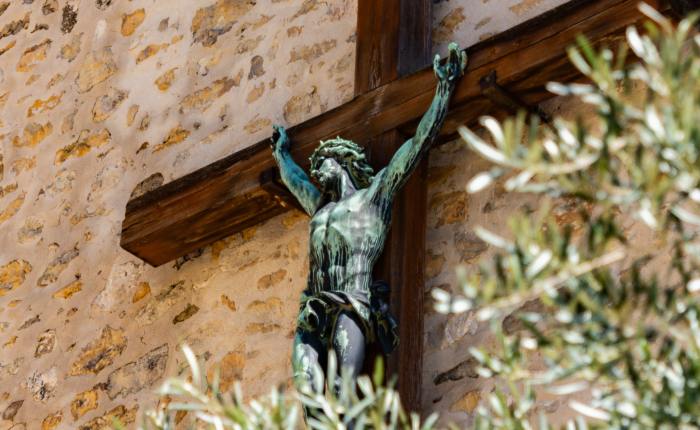
In The Heart of Our Darkness

In The Heart of Our Darkness

My heart is filled with so much longing.

Is it the season of Advent which fills it with yearning and anticipation? Or is it the state of my being at this time? Or is it simply what it means to be human?

Regardless of the cause, I am left in the agony of waiting during these shortening winter days. In some ways, anticipation is delightful, inviting a sense of looking forward to something and a source of hope for the future. Yet in other ways it can be draining, one’s being filled with a fervent desire for a fulfillment which is not yet here and the remembrance of that lack is persistent. While we cannot change that we wait, we can change how we wait. In recent days, two things have come into my mind and heart which have invited me to consider how I’m waiting even if they don’t completely change my experience of it.

The first was a moment in prayer a few weeks ago. It can be easy for me to feel that while God has a plan for me, He has perhaps overlooked moving forward with the next step. Yet I know that God wastes nothing, forgets nothing, overlooks nothing, and is in no way negligent with any aspect of any person. So what came into my prayer was the image of my whole heart, my whole being, every drop of my present life and circumstances being poured out into His hands. Like a bucket of water, it flowed from me and was captured tenderly, completely in His cradled hands. As individual drops moved toward the edges, seemingly prepared to fall carelessly to the ground, Our Lord managed to keep them all within the crevice of His hands.

Nothing was lost.

No fleeting emotion was unworthy of His attention, no aching wound escaped His notice or care, no mundane moment of my life was devoid of His presence and acknowledgement. I’ve come back to this image many times. My whole life, the complexities of my heart, the things I love and hate are all held by Jesus. Nothing escapes His notice or loving gaze.

The second is the idea of not letting my heart be troubled. It has come up in various ways and in different devotionals I’m listening to or reading. What has caught my attention most recently is the idea of letting my heart be troubled. So perhaps my life is filled with waiting and uncertainties. At least I can strive to not be troubled by the lack of clarity, to receive what is offered from the Lord and trust that He will provide. The storm can rage around us, but we can seek to not let the storm become interior. Not being troubled becomes an incredibly active thing rather than the passive thing it might sometimes seem to be.

Continue reading “In The Heart of Our Darkness”

A Thousand Deaths

A Thousand Deaths

When Jesus was confronted with untrue accusations, do you remember what He did? As the Sanhedrin gathered false testimony, as Pilate presented questions given by the chief priests, as Jesus struggled beneath the weight of the cross and the jeers of the people, as Jesus was maligned while on the cross, do you remember what He chose?

Silence.

How hard it is to not rush to our own defense! When situations are misrepresented, when intentions are skewed, when honest questions are left unanswered, it is a tremendous act of the will to not attempt to set all things right. Sometimes, it is necessary to provide clarity and correctness and other times it is completely unnecessary. And sometimes it is necessary to try to show the misunderstandings, but to ultimately fail in convincing them of their skewed view.

We always feel the pains of injustice acutely when it offends our own sense of justice. I look at the lives of the saints and martyrs and I tend to think about how glorious and courageous were their deaths. Yet each of those martyrdoms was preceded by many, many small bloodless deaths. St. Paul didn’t only suffer beheading in Rome. Before that, he was imprisoned, he experienced riot after riot when preaching the Gospel, he was looked upon with distrust by the Jews and the Christians after his striking conversion, and he spent much time in chains for the sake of the Gospel. His final suffering, the death of a martyr, was simply the last death he experienced in a long line of dying to self.

Most of our stories won’t be quite that dramatic. We probably won’t sit unjustly condemned in terrible prisons awaiting our cruel deaths. We will, however, suffer in other ways. And it will be in ways that will be easy to want to reject or feel the need to correct. As Jesus heard false testimony, I am certain He had at least part of a desire to simply say, “I didn’t say that. That isn’t right. You weren’t there. You are intentionally misrepresenting me.” Instead, He suffered in silence with the Lord. He knew that the truth would be revealed and He rested with the Lord in the midst of being misunderstood. He invites us to do the same, in the small and the large sufferings of our daily life.

Continue reading “A Thousand Deaths”

For the Love

For the Love

“The only part I didn’t really like was when she said that before she was a Christian she didn’t know what love was.”

After a recent talk at school, a few students were voicing their thoughts about the talk. The speaker had made a bold claim, one I hadn’t really thought about too deeply before my students offered their critique. Another student agreed and said he thought the speaker was being dramatic.

“Is it possible,” I questioned, “that being a Christian profoundly changes how she loved?”

“No,” said one student.
“Yes,” said another.

The one who said no came closer and continued with this question. The more I teach and the more I know about people, the more I realize that questions help answer better than arguments. Questions help clarify where exactly the person is, how much they know, and how much they have thought about the idea in the first place. So I posed another question, uncertain as I did so where exactly I was headed or what the next question would be.

“Is there anything different between how Hitler loves and Mother Teresa?”

Continue reading “For the Love”