The Shack: A Catholic Critique

The Shack: A Catholic Critique

Spoiler: If you haven’t read The Shack by Wm. Paul Young and don’t want to know anything about it that might take away from your initial experience, please be aware this post might not be for you.  I discuss elements of the story, but I don’t give it all away.

I recently finished reading The Shack and I found it to be, as a whole, a beautiful story of how God desires to enter into our most painful situations and transform them by His presence.  The way Young depicts the interactions within the Trinity caused me to stop and consider more deeply the perfect communion found within God Himself.  In fact, as soon as I finished The Shack, I picked up Fr. Michael Gaitley’s book The ‘One Thing’ is Three: How the Most Holy Trinity Explains Everything.  After reading about the communion of the Trinity in intimate detail, I was filled with a desire to learn more about our Trinitarian God.

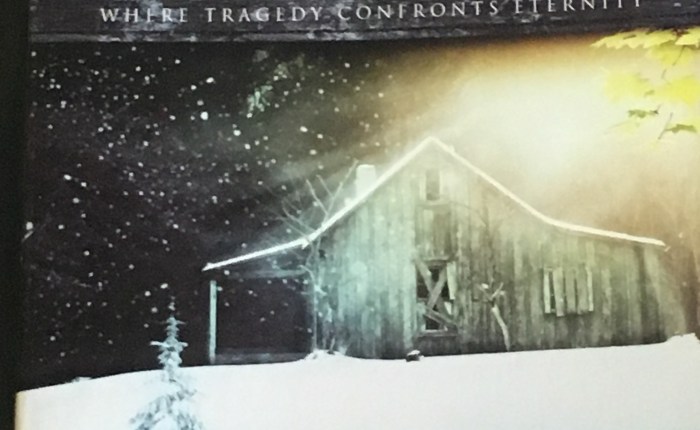
The general story line of The Shack is about a man named Mack who has experienced great suffering and loss.  He receives a note from God asking him to come to an old shack to spend the weekend with Him.  When Mack does this, he enters into an incredible encounter with the living God and grows in an understanding of each person of the Trinity.

The main aspects of Young’s story I found to be edifying.  It was simply some of the side details or conversations that made me wonder if he was critiquing Christianity as a whole or specifically Catholicism.  Or, at least, his perception of what the Catholic Church teaches or is.  There are a handful of elements that struck me as a direct rebuke of Catholicism.  The two I want to focus on are ritual and institution.

There is a beautiful section where God involves Mack in “devotions” after a shared meal.  Rather than producing a Bible to read from, Mack is surprised when Jesus reaches across the table, takes the Father’s hands, and speaking honest, loving words of adoration.  It reinforces the reality that devotion is entering into a loving relationship with God, not something that is merely rote or filled with words.  After another meal, Mack expects the same thing to happen.

“What about devotion?” asked Mack.
“Nothing is a ritual, Mack,” said Papa…

What is so wrong with something being a ritual?  There are a couple other places where ritual is portrayed as unsavory and in conflict with God’s desires.  I could agree with this if ritual meant that something was insincere or done merely out of habit.  However, that is not what a ritual has to be.  Sometimes rituals are the best way to enter into something that is far above us.  Like the Mass or marriage, we follow a religious ritual because we are connected to something bigger than just ourselves.

The Catholic Church is known for saying the same Mass over and over and over again.  My students will sometimes question why they need to go to Mass each week when it is simply the same thing they heard the previous week.  But if we understand the sacrifice of the Holy Mass as it actually is–the priest in persona Christi re-presenting the sacrifice of Jesus at the Last Supper and consummated on the cross at Calvary–then we would realize that nothing else would be a fitting memorial.

Yes, it is a ritual.  But Jesus also said “Do this in remembrance of me.”  Why reinvent the wheel every Sunday when Jesus has given us His very self and asks us to share in this sacrificial meal?  More than new praise and worship songs (which I appreciate in a specific context), the Mass prayed throughout the ages unites us to the earliest followers of Jesus Christ.  This isn’t a bad type of ritual, but rather a ritual that unites Christians across space and time. Continue reading “The Shack: A Catholic Critique”

Sacramental Records and Sacramental Beauty

Sacramental Records and Sacramental Beauty

I know sacraments aren’t a contest, but how many have you participated in or witnessed in a one week time period?

After I go to confession within the next couple days, I will be at five sacraments.  Five out of the seven sacraments of the Catholic Church.  That is a record for me, although I can’t tell you what the previous record actually was.

Last Friday, I went to ordinations for six priests for my diocese.  On Saturday, I attended the wedding of a couple friends.  Yesterday, I became a godmother for the youngest daughter of a couple with whom I am friends.  Interwoven over this week were several Masses and soon I will go to confession to bring the grand total of sacraments to five this week.

One of the beautiful aspects of the sacraments is how tangible they are for us physical creatures.  As I stood behind the mother at the baptism, I watched the priest sign the child with an aromatic cross of chrism.  She was claimed for Christ in a physical way so as to show the spiritual reality.  The water poured over her head, reveals the spiritual cleansing that is taking place even though we cannot see it happen.  Long after the scent of chrism has vanished, her soul will still be marked with an indelible seal, proclaiming her as a new creation in Christ.

At ordinations, I watched the bishop trace the hands of the men with chrism, consecrating their hands and lives to the eternal High Priest.  Beyond the chrism, there was the laying on of hands by the bishop and all their brother priests.  Placing their folded hands within the bishop’s hands, they promise obedience to the bishop and to his successors.  Called to conform their lives to the cross, they prostrate themselves before the altar of the Lord, the place where they will daily offer up the sacrifices of the People of God and make present the sacrifice of Jesus.   Continue reading “Sacramental Records and Sacramental Beauty”

The Deepest Longing of Our Hearts

The Deepest Longing of Our Hearts

“I guess I don’t like the argument from desire because I’ve never felt a desire for something that can’t be satisfied on earth.”

As a melancholic who has nearly always longed for something beyond this world, I was a bit surprised by this admission.  My class was reviewing arguments for God’s existence and as we went over each one, I would ask a few students to share if they liked or disliked the argument.  Then they needed to voice why, perhaps the most difficult part of it all for them.

I wanted them to reflect on the arguments and see which ones they found personally compelling.  Each person is different and so I wasn’t too concerned if they liked all of the arguments or not.  Yet it is always interesting to me which ones they dislike and why.  Some other students voiced a dislike for the desire argument, but the declaration that they had never desired something beyond this world seemed foreign to me.

Melancholic that I am, I have always longed for perfection.  Ever since high school and college, that has translated into a longing for Heaven.  So as my students were voicing that they have never experienced this unfulfilled desire for something beyond this world, I was left wondering why they don’t have a longing that I never remember being without.

In my first year of teaching, I prayed frequently for death.  Not in a morbid way, but in a longing-for-home-and-yet-knowing-everything-around-me-is-temporary way.  The more I battled with my students over Church teaching, the more I wanted to be in a place of eternal Goodness, Truth, and Beauty.  Yet that was far from the first time that I had felt an unfulfilled desire.  Why are my students not experiencing this also? Continue reading “The Deepest Longing of Our Hearts”

Build Up the Ancient Ruins

Build Up the Ancient Ruins

After finishing a silent retreat, I opened my Bible to where I had some papers sticking out.  I had marked this section because of the first three verses of Isaiah 61.  They were the Scripture verses my college women’s group considered “our” passage.  While they speak beautifully about the Spirit of the Lord and how it works in us, my attention was attracted to the following verse.

“They shall build up the ancient ruins,
they shall raise up the former devastations;
they shall repair the ruined cities,
the devastations of many generations.”
(Isaiah 61:4)

For the first time, I read this verse and realized the great hope attached to it.  I look at the world around me and I see a lot of things falling into ruin.  This isn’t the result of one generation but of many generations over the years, the buildup of human sin over the course of human history.  Yet here in Isaiah, the Lord is promising to re-build that which is ruined.  And Isaiah isn’t saying the Lord is going to do this all apart from us, but rather that He will use us to re-build and raise up new things.

I cannot help but think that this new life will come from the way the Spirit of the Lord will move.

The Spirit of the Lord God is upon me, because the Lord has anointed me to bring good tidings to the afflicted; he has sent me to bind up the brokenhearted, to proclaim liberty to the captives, and the opening of the prison to those who are bound; to proclaim the year of the Lord’s favor, and the day of vengeance of our God; to comfort all who mourn…

(Isaiah 61:1-2)

When we allow the Spirit of the Lord to work in and through us, He will re-build the broken world in which we live.  I see it already happening in small ways.  On the silent retreat, I was primarily surrounded by moms, several of them visibly pregnant with another child.  It is beautiful to think of how families will be strengthened and renewed simply by their mother’s dedication to her faith.   Continue reading “Build Up the Ancient Ruins”

The Holy Spirit Wants to Kill You

The Holy Spirit Wants to Kill You

Thankfully, I’m dying bit by bit.

I had a professor in college who liked to shock us by saying, “The Holy Spirit is trying to kill you.”  And, honestly, there is a lot in me that He needs to kill.

At the end of last week, I was frustrated with many of my students and tired of teaching.  One class seemed to be intensely critical of everything I was saying, perhaps a reaction from an impromptu assignment the day before.  Then a phone went off in class.  Finally, I asked students to take down papers I had them stick to the board and a few seemed to think it would be funny to tear them off, leaving them slightly crumpled.

It was all more than I wanted to deal with at the time.  And so I reacted.  I spoke a bit too harshly to the students who didn’t seem to care about the activity I had thrown together for them.  They were upset, but I was perhaps more upset.  One wanted to argue the matter and I told them to come back later if they wanted to discuss it.

I had a couple class periods to reflect on the situation.  My response, I soon realized, was not to that isolated situation but to the frustration of the entire day.  And I knew that wasn’t fair, but I couldn’t undo my unfair reaction.  So when one of the students stopped by after school, I was surprised, but glad.  We had a conversation and a few moments of it I could feel myself getting a little upset again.

In the end, part of me died.  I told the student I over-reacted and the punishment I threw out wasn’t fair.  While apologizing, I admitted that I hadn’t responded in the way that I should have responded.  “I agree with you: you don’t deserve a detention.  I’m sorry.” Continue reading “The Holy Spirit Wants to Kill You”

“Beauty and the Beast” Gave Me the Perfect Phrase for Holy Week

“Beauty and the Beast” Gave Me the Perfect Phrase for Holy Week

I watched Beauty and the Beast this weekend and I’ve been turning one lyric over and over in my mind ever since.  “How in the midst of all this sorrow can so much hope and love endure?” (from ‘Days in the Sun’)  For several reasons, it seemed to be the perfect phrase to carry into this Holy Week.

In the midst of experiencing again the Passion of Jesus Christ, how can we still find hope and love?  When I read the news, how can I find hope and love in the events of strife and discord?  In tragedy on a personal or community level, how can I wade through the hurt and find hope?

The short answer is that it is difficult to do, but it must be possible.  It isn’t a matter of denying the pain or sorrow.  The Lord knew we would experience pain.  He understands the depths of feeling forsaken and abandoned.  His closest friends fell asleep during His moments of great agony.  When soldiers came to arrest Him, the apostles all fled.  Jesus isn’t asking us to deny pain or to act like it doesn’t impact us.  Rather, He is asking us to choose to find the Resurrection in the midst of every crucifixion.  Or, at the very least, to acknowledge that there will be a Resurrection, even if death seems to be victorious right now. Continue reading ““Beauty and the Beast” Gave Me the Perfect Phrase for Holy Week”

With the Lord, A Little is More Than Enough

With the Lord, A Little is More Than Enough

The Lord is the quintessential example of making do with what you have.  He is able to provide abundance from an experience of poverty.

When it was evening, the disciples came to him and said, ‘This is a deserted place, and the hour is now late; send the crowds away so that they may go into the villages and buy food for themselves.’  Jesus said to them, ‘They need not go away; you give them something to eat.’  They replied, ‘We have nothing here but five loaves and two fish.’  And he said, ‘Bring them here to me.’  

Matthew 14:15-18

In a situation where the disciples were prepared to send the crowds away, Jesus challenged them to feed them with their meager rations.  To the disciples, it was an impossible feat.  There was not enough food to provide for them all.  How could they feed thousands with food meant to satisfy a few?

The answer is found in surrendering the little to Jesus.  For Him, it is manageable to multiply the fish and the bread to be superabundant.  The same is true with each one of us.  When we surrender ourselves to the Lord, little though we may be, He is able to do far more with it then we could imagine.

You give them something to eat.  In our littleness, Christ is asking us to be streams of living water and bountiful banquets for the weary wanderers we encounter.  Yes, we are to direct them to Jesus, but Jesus living in us.  When we present ourselves to the Lord, He provides.  It is never just enough, it always more than we could have hoped.   Continue reading “With the Lord, A Little is More Than Enough”

A Laity of Saints: How God Uses the Little for Greatness

A Laity of Saints: How God Uses the Little for Greatness

When I mention that my two older sisters are religious sisters, people often wonder what my parents did to make that happen.  In a way, I understand, because it is mildly unusual in today’s world to hear about young women making vows of poverty, chastity, and obedience.  Yet I also want to fight against this mentality that holiness is primarily for priests, religious, and consecrated persons.  Sanctity is for everyone and we need to continue to proclaim this good news.  

If you are what you should be, you will set your whole world on fire.

~St. Catherine of Siena

Venerable Jan Tyranowski recently came into my life and he inspires me in the quest for a saintly laity.  He was born at the turn of the twentieth century in Poland.  For over three decades, he led a rather unremarkable life.  But at Mass one day, he heard the priest say that it isn’t difficult to be a saint.  From that day forward, he pursued virtue and holiness with an incredible ardor.

When Nazis invaded Poland, they deported several of the priests in parish, leaving behind only a couple elderly priests.  Knowing of his deep faithfulness, the priests ask Jan to minister to the young of the parish.  Despite his introverted nature and little formal education, Jan began this ministry even though he considered himself incapable.  He formed prayer groups comprised of fifteen young men each.  Each man was responsible for daily praying a decade of the rosary and striving to live out particular virtues.  The groups were called “Living Rosaries” and Jan chose a leader for each group, investing time to spiritually form each leader.

Venerable Jan Tyranowski never married and never became a priest, yet his life of holiness impacts us today.  The Second Vatican Council called for the laity to live more fully the mission of the Church.  This call was anticipated in the life of Jan and he did this in the midst of a Nazi occupation.  One of the young men who was in his prayer group and was spiritually formed by this simple tailor was Karol Wojtyla, better known as Pope St. John Paul II. Continue reading “A Laity of Saints: How God Uses the Little for Greatness”

A House Divided

A House Divided

Satan, the father of lies, loves division.

It matters very little what the division is actually over.  In fact, I think the more religious-oriented the division, the more it pleases Satan.  But he will take any dispute, so long as it seeks to divide.

Knock down drag out brawls over the liturgy?  Disputes over the placement of the altar?  Feuding over Lenten fasting?  Frustrations with priests and bishops?  Sides forming over who is more Catholic than the pope?

Satan is delighted.

We spend our time considering what we think is best and we tend to lose sight of the Lord.  I’m not arguing for an “anything goes” mentality.  Far from it, I am encouraging us to focus on what is the most important rather than repeatedly increasing the divisions within humanity.

For the bonds which unite the faithful are mightier than anything dividing them. Hence, let there be unity in what is necessary; freedom in what is unsettled, and charity in any case.

(Gaudium Et Spes)

In The Great Divorce, C.S. Lewis portrays Hell as a place of isolation.  The opening pages start in a town that is approaching the evening hours but seems empty of people.  Yet the narrator finds people waiting in line at a bus stop.  As the minutes pass, people leave the line because they keep quarreling with each other about one thing or another.  The town is empty because the inhabitants cannot bear to be in such close proximity to other people with all their flaws and imperfections.  So they keep moving, distancing themselves from others until they find themselves in complete isolation. Continue reading “A House Divided”

When Simplicity Must Be Chosen

When Simplicity Must Be Chosen

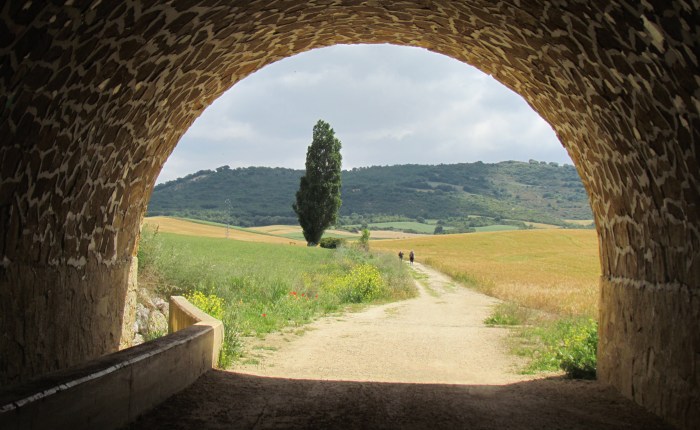
Nearly three years ago, I strapped on a hiking backpack and walked five hundred miles.  As I walked El Camino de Santiago, people crossed my path who were completing the pilgrimage for the second or third time.  While beautiful, I wondered why people would complete this trek multiple times.  Once will be enough for me, I thought.

Yet now and again, I find myself longing to be on some dusty trail in the midst of the Spanish countryside.  It isn’t because of my love for travel, although I suppose that does play a role.  My desire to be on the Camino for a second time stems largely from my desire for simplicity.

On the Camino, it is easy to be simple.  In fact, it is almost a requirement that one be simple.  On your back, you carry all of your clothes, sleeping bag, toiletries, etc.  Everything you think you will need along the Way, you must plod every blessed mile with it fastened to your back.

Sometimes it annoyed me to live so simply.  I wanted a different outfit to wear.  I was surprised at how much I found myself longing for a real towel and not the travel towel I would use each day.  At times I wished to simply remain in the same place for more than an evening.  There were several things that made me not like living simply.

Yet, in a very authentic way, I realized my heart was made for simplicity.  When my closet of clothes overflows and the laundry basket is full, when my bookshelves no longer have room for the books I insist on buying, or when I find myself shopping online for things I realize I do not need, I remember that my heart is a simple heart.  Yet I wish simplicity was forced upon me instead of needing to be chosen.

My possessions have a weight and I want to be free.

Sitting in a cluttered room, I find myself slightly jealous of my older sisters and their vows of poverty.  To be free to be poor.  I know I romanticize poverty, but there is a longing in my heart for less.  And in that less, I know I will find more.

But the Lord answered her, “Martha, Martha, you are anxious and troubled about many things; one thing is needful.  Mary has chosen the good portion, which shall not be taken away from her.”

Luke 10:41-42

For over thirty days, I walked the Camino and if I did it again, I would pack less.  There is a simple beauty in choosing between two outfits.  There is a simplicity found in needing to walk a few miles each day.  I’ve never been so aware of my feet before.  And rarely have I felt like I’ve spent the entire day just being and walking in the Lord’s company.  Those lovely, simple things make the Camino something I wish I could be doing right now. Continue reading “When Simplicity Must Be Chosen”