Pausing for Perspective

Pausing for Perspective

Walking out of the school building last week, I took in the afternoon weather.  It was overcast and wanted to rain.  Part of me was a little annoyed that it wasn’t a sunny winter afternoon.  Although it was warmer than a typical January day, it was a bit bleak.  Yet before I could be too down about it, I unexpectedly thought, “If I were in England, this would feel like a wonderful day.”

For a moment, I took in the cool air and imagined traipsing around London.  The cloudy sky seemed to fit perfectly for a stroll down the streets of London and seeing the sites.  If I were in London, I wouldn’t sit in a hotel room and be annoyed that it wasn’t sunny.  I would step out with an umbrella and soak in the delight of being able to explore a new town.  In fact, the cool air and the cloudy sky might even seem to add to the romance of the excursion.

It is incredible what a change in perspective can do.  On an afternoon in South Dakota, the weather seemed to be rather unremarkable, bothersome even.  Yet if I pictured myself somewhere else, be it the English countryside or a pub in Dublin, it suddenly seemed to add to the beauty of the situation.  I think there is something about the unfamiliar and the novel that makes us more prone to find it enjoyable.  The same thing in an everyday setting is easily overlooked or forgotten.

I’ve experienced this stark difference several times in my life.  The easiest examples are from when I’ve been traveling.  When I studied abroad in Austria, I had to walk a couple miles to the train station every time I wanted to explore Europe.  It is amazing how invigorating it felt to strap on a backpack and trudge through the snow, headed to someplace completely unexplored.  I’ve spent my whole life living in a state that experiences cold winters and sufficient snowfall, but there was something about an Austrian winter that was exhilarating.

17964_441290170483_2092371_n

Or there was the time that I went to Honduras for a mission trip.  There was something soul-satisfying about waking up in the early morning and stepping outside to hear the birds chirping.  In those moments, there was some indefinable joy and sensation.  To this day, on specific spring or summer mornings, I can go outside and there is something “Honduran” about the atmosphere.

These moments of travel and exploration are times where I have experienced what it means to be fully in the present.  It happens in ordinary life, too, though not nearly as often.   Continue reading “Pausing for Perspective”

The Best Defense is Encountering Love

The Best Defense is Encountering Love

You can, in the broadest terms, call it “Catholic culture.”  However it’s described, though, it’s not something you simply argue yourself into.  Rather, it’s something you experience aesthetically as well as intellectually, with the emotions as well as the mind, through friendships and worship and experiences-beyond-words as well as through arguments and syllogisms.

“Letters to a Young Catholic” by George Weigel

Something I am intent on drilling into my students this semester is that Christianity is necessarily a life of encounter.  It is the tremendous beauty of being able to experience an authentic and lived relationship with Christ while also delving into the rich intellectual tradition of the Church.  Catholicism is chock-full of the “both/and” that makes life so simple and yet so deep.

I teach high school Theology to sophomores and seniors, making it somewhat safe to assume that I am not an advocate of an anti-intellectual, touchy-feely Christianity.  Specifically, one of my courses is apologetics, which is teaching how to defend the faith against attacks.  And there are many, many attacks launched against the Church in every age, no less in this one.  Defending the faith, though, is not merely done through well-chosen words or precisely articulated statements.  These are helpful, but much of the battle is done through actions.  If my students do not love the Church, they will be far less inclined to defend or understand Her.

I am well aware that the love I have in my heart for the Catholic Church is not the norm.  My students need to encounter more than the beauty of truth to be convinced.  I read the Church’s teachings and my heart stirs with the acknowledgement that these are profound truths.  Often when my students hear the Church’s teachings, they hear how their freedoms are being minimized or that they are being told what not to do.  However, if they love the Church, they will see that She is a mother caring for and protecting Her children, even if they do not always understand.

This is where the necessity of encounter comes in.  Catholicism, in Our Lord’s great wisdom, is a faith filled with the tangible.  We hear the words of absolution at Confession, we feel (and smell) the oils at Baptism and Confirmation that claim us as members of the Church.  The incense, like our prayers, rises up to the Heavens as we adore Our Lord in the Eucharist.  On pilgrimage, we travel to the places where the bones of the Apostles and saints of the Church rest.  Oddly, we touch our rosaries and prayer cards to their tombs, praying that we will follow the Lord’s will as radically as they did.  We light candles before altars, hoping that our intentions will be continually presented to Our Lord’s throne.  As George Weigel says throughout Letters to a Young Catholic, there is a grittiness in Catholicism.  In this book, he also says the following:

Catholicism does not rest on a pious myth, a story that floats away from us the more we try to touch it.  Here, in the scavi [excavations under St. Peter’s], we’re in touch with the apostolic foundations of the Catholic Church.  And those foundations are not in our minds.  They exist, quite literally, in reality.  Real things happened to real people who made real, life-and-death decisions–and staked their lives–not on stories or fables but on what they had come to know as the truth.

To be Catholic, George Weigel argues and I concur, means to live in reality.  And as someone who so often feels that people think my ideals mean that I don’t live in reality, that is uplifting to hear.  Being Catholic means living in the greatest love story while also fighting the greatest battle of all time, primarily because it transcends time.  As a romantic with more than a touch of stubbornness, these intertwining elements make the Church my perfect home.  It is not merely a battle of the wits, arguing and defending a supernatural institution to a world rooted in earthly affairs.  It is also, and primarily, an encounter with Love, being transformed by Love, seeking to enter into Love.  If love is not at the heart, all is meaningless and in vain.   Continue reading “The Best Defense is Encountering Love”

When will I feel like I’ve arrived?

When will I feel like I’ve arrived?

The other day, I was filling my glass with water and perusing the pictures and cards decorating the refrigerator.  A picture of a young couple with a smiling baby captured my attention.  I found myself wanting to be them and thinking how lucky they were.  They were married, had a baby, and lived in a warm climate.

“When will I feel like I’ve arrived?”  I found myself wondering.  And that question struck me.  Most of us spend much of our lives waiting for the next phase, one that we idealize as better than our current state.  Perhaps this couple is hardly sleeping and they are looking forward to the days when they can.  Or maybe they are longing for another child.  So I asked myself, “At what point will I have all I want?”

Will it be when I am married?  Or when I have my first child?  Or when I have a big family?  Or when they start to grow up and we can go do things together?  Or when they are all moved out and have families of their own?  When will I be in the place that I want to be?  What do I consider the end goal? Continue reading “When will I feel like I’ve arrived?”

Maranatha!

Maranatha!

“Tell me, what is it you plan to do with your one wild and precious life?”  (The Summer Day, Mary Oliver)

We are on the brink of something new and something old.  Hundreds of years have passed since the birth of Christ and yet we have never before been in this place, at this time, with these graces being offered.  What will we do with it all?

Never again will I be right where I am right now.  And part of me rejoices that this will not always be my lot because I eagerly look forward to the future.  I want my life to change and be different than it is now.  Yet in some future day, I may look back at right now and realize only then all that was good about this time.  I do not want it be that way–I want to, right now, recognize the blessings of this moment, subtle though they may seem to my slow heart.

How is Christ being born into my life this day?  How is He striving to shake up the world I’ve known for twenty-six years and say, “Behold, I am doing something new”?  The graces He offers me today are not the same graces offered yesterday or the day before.  They are always new.  Jesus doesn’t offer left-overs, but rather He offers what is most fitting for the moment.  He only ever offers the best to us.

In a special way, Christ is offering the gift of His birth this weekend.  I cannot go to Bethlehem and see Him be born, but I can experience His birth in my life.  Scripture is living and effective.  It is not a nice story from hundreds of years ago, but rather it is a living reality now.  How am I the innkeeper, refusing room to Jesus?  How am I a shepherd, kneeling before a king yet uncertain of what He is asking of me?  How am I St. Joseph, following the promptings of the Lord when He speaks to me?  How am I the wise man, leaving home in search of a king for my life?   Continue reading “Maranatha!”

A Lot Can Happen in a Year

A Lot Can Happen in a Year

A phrase I have found myself repeating over the last few months is, “A lot can happen in a year.”  It has come up when reflecting on different friends and how their lives have changed.  Sometimes it relates to jobs or relationships or babies.  And, sometimes, when I’m being a bit more pessimistic and thinking about my own life, I’ll add to the end of that phrase, “…or not change.”

Yet, mostly, I utter this phrase in hope.  Whatever state my life is in now, in a year, it could be very different.  Who knows what the Lord has planned for tomorrow?  or next week?  or next month?  His promises and blessings for this next year will definitely be different from what I imagine, but they will continue to change and transform me.

Sometimes change can be a bit scary.  And at other times, change can be prayed for and longed for.  I have numerous desires in my heart that I long for the Lord to fulfill.  But I also can be led to worry about how He will fulfill them and if I am actually ready for Him to fulfill them.  Whatever my current feelings may be, a lot can and will happen in the next year.

This week we are wrapping up one liturgical year and preparing for the advent of another.  Now is a good time to consider how the Lord has poured out His blessings upon our lives.  The past year of grace has changed and transformed us.  What are specific ways the Lord has caused us to grow?  What encounters have we had with the Lord and how have they changed us?  How have they not changed us as much as they ought?  The next year will continue to do the same in new and unexpected ways.  As we sit on the cusp of a new year, let us pray to be filled with a deeper desire to enter into salvation history in a new way.  May this next year not leave us unchanged.  Come, Lord Jesus, reign in my life.  Let a lot happen in this next year.

In one moment, I can give you more than you are able to desire.
(Jesus to St. Faustina, Diary 1169)

Half-dark

Half-dark

I decided today that I would change the light bulb in my bedroom that had burned out a couple months ago.  As I spun the glass dome off the fixture, I was surprised to find that two light bulbs were out.  My room was being lit by one 40 watt light bulb.

In the matter of a few moments, I had replaced the two burnt out bulbs with two 60 watt bulbs.  And what a difference it made!  I left my room to throw the light bulbs away and when I re-entered my room, I was amazed by how bright it was.

I had been living in a half-dark room for months.

I had been living in the half-dark for months.

And because I am me, it couldn’t just be about a light bulb or a bedroom.  Instead, I immediately began to wonder how this applied to my life.  What areas of my life are half-dark?  How many things do not have the proper light shed on them because I am too lazy or unwilling to attempt it?

Nothing Wasted

Nothing Wasted

“Gather the fragments left over,
so that nothing will be wasted.”

At Mass yesterday, this verse from John’s Gospel struck me.  I heard it that morning when a group of students and faculty gathered in the chapel to open the day with prayer. Once again, it stood out to me during Mass.

Nothing will be wasted.

What a beautiful promise the Lord makes to us in that one verse.  He was speaking of the bread that had been multiplied to feed the hungry who had come together to hear Him preach.  If He says this about bread, how much more would He say it about my life? Continue reading “Nothing Wasted”

Being the Adventure

“Someday, I want to be the adventure someone chooses.”

The words resonate in my heart, even though I’ve never quite thought of it like that.  My friend is telling me that she has encouraged men she was interested in to pursue their dreams.  Yet what she really wants is to be the adventure they choose to pursue.  I hear her ache and I feel a similar one in my own heart.

We are millennials.  In many ways, I do not believe I fit into my generation.  However, in this regard, I do: I desire greatness.  I do not mean that I long to be recognized or praised in front of all.  Nor do I want empty words of admiration or platitudes repeated just to satisfy a longing to be great.

No.

I want to contribute, in some meaningful way, to society.  I want to leave an impression.  I want to fill a need.  I want to embrace adventure and travel and see new sights.  I want to feel the exhilarating rush of being absolutely, irrevocably alive.  I don’t want to do this by getting high, imbibing too much alcohol, or living a way that is less than I am.  I want to live fully my humanity.

At times I feel like I haven’t done much in my twenty-something years of living.  And by some standards, I haven’t.

I have:
-graduated from high school
-graduated from college (and completed English and Theology theses at 20 pages each)
-studied abroad
-gone on three mission trips, leading one of them
-been a small part in saving at least one child from abortion during my time sidewalk counseling
-been a Confirmation sponsor for two people and godmother to two others
-been published in two newspapers and a college student publication
-traveled to: Mexico, Canada, Honduras, Ireland, Northern Ireland, Scotland, Spain, Portugal, France, Switzerland, Germany, Poland, Austria, Czech Republic, Italy, Vatican City, and 32 of the states in the US
-successfully taught high school for 3.5 years
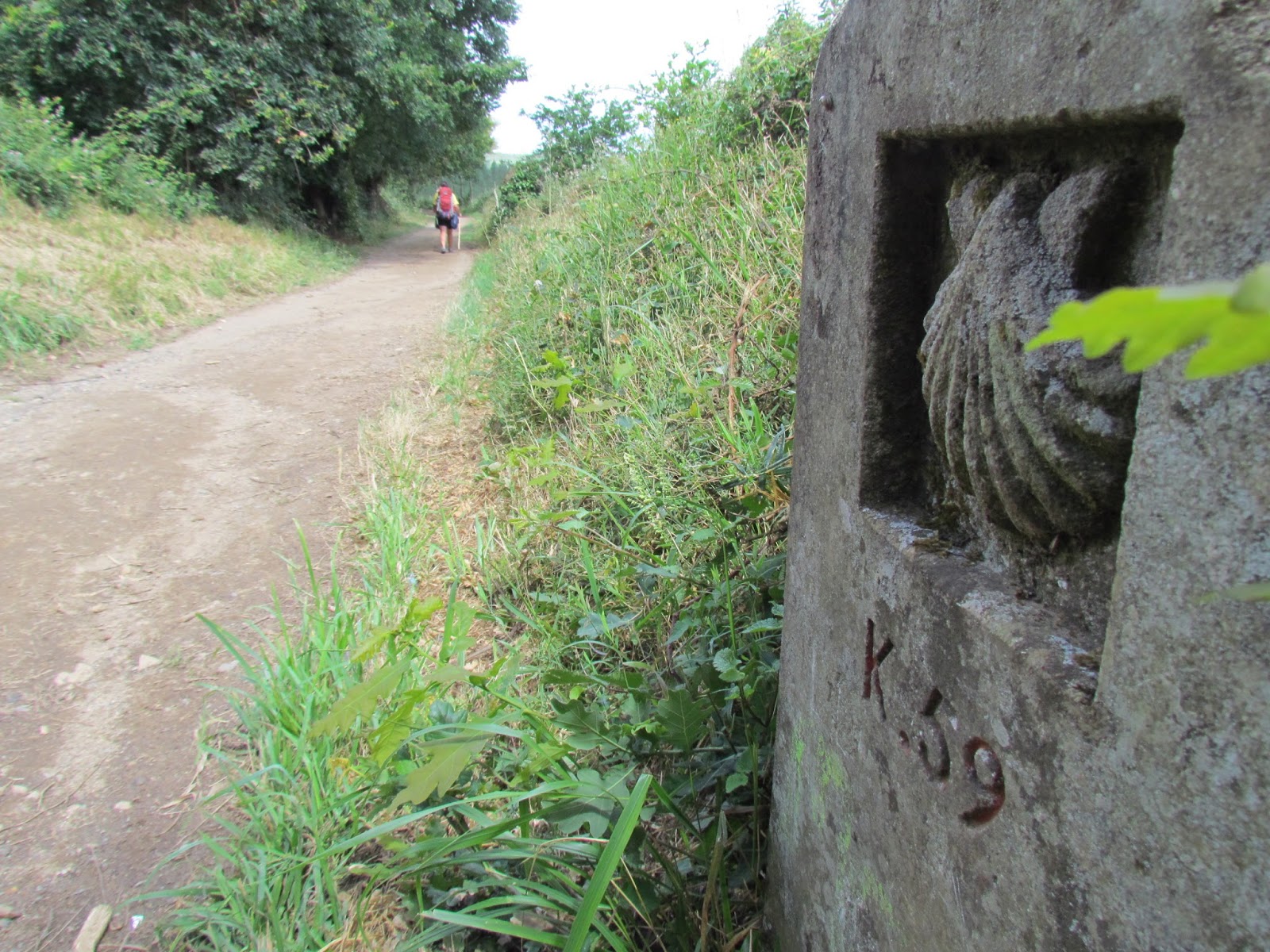
-walked El Camino de Santiago


Yet despite these “accomplishments” I am left longing for more adventures.  Namely, the adventure of marriage and family.  The person I immediately turn to when thinking of marriage as an adventure is the ever-endearing G.K. Chesterton.

The supreme adventure is being born.  There we do walk suddenly into a splendid startling trap.  There we do see something of which we have not dreamed before.  Our father and mother do lie in wait for us and leap out on us, like brigands from a bush.  Our uncle is a surprise.  Our aunt is, in the beautiful common expression, a bolt from the blue.  When we step into the family, by the act of being born, we do step into a world which is incalculable, into a world which has its own strange laws, into a world which could do without us, into a world that we have not made.  In other words, when we step into the family we step into a fairy-tale.

So my dear Chesterton would tell me that I am already living the supreme adventure: I have been born into it.  I would argue with him (since it is often my nature to be non-compliant) that my current life is not the familial adventure he speaks of since I am in the “in between” time.  I have a house but it is rented.  I live with friends and not a family of my own.  It is good, but not what I long for.  Perhaps he would agree with me in these points.  In this hypothetical argument, he might remind me that marriage, for all my silly idealism, is not perfection.  He might say this:

When we defend the family we do not mean it is always a peaceful family; when we maintain the thesis of marriage we do not mean that it is always a happy marriage.  We mean that it is the theatre of the spiritual drama, the place where things happen, especially the things that matter.  It is not so much the place where a man kills his wife as the place where he can take the equally sensational step of not killing his wife.

I remember the look of confusion and a bit of shock on my mom’s face when I read her that quote once.  But isn’t it true?  Sometimes the more sensational thing is two human beings, undeniably different even if undeniably in love, not killing each other.  Clearly, Chesterton was a married man.

However, I do not wish to simply quote Chesterton all day, though I love his writings even if I haven’t read many of them.  Rooted deep in the hearts of modern man, I believe, is the desire to give entirely of oneself, wholly and without reserve or end.  This is the longing for marriage.  The desire we have to be the adventure that someone else undertakes.  What adventure (apart from that of pursuing God) could be greater than looking at another human being and saying, “You.  I choose you and only you forever.  I choose to journey through life with you, come what may.  I choose your heart to pursue and cherish always.  And I know time will change us.  In ten years, you will not be the same person I married.  But I will still choose you.

It is the nature of love to bind itself, and the institution of marriage merely paid the average man the compliment of taking him at his word.

As much as this millennial longs to do all kinds of things and pursue all sorts of adventures (pilgrimage to the Holy Land, run a half marathon, go to jail for a night*, or fly a plane), I long for the simple adventure of a home and a family.  In many ways, my desires are not so adventurous or dramatic after all.  They are little things, daily things.  The adventure of simply being the adventure.

The old-fashioned Englishman, like my father, sold houses for his living but filled his own house with his life.

*Naturally, when I say I wish to go to jail for a night, it is with the idea that I went standing up for something I deeply believe in.

Comparatively Speaking

When I was younger, people often compared me to my older sisters.

For the most part, I liked it.  My older sisters were involved in many activities at our small school and they were both really smart.  To me, several years younger than them, they were the type of person I wanted to be when I got older.  I enjoyed being known as the younger sister.

Following in their footsteps wasn’t something I minded, even to the point of telling people that part of the reason I chose the college I did was because my sisters went there.  When I went to college, I always hoped that I would run into someone who had known either one of my sisters.  Too much time had passed, but anytime I met an alumni who attended college the same time my sisters did, I would ask if they knew them.  In fact, it was strange to be in a place where my last name meant nothing and nobody had any expectations for me based on prior knowledge of my family.

The first feelings I had of not wanting to be compared to my sisters were when they entered the convent.  People assumed my following in their footsteps would lead me to the door of a convent.  For one of the first times, I wanted my path to be markedly different than my sisters.

“When will you enter the convent?” was a question I heard more times than I can count.  The fact that I liked Mass, Jesus, and my faith in general (combined with an introverted temperament) made people assume that I was going to become a sister, too.

My younger sister responded differently to people’s expectations.  She oftentimes felt annoyed by the comparison that inevitably happened in a small school.  I remember her battle cry in high school being something along the lines of, “I am my own person!  I am different from my sisters!”  And in many ways, I understand why she felt that way.  Her talents were different from mine and the comparisons she faced seemed to say she didn’t measure up.  People assumed she chose her college because her sisters had gone there but she was quick to declare that was not true.  She picked her college, she said, because she wanted to go there, not because of anyone else who went there.  In fact, it almost made her choose to go somewhere else.

I try to remember these differing views on comparison when I am teaching.  Sometimes the siblings are so much like each other, I can see the older sibling in the younger sibling’s expressions or phrases.  Other times, I have to keep myself from saying, “You are nothing like your sibling”–whether that is for better or worse.

For competitive souls like myself, comparison can become a dangerous road to travel.  I didn’t mind being compared to my sisters when I was younger, and in many ways, I still don’t.  Yet I can push the “competition” to the limits–how does one compete with a cloistered nun?

Someone even told me that one time.  I mentioned that my two older sisters were religious sisters and their comment was something along the lines of, “How can you top that?”  My response, filled with some subtle, yet biting sarcasm, was, “I can’t.”  And internally, But thanks for reminding me.

I believe they meant the comment in jest, but I couldn’t help but walk away thinking, Why would you even tell someone that?  If I’m not planning to be a religious sister, then clearly nothing else I can do could measure up.  So many people who enter religious life feel the pressure to not enter.  My high school and college years were filled with the opposite pressure to enter.  At times I even began to feel badly about wanting to get married and have kids.

This is not how I enjoy being compared.  Who wants to have the battle over who is winning most at life, whether in a religious or secular context?  Because if I have expectations placed on me because my sisters are religious sisters, I am sure to disappoint.  But, as my younger sister recently pointed out, we love to be associated with them.  I will bring them up often and talk about their lives, but I don’t want to live life trying to compete with them.  They aren’t competing with me.

I want to run a different kind of race.  “I have fought the good fight, I have finished the race, I have kept the faith.” (2 Timothy 4: 7)  One where we are running together toward the same goal.  I can look at the people around me and see their gifts and how God is using those to help the whole Church.  People like to be seen on their own merits, not on what others expect of them based on siblings or parents.

However, sometimes the person it is hardest to get to stop with the comparison game is your own self.