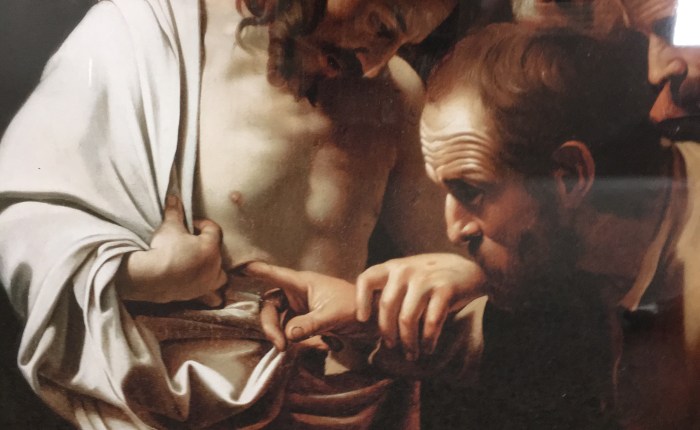
Farewell to a Pastor

Farewell to a Pastor

Jesus and the prophets spoke to the people of their times in ways that enabled the listeners to understand.  They used examples and situations that were relevant.  Growing up on a sheep farm, the numerous references to sheep struck me as particularly insightful.  Many of my classes have heard stories of how sheep aren’t the brightest and how fitting I think that is in relation to humans.  Yet for all the ways that sheep seem dim-witted, they have some great qualities that make them endearing.

Sheep are communal beings and generally move as an entire flock.  It was rare that simply one sheep would slip through a defect in the fence.  If one had escaped, it was likely that multiple had.  I have several memories of trying to separate a couple of specific sheep out of the flock and their attempts to remain with the larger group.  Yet their desire to be in communion with others, in their simple animal way, is something that is roughly mirrored in humans.  Even as an introvert, I know I need to be in communion with others.  I want to be alone at times and yet I find an intense joy in sharing life with others, too.

“Truly, truly, I say to you, he who does not enter the sheepfold by the door but climbs in by another way, that man is a thief and a robber; but he who enters by the door is the shepherd of the sheep.  To him the gatekeeper opens; the sheep hear his voice, and he calls his own sheep by name and leads them out.  When he has brought out all his own, he goes before them, and the sheep follow him, for they know his voice.  A stranger they will not follow, but they will flee from him, for they do not know the voice of strangers.” (John 10:1-5)

When the sheep would wander far out into the pasture, my dad would go to the gate with a couple of pails of corn, cup his hands to his mouth, and bellow, “Sheep!”  It wasn’t really a unique call in terms of words used, but his voice was unique to the sheep.  My brother could try to imitate it, but I remember going to the pasture on days I was responsible for chores and trying to yell in the deep pitch of my father.  Generally, they were unconcerned.  After calling and several enticing shakes of corn kernels in a bucket, they would lift their heads and begin to head in my direction.  As soon as my dad calls, they start running in his direction, at near full speed.  They know the shepherd’s voice.

“I am the good shepherd. The good shepherd lays down his life for the sheep.  He who is a hireling and not a shepherd, whose own the sheep are not, sees the wolf coming and leaves the sheep and flees; and the wolf snatches them and scatters them.  He flees because he is a hireling and cares nothing for the sheep.  I am the good shepherd; I know my own and my own know me, as the Father knows me and I know the Father; and I lay down my life for the sheep.” (John 10:11-15)

The word pastor literally means a helper or feeder of sheep.  For years, I only referred to my priests as “Father.”  And there is admittedly a beauty in that.  I love the filial sense of love and respect that is found in the relationship between a priest and his people, a father and his children.  Yet over the past couple years, I have found the term pastor increasingly meaningful.  I used to equate it only with Protestant churches and their ministers.  However, pastor means shepherd and I know the importance of the role of the shepherd.

In a world that is chaotic, the sheep need a shepherd to speak through the noise.  For the past three years, I have had the great gift to be led by my parish priest, my pastor, Fr. John.  He is a priest of my diocese, but I found myself quick to claim a closer association with him if possible.  Not simply a fellow member of the diocese, he was my particular shepherd, the one leading my parish community.   Continue reading “Farewell to a Pastor”

The Shack: A Catholic Critique

The Shack: A Catholic Critique

Spoiler: If you haven’t read The Shack by Wm. Paul Young and don’t want to know anything about it that might take away from your initial experience, please be aware this post might not be for you.  I discuss elements of the story, but I don’t give it all away.

I recently finished reading The Shack and I found it to be, as a whole, a beautiful story of how God desires to enter into our most painful situations and transform them by His presence.  The way Young depicts the interactions within the Trinity caused me to stop and consider more deeply the perfect communion found within God Himself.  In fact, as soon as I finished The Shack, I picked up Fr. Michael Gaitley’s book The ‘One Thing’ is Three: How the Most Holy Trinity Explains Everything.  After reading about the communion of the Trinity in intimate detail, I was filled with a desire to learn more about our Trinitarian God.

The general story line of The Shack is about a man named Mack who has experienced great suffering and loss.  He receives a note from God asking him to come to an old shack to spend the weekend with Him.  When Mack does this, he enters into an incredible encounter with the living God and grows in an understanding of each person of the Trinity.

The main aspects of Young’s story I found to be edifying.  It was simply some of the side details or conversations that made me wonder if he was critiquing Christianity as a whole or specifically Catholicism.  Or, at least, his perception of what the Catholic Church teaches or is.  There are a handful of elements that struck me as a direct rebuke of Catholicism.  The two I want to focus on are ritual and institution.

There is a beautiful section where God involves Mack in “devotions” after a shared meal.  Rather than producing a Bible to read from, Mack is surprised when Jesus reaches across the table, takes the Father’s hands, and speaking honest, loving words of adoration.  It reinforces the reality that devotion is entering into a loving relationship with God, not something that is merely rote or filled with words.  After another meal, Mack expects the same thing to happen.

“What about devotion?” asked Mack.
“Nothing is a ritual, Mack,” said Papa…

What is so wrong with something being a ritual?  There are a couple other places where ritual is portrayed as unsavory and in conflict with God’s desires.  I could agree with this if ritual meant that something was insincere or done merely out of habit.  However, that is not what a ritual has to be.  Sometimes rituals are the best way to enter into something that is far above us.  Like the Mass or marriage, we follow a religious ritual because we are connected to something bigger than just ourselves.

The Catholic Church is known for saying the same Mass over and over and over again.  My students will sometimes question why they need to go to Mass each week when it is simply the same thing they heard the previous week.  But if we understand the sacrifice of the Holy Mass as it actually is–the priest in persona Christi re-presenting the sacrifice of Jesus at the Last Supper and consummated on the cross at Calvary–then we would realize that nothing else would be a fitting memorial.

Yes, it is a ritual.  But Jesus also said “Do this in remembrance of me.”  Why reinvent the wheel every Sunday when Jesus has given us His very self and asks us to share in this sacrificial meal?  More than new praise and worship songs (which I appreciate in a specific context), the Mass prayed throughout the ages unites us to the earliest followers of Jesus Christ.  This isn’t a bad type of ritual, but rather a ritual that unites Christians across space and time. Continue reading “The Shack: A Catholic Critique”

This Is Us

This Is Us

I have a friend who once said that some things are cliché because they are true.  Phrases that seem trite and overused are sometimes the best way to say what we want to say.  They have become clichés because they express a truth like nothing else really can.

At times, I fight against what it seems a lot of people like or consider to be the best.  But sometimes, it is because it is actually good that so many people rave about specific things.  On Facebook, I’ve seen quite a few people talking about how much they loved the show “This Is Us.”  With the school year wrapped up, I decided to give it a try.

I don’t think a show has ever pulled at my heart as much as this one has.

I love how they portray the complexity of the human heart.  In this show, families are messy, imperfect, and crucial to our own identity.  As the show unfolds, perfect facades crumble to reveal that everyone is striving to get through life doing the best they can and making numerous mistakes along the way.  It is very human, which makes it simultaneously beautiful and frustrating.  Though the families can be chaotic, a theme interwoven in the show is the importance of family.  Whether they are blood relations or adopted family, the experiences we have in our homes shape how we interact with the rest of the world.

This Is Us- Season 1
THIS IS US — Pictured: “This Is Us” Horizontal Key Art — (Photo by: NBCUniversal)

In a world that seems to insist that families can be replaced with technology or friend groups, it is refreshing to see families upheld as the place where we grow, change, and become who we are.  Imperfect families, with parents fighting their own struggles and children feeling their own unique pains, are the places that shape us and show us how to love.  “This Is Us” doesn’t claim that all families are perfect or should be perfect.  I would say they are simply claiming that the role of family is irreplaceable.   Continue reading “This Is Us”

The Holy Spirit Wants to Kill You

The Holy Spirit Wants to Kill You

Thankfully, I’m dying bit by bit.

I had a professor in college who liked to shock us by saying, “The Holy Spirit is trying to kill you.”  And, honestly, there is a lot in me that He needs to kill.

At the end of last week, I was frustrated with many of my students and tired of teaching.  One class seemed to be intensely critical of everything I was saying, perhaps a reaction from an impromptu assignment the day before.  Then a phone went off in class.  Finally, I asked students to take down papers I had them stick to the board and a few seemed to think it would be funny to tear them off, leaving them slightly crumpled.

It was all more than I wanted to deal with at the time.  And so I reacted.  I spoke a bit too harshly to the students who didn’t seem to care about the activity I had thrown together for them.  They were upset, but I was perhaps more upset.  One wanted to argue the matter and I told them to come back later if they wanted to discuss it.

I had a couple class periods to reflect on the situation.  My response, I soon realized, was not to that isolated situation but to the frustration of the entire day.  And I knew that wasn’t fair, but I couldn’t undo my unfair reaction.  So when one of the students stopped by after school, I was surprised, but glad.  We had a conversation and a few moments of it I could feel myself getting a little upset again.

In the end, part of me died.  I told the student I over-reacted and the punishment I threw out wasn’t fair.  While apologizing, I admitted that I hadn’t responded in the way that I should have responded.  “I agree with you: you don’t deserve a detention.  I’m sorry.” Continue reading “The Holy Spirit Wants to Kill You”

The Burden of Perfection

The Burden of Perfection

When Jesus appeared to His Apostles after the Resurrection, His hands, feet, and side still bore the marks of the crucifixion.  His glorious, death-conquering body held the holes that won salvation.  To be certain, His body was different than it was before.  He was strangely appearing and disappearing, passing into locked rooms, and yet still able to eat and be touched.  Dying and rising had changed His body.  Gone was the appearance scarred beyond human recognition.  However, His body still showed where nails and a spear had pierced Him through.  Why was that?

There are several theological reasons, but I would like to focus on one minor, personal reason.  I would argue that Christ kept His wounds to destroy our image of perfection.  Here is the conquering King, the One who has fought death and won and yet–He still shows signs of this arduous battle.  As the commander of this battalion, as the King who leads His people into battle, Christ is not unaware of the price of this fight.  Our whole lives seem to be a battle towards Heaven.  Christ doesn’t need perfect looking soldiers; He simply needs faithful ones.

The burden of perfection is one we place upon ourselves.  We want lives that are neat and tidy, yet none of us have it.  Sometimes we brand others as perfect, but that is only because we see portions of their lives and not the whole of it.  And when we expect this perfection from them, we encourage them to fake it instead of living authentically.

Often, when I tell people that my two older sisters are religious sisters, I can see them mentally placing my family in a certain type of box.  Years ago, I gave my witness in preparation for a summer of catechizing youth, and one of the critiques I received was that teens probably couldn’t relate to my story.  While I understood what they meant, I couldn’t help but take it a bit personally.  My story of an aching heart being separated from my sisters was not something they deemed relatable.  Since then, I have discovered that it is something to which others can relate.  Perhaps they don’t have siblings in religious life, but many have experienced anger and frustration with God and a plan you never wanted for your life. Continue reading “The Burden of Perfection”

Attractive Misery

Attractive Misery

We feel…shame at seeing our misery and our baseness exposed.  Yet this misery possesses the mysterious privilege of attracting our Lord.  This is difficult to understand, yet it is an incontestable truth.  Our nothingness and our misery constitute the force that attracts our Lord.

(Secrets of the Interior Life)

I’ve never really understood this idea of how our misery attracts the Lord to us.  Generally, when I see my own miserableness, it is repulsive or something I want to hide.  It isn’t something that is attractive or pleasant.  When it comes to seeing the miserableness of others, I’m not much better.  My personality is one that desires perfection.  The people around me (including me) are continually letting me down because they don’t live up to my image of perfection.

Yet the Lord uses all things for good.  The cheating incident I mentioned a couple posts back has really pushed my heart.  It made me move from anger to forgiveness.  A few days later when the individuals came back and we spoke, I found great freedom in being able to express how they had hurt me and to hear them apologize.  The relief on their faces was incredible.  It was though they walked into my room carrying a burden and then through the exchange of a few words, that burden was lifted.  My burden was lifted, too.

Strangely, over the last couple weeks, I have found a special tenderness in my hearts toward those individuals.  No longer angry, I am able to love them as they are: flawed human beings.  The Lord knows I have difficulty loving people in their humanity and so I am beginning to be grateful for this incident.  I don’t want to love them only when I think they are perfect, but for the beautiful complexity that is wrapped up within their hearts and souls.  I know myself and so I know I do not want to be loved merely for my seeming perfection but rather in my entirety.  In the midst of this, I experienced for the first time, at least consciously, the way that misery attracts my heart.   Continue reading “Attractive Misery”

To Be the Face of God

To Be the Face of God

The other day, I gave a test in all of my classes.  In the midst of this, I discovered a student cheating on the test.  As I spoke with the student and some details were revealed, I found that I wasn’t angry with the student.  I simply felt this incredible sadness.

I always want to be able to trust my students.  When something happens that betrays that trust, I find myself a bit frustrated and sad.  I don’t want to doubt what they tell me or question their integrity.  But they are humans and sometimes humans cheat or lie.

During the rest of the day, this incident weighed on my mind.  I was sad and disappointed with this student but also with students in general.  Cheating is something I do not understand.  Perhaps because I enjoyed school and generally like a challenge, but I could never see myself cheating in school.  In middle school and parts of high school, people thought I was semi-ridiculous for how cautiously I guarded my paper during tests or quizzes.  I didn’t want to be the unknowing person from whom others stole their answers.  Some of my students have a very different perspective.

So I began to wonder how God takes in the continually disappointing behaviors of humanity.  It is a love that I cannot comprehend because it is truly a love without condition.  My love is conditional.  I have a great affection for my students, but when confronted with their weaknesses and their imperfections, I struggle with how to move forward.  I know a single action does not define who they are, but it shapes how I perceive them.  How can the Lord look at us in the midst of every sin and love us wholly and entirely?   Continue reading “To Be the Face of God”

A House Divided

A House Divided

Satan, the father of lies, loves division.

It matters very little what the division is actually over.  In fact, I think the more religious-oriented the division, the more it pleases Satan.  But he will take any dispute, so long as it seeks to divide.

Knock down drag out brawls over the liturgy?  Disputes over the placement of the altar?  Feuding over Lenten fasting?  Frustrations with priests and bishops?  Sides forming over who is more Catholic than the pope?

Satan is delighted.

We spend our time considering what we think is best and we tend to lose sight of the Lord.  I’m not arguing for an “anything goes” mentality.  Far from it, I am encouraging us to focus on what is the most important rather than repeatedly increasing the divisions within humanity.

For the bonds which unite the faithful are mightier than anything dividing them. Hence, let there be unity in what is necessary; freedom in what is unsettled, and charity in any case.

(Gaudium Et Spes)

In The Great Divorce, C.S. Lewis portrays Hell as a place of isolation.  The opening pages start in a town that is approaching the evening hours but seems empty of people.  Yet the narrator finds people waiting in line at a bus stop.  As the minutes pass, people leave the line because they keep quarreling with each other about one thing or another.  The town is empty because the inhabitants cannot bear to be in such close proximity to other people with all their flaws and imperfections.  So they keep moving, distancing themselves from others until they find themselves in complete isolation. Continue reading “A House Divided”

When Simplicity Must Be Chosen

When Simplicity Must Be Chosen

Nearly three years ago, I strapped on a hiking backpack and walked five hundred miles.  As I walked El Camino de Santiago, people crossed my path who were completing the pilgrimage for the second or third time.  While beautiful, I wondered why people would complete this trek multiple times.  Once will be enough for me, I thought.

Yet now and again, I find myself longing to be on some dusty trail in the midst of the Spanish countryside.  It isn’t because of my love for travel, although I suppose that does play a role.  My desire to be on the Camino for a second time stems largely from my desire for simplicity.

On the Camino, it is easy to be simple.  In fact, it is almost a requirement that one be simple.  On your back, you carry all of your clothes, sleeping bag, toiletries, etc.  Everything you think you will need along the Way, you must plod every blessed mile with it fastened to your back.

Sometimes it annoyed me to live so simply.  I wanted a different outfit to wear.  I was surprised at how much I found myself longing for a real towel and not the travel towel I would use each day.  At times I wished to simply remain in the same place for more than an evening.  There were several things that made me not like living simply.

Yet, in a very authentic way, I realized my heart was made for simplicity.  When my closet of clothes overflows and the laundry basket is full, when my bookshelves no longer have room for the books I insist on buying, or when I find myself shopping online for things I realize I do not need, I remember that my heart is a simple heart.  Yet I wish simplicity was forced upon me instead of needing to be chosen.

My possessions have a weight and I want to be free.

Sitting in a cluttered room, I find myself slightly jealous of my older sisters and their vows of poverty.  To be free to be poor.  I know I romanticize poverty, but there is a longing in my heart for less.  And in that less, I know I will find more.

But the Lord answered her, “Martha, Martha, you are anxious and troubled about many things; one thing is needful.  Mary has chosen the good portion, which shall not be taken away from her.”

Luke 10:41-42

For over thirty days, I walked the Camino and if I did it again, I would pack less.  There is a simple beauty in choosing between two outfits.  There is a simplicity found in needing to walk a few miles each day.  I’ve never been so aware of my feet before.  And rarely have I felt like I’ve spent the entire day just being and walking in the Lord’s company.  Those lovely, simple things make the Camino something I wish I could be doing right now. Continue reading “When Simplicity Must Be Chosen”

Why I Will Drink Coffee on Sundays

Why I Will Drink Coffee on Sundays

In my youth, giving something up for Lent meant you didn’t have it from Ash Wednesday until Easter Sunday.  When one of my sisters came home from college, she revealed a secret: you can have the things you gave up for Lent on Sundays.  She claimed it was a “mini-Easter.”  At the time, though, it seemed like cheating and an excuse for people who couldn’t handle giving something up for the entirety of Lent.  I didn’t need a cheat day, I reasoned, I was strong enough to last all of Lent.

Over the past few years, I have come to realize the wisdom in allowing Sunday to be a relaxed day in the midst of a penitential season.  There is a particular wisdom found when I remember my own temperament.

I like a good challenge.  Tell me I can’t do something and I will probably try to do that thing (if I care enough).  I’m stubborn and prideful to a fault.  So when I tell myself that I can go without coffee for the entirety of Lent, I start to feel a little smug.  It sounds challenging and I can already feel a sense of pride within myself.  Of course, it is a sacrifice for the Lord and yet I am quick to make it about what I can do.

However, if I acknowledge that I will go six days without coffee and then break that fast on Sunday, it is hard to get overly prideful about that.  Really?  That’s it?  Six days?  And I find myself almost convincing myself to “be strong” and go through all of Lent without it.

The purpose of Lent, though, is not to build up my ego and pat myself on the back for all of the difficult things I did.  Hopefully, Lent is a time of challenging ourselves and saying no to our own habits and desires.  Yet if I walk into Mass on Easter Sunday, bursting at the seams that I was able to forego a long list of comforts, I might miss the fact that Jesus is the one saving me. Continue reading “Why I Will Drink Coffee on Sundays”