“This feels like it should be coming from an episode of Boy Meets World.”
“And I’m Mr. Feeny?” I ask.
“Yup.”
Honored. Truly honored. Which led me to youtube videos from Boy Meets World.
“This feels like it should be coming from an episode of Boy Meets World.”
“And I’m Mr. Feeny?” I ask.
“Yup.”
Honored. Truly honored. Which led me to youtube videos from Boy Meets World.
“Are we your favorite class?”
I wonder if they are just guessing. Do they ask every teacher this? Am I that transparent? They don’t know how I am with my other classes, so I am not quite certain how they could guess this.
“Do you have the most fun with our class?”
I don’t want to lie to them. But I cannot tell them the truth. I cannot say, “Yes. You are my favorite class. You are often the highlight of my day. I look forward to this class and don’t stress out at all about this class. I love the students. You are my favorite.” I cannot say this. Because even if I would swear them to secrecy, it would come out. At some point, one of them would open one of their lovely, excited mouths and spill the secret. How would I recover from that? While I may be permitted to have favorites, they are to be secret favorites. Ones that are never actually discovered until twenty years later when you run into your students at the grocery store and you see them juggling kids. Then you can say it as much as you want. Then it is acceptable. As much as I may want to tell them now, I cannot.
Instead, I say, “Are you guys done with your assignment?”
“She is completely avoiding our question! Don’t lie–are we your favorite?”
“I’m not going to lie. You have five minutes left to complete your reading.”
They mustn’t know. But how can I help it if they think they are my favorite? It is hard to argue with the truth.
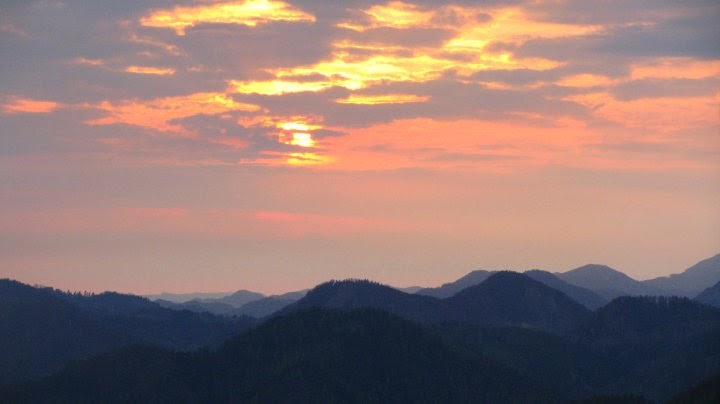
“The acute experience of great beauty readily evokes a nameless yearning for something more than earth can offer. Elegant splendor reawakens our spirit’s aching need for the infinite, a hunger for more than matter can provide.” -Fr. Thomas Dubay
An acute experience of great beauty. Sometimes beauty pierces the heart and the soul. It catches your breath. It very nearly makes you weep. It is a heart-rending experience of something that makes you long for far more, yet causes tremendous gratitude that you were able to experience that small glimpse.
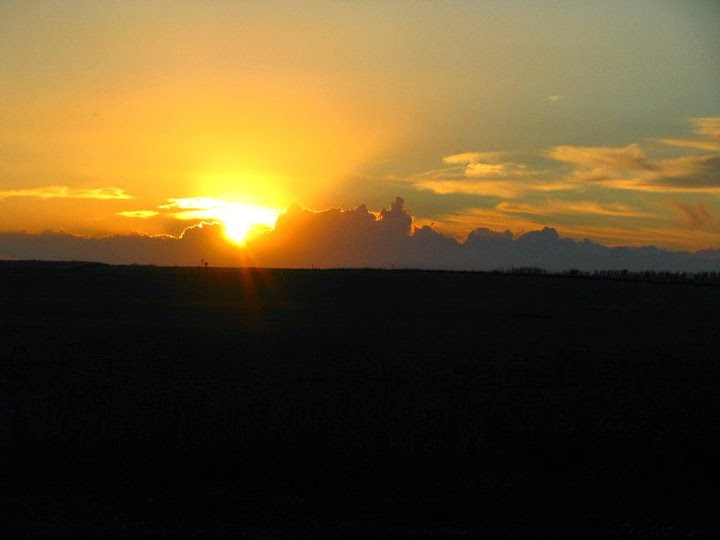 |
| Photo cred for this one goes to my little sister |
It can be something seemingly insignificant. The most recent things that have caused my heart to swoon have been trees. Last Friday, I was driving to Mass and passed a tree bellowing the glory of God. It was the perfect shade of golden-red and I felt tears come to my eyes as I gazed at it. It was a moment of intimate union in my car as I moved passed the tree. It happened again last night at my parents’ house. The tree was filled with beauty and sunshine and the brilliant contrast of golden leaves with scarlet was arresting. Even with my arms laden with papers, I still took a few minutes to gawk at the loveliness of creation.
Yesterday, the priest at Mass focused on beauty and how it can pull us in to something beyond what we can see. I was in love with his descriptions of different moments of beauty. Part of me wondered if this is a common experience, the transformative power of beauty that causes one to stop and stare with unabashed brazen wonder.
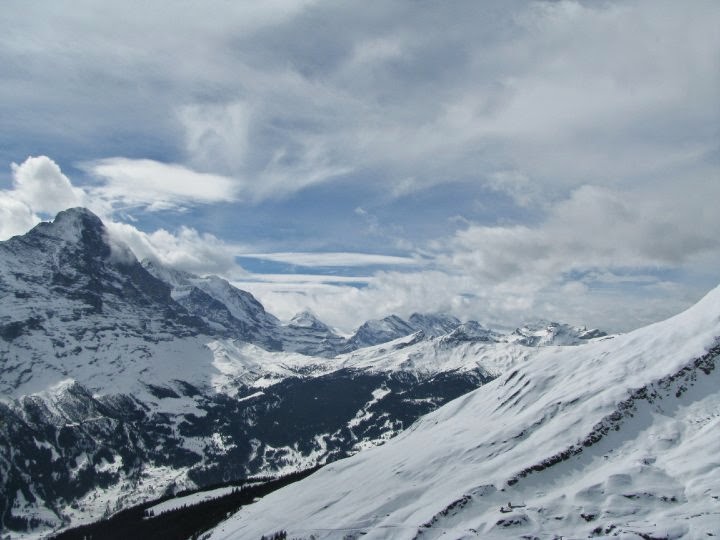
It happened to me in Switzerland, a land I became firmly convinced that could never be home to atheists. I wondered how they could look at their mountains and lakes and not see God. Yet we can all be in beautiful situations and places and simply pass them by, not concerned with the truly monumental aspects.

Take a few moments to soak in the beauty of fall, the beauty of this world. Gaze at a lovely painting, listen to a classical work, drive through the autumnal countryside–draw up into your soul all of the beauty that surrounds you and let yourself be drawn up into it as well.
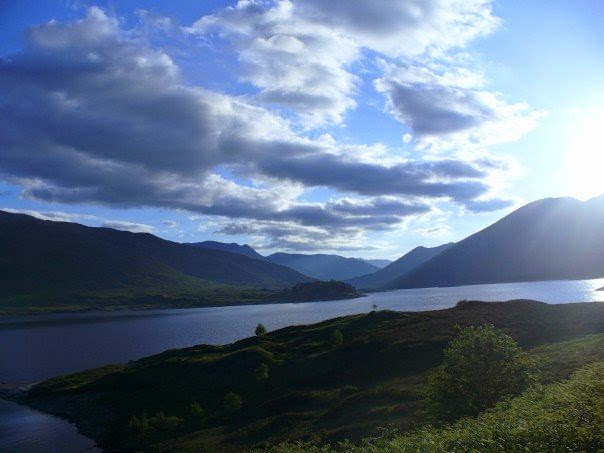
My little sophomores are so cute. Don’t tell them I said that, though. To them, at 15-16 years old, cute isn’t a compliment. But I mean it as a sincere compliment.
A few examples to illustrate my point. Today we had a test in Scripture. They came in and wanted to write “Knowledge Celebration” on the board with balloons. They proceeded to gather around the board and do that–one person delegated to write “knowledge” and the other “celebration.” Someone else wrote off to the side “Celebratory woop!!”
After prayer, a couple students begged to tell a story of their adventure last class period. I gave them three minutes. One of them rapidly told the story, including much animation, humor, and excitement. The other outlined the story on the board with rudimentary symbols and signs. In the end, the class politely applauded the adventure that had occurred.
Yesterday I wore glasses to school for the first time. This sophomore class was the only one to mention anything about them, although I am sure most of the other students noticed.
Student 1: “Have you ever worn glasses to this class before?”
Me: “No.”
Student 2: “You look like a whole new woman!”
Student 3: “You look very scholarly.”
(Murmurs of assent.)
The other day one of my students gave me a back-handed compliment. He meant it in the best way but it isn’t exactly in the way a teacher desires to hear it. (But as compliments are hard to come by in this profession, you take what you can get.)
“It feels like we never do anything in this class and yet I feel like I am learning a lot.”
“Thanks,”
“No, I mean–I enjoy this class so much it never feels like work.”
That’s better.
They are at an interesting point in their lives. They are in the midst of high school life. Growing up, they are determining who they will be for the rest of their lives. Yet there is an innocence that is found within them. Particularly this class. They have troubles and stresses but they are genuinely good kids. And I love them all the more for it. They are definitely not perfect, but they are sophomores and they give me hope in a seemingly hopeless world.
I wonder what the Lord has planned with their beautiful, fragile, so-much-potential lives. And I am thankful to be a part of it, if only for a while.
 Each day was simple in its task. I was to wake up, eat, walk, pray, and sleep. Each day, I was successful.
It is difficult to not be successful with such a simple task. Yet too often I feel as though my life is not filled with simple tasks. Instead of checking each item off the list and falling into bed knowing I did what was necessary that day, I am often going to sleep simply because I’m too exhausted to finish the task at hand.
The Camino was simple. Not easy, but very simple. I don’t think my interactions with everyone I encountered were perfect, but essentially every day ended successfully.
I don’t feel this success as a teacher. I don’t feel this success simply as a working young adult Catholic. Most days I feel as though I am miserably failing. Then I wake up the next day to fail again. The stack of uncorrected papers grow, the lesson plans become less than plans and more like ideas that are half-taught. The sleep dwindles, the time I take for prayer lessens and I fall asleep during it anyway.
I am not successful.
The world measures my life by a standard of success that I do not have the luxury of choosing. Even if I had the option to choose my own standard, I would still fall short.
Thankfully, the Lord measures success differently. He desires my faithfulness and not simply my apparent (or unapparent) success. With honesty, however, I am lacking in the faithfulness department, too.
All of this draws me back to the simplicity found on the Camino. I had no papers to grade, no lessons to plan, no time to waste on Facebook, and very little distractions apart from the beautiful scenery and the pain in my feet. It made me wish that all of life could be like that. That life could be a simple, clear path. I would wake up in the morning and know exactly where I was to go and I would take the necessary steps to get there. I would nourish my body and try to consistently be in my bed by 10 pm. It was a forced balance that I find myself not adhering to on a regular basis. I knew what I needed and so I did what was necessary.
How do I take the simple beauty of the Camino lifestyle, the necessary discipline encompassed within that, and apply it to my daily life?
How do I encounter success through being faithful?
How do I simplify?
David was an American. The first American that we encountered as a hospitalero in the Spanish albergues. My impression of him, initially, was terrible. That wasn’t because I was quickly judging him or disliked him in appearances. It was because he came off like a jerk.
We showed up, with our minimal Spanish and tired legs, and inquired about beds for the three of us. “Tres?” The single word was a question indicating more than we wanted to attempt in Spanish. The man with a full head of silvery hair was unimpressed.
“Yes. I see three people.” We were taken aback and weren’t sure how to proceed. If I had an ounce more of stubbornness and more energy in my body, I might have left the albergue and walked to a different one or a different town. Instead, we awkwardly stood there, feeling bad for our spokesman and wondering if he was the only one in charge.
He briskly asked for our passport and credentials. Annoyed, I tried to kill him with kindness. I openly smiled at him when he handed my documents back to me. He didn’t seem quite certain how to take it. I would have thought he would be excited or interested to meet some people from his country, but he was clearly not.
The other hospitalero came down the steps and she greeted us in Spanish. David’s unenthusiastic voice chimed in, “They speak English.”
“You do?! Wonderful! I can talk to you! My name is Patricia.” The shift in emotions was quick. David was brooding and annoyed while Patricia was bubbly and patient. We watched them interact, assuming at first that they were a married couple. She wanted to know what the men had discovered about the water situation. Three times David gave a rude or unkind answer, but she persisted.
“No, really, David. Tell me what they said, so I can tell those who are asking.”
Finally, he gave a genuine response that satisfied her. My impression at this point was rather favorable to Patricia and dismissive of David. I wasn’t here to get walked on or be the point of his melancholic sarcasm. She convinced him to show us to our beds, a task he wasn’t pleased with but completed with minimal grumbling.
And so it was, the first American volunteer and already I was wishing one of us was from a different country. No wonder people dislike Americans if they all act like that, I thought.
My next main encounter with David was at our communal meal. Between Patricia and David, the plan for the evening was presented: supper followed by singing and then watching the sun set. David kept walking in and out of the room while we settled into our seats. I thought I had him pegged–they were a married couple and she wanted to volunteer and he came along because of her. Not because he wanted to, but simply for his wife.
Yet within the first few minutes that theory was flipped on its head. They weren’t married but had met the previous year when they finished the Camino in Finisterre. Both wanted to volunteer and decided to complete the undertaking together. He was from the States and she was from England. This information was nothing to what happened next.
Cool, detached, collected, sarcastic David began to speak. He revealed that this was their last night of the two weeks of volunteering. The next day they would be leaving for a holiday. David got choked up numerous times during his speech, his voice cracking and squeaking as he struggled for control. It was completely and utterly unexpected.
The meal of lentil soup with meatballs was served. David would take our bowls, with a large smile, and refill them before passing them back down the line to us. I was baffled. This hardly seemed to be the same man. Here he was trying to be polite and kind, a contrast to the seemingly self-absorbed American I had encountered hours earlier.
David was one of the greatest surprises of the Camino. I’m not sure I ever again saw such a transformation. The first David was, unbeknownst to me, struggling with the idea of leaving the tiring but beautiful work of being a hospitalero. He was also under stress due to water problems and trying to communicate in his rather terrible Spanish. I didn’t know that but immediately felt not welcomed. Patricia was more patient and knew more of his heart. When he obnoxiously refused to seriously answer her questions, she patiently waited for him to be sincere. That evening, David told all of us that Patrica was his best friend.
They sang silly songs, making fools of themselves for our entertainment. Then we took a group picture outside and watched the sun set. The colors were lovely but weren’t quite as grand as South Dakota. In the morning, we set off, waving goodbye to companions from the previous night. David surprised me. At the center of our hearts is a desire to be known and loved. We may build up walls all around us and shield ourselves with steely hearts, but there is always a chink in the armor. Because there always remains the desire to be known by others.
Even supposed jerks like David can turn out to have hearts of flesh after all.
“I will give you a new heart and place a new spirit within you, taking from your bodies your stony hearts and giving you natural hearts.” Ezekiel 36:26
There we were. Gathered around a long table, laden with food and wine, surrounded by a small sampling of the globe. Simple food was passed around, abundant and filling. Joy was passed down the row of people, the seasoning that was added to the top of each bowl of stew that was consumed. It was warm–or perhaps it was the wine and the intoxicating blend of languages and cultures, a beautiful spin on the Tower of Babel with English being a common reference point for many.
Some say this is what the Camino is–this is the ultimate Camino experience. The communal meals shared in random albergues around Spain to an eclectic gathering of people. We are from the US, Canada, Brazil, India, Germany, France, Spain, and beyond. We speak a smattering of languages but we are sharing our stories and bonding, even though this may be the only moment we are ever together. This part of the day was one of my favorites and the memories are poignant.
Despite the beauty of those moments, they simply made me feel like I was remembering something rather than experiencing it for the first time. Of course this was my first time walking the Camino and sharing in those lovely communal dining experiences. But I had shared a common meal with people of varying backgrounds and motivations. I had felt the warm embrace of belonging to a community. All of this was simply pointing to our membership in the Body of Christ. I belong to Him and, through Him, am united to so many others. Although we seem so different, we are very similar. We are all searching for truth and goodness and beauty. We all desire friendship and companionship and love. We are longing for fulfillment and something to transcend this fragile life on earth.
The communal meals along the Camino were the physical nourishment for the road that stretched in front of us, the difficult, beautiful road leading to Santiago. The Eucharist is the spiritual nourishment that prepares us for the road that stretched on, the road strewn with thistles and roses that meanders to the Wedding Banquet of the Lamb. Both are shared with others and both point to something even more.
And the angel of the Lord came again a second time, and touched him, and said, “Arise and eat, else the journey will be too great for you.” And he arose, and ate and drank, and went in the strength of that food forty days and forty nights to Horeb the mount of God. -1 Kings 19:7-8
I gently tapped the bowl with my finger. It was plastic, as I had expected, instead of glass. The time had come for the grandkids to go through what had belonged to our grandparents and request our favorite things. There were some things that I wanted, but not very many. In my love for my grandparents, I looked at the material items and realized part of the sacrifices they willing endured for their family.
My grandparents grew up during the Depression. They understood not having much and carried that mentality into the rest of their lives. My grandpa said that his family never went hungry, but then he also told my dad, without complaint, that there were times when they ate potatoes for every meal of the day.
Some people lived through the Depression and then spent much of their lives trying to live in luxury so as to make up for their time of poverty. My grandparents embraced the lifestyle of simplicity that was taught to them through the difficulties of the 1930s followed by the war of the 1940s. By the time they both died (my grandma in 2004 and my grandpa in 2013), they had stored up for themselves what probably seemed like amazing wealth to the 1930s versions of themselves.
Yet they did not live as though they were wealthy. My grandparents were generous with us but did not seek to spoil us. The overall impression was that family, not money, would be the source of happiness. As I got older, the number of family functions seemed only to increase. We would gather for a long weekend at a lake, spend a weekend in a hotel in town as a family, and once a group of us took a trip to Ireland and Scotland for a couple weeks.
The simplicity of their lifestyle is something that is good for me to remember. They turned off lights, used no air conditioning, ate simply, and did without many luxuries. Without great wealth to begin with, they gave birth to ten children and ushered nine of them into adulthood. My grandma would replace the elastic in her pants when it gave out and my grandpa would wear the same overalls for decades. Their happiness did not rest in their bank accounts but in the family they were raising. And if family is an indicator of wealth, they were abundantly wealthy. Nine children lived to adulthood and between 30-40 grandchildren were born as a result of that.
This week my dad and his siblings are selling my grandparent’s land. I’m sure that it is a difficult experience, something that seems to finalize things that one wants to pretend didn’t happen. While my grandparents are no longer here on earth, their memory remains rooted in our hearts. Yet far from wish they could remain here with us forever, I pray they are in Heaven. In Heaven, there is no need to conserve money or live simply. Heaven is an overflow of abundance, a rich banquet for all to join in, lavish goodness poured into the lap of each person there. That is what I desire for them. Not money or great material wealth, but the richness of belonging entirely to the family of God, to the Body of Christ.
“Blessed are the poor in spirit, for theirs is the kingdom of heaven.” (Mt. 5:3)
At different times I find myself missing college. While it was stressful and filled with numerous papers, I miss the unique setting that is found in living in the dorm and sharing my daily life with many others. The fact that a perpetual adoration chapel was only a short walk away was also a major benefit. Sometimes I was overwhelmed by the constant stream of people around campus, prohibiting any chance of being alone and filling my melancholic soul with stillness and silence. Despite that, I found it invigorating to be surrounded by young people my age who desired to zealously live out the faith. Of course they failed, but it was to my never-ending joy to be able to enter into deep theological discussions at the drop of the hat.
Once experiences the beauty of such an environment, everything else seems to not compare. Now I don’t live in a place that is teeming with young Catholics. I have a real job and I have to concern myself with money. The goal now, as opposed to the liberal spending of college, is to earn more than I spend. College was a steady stream of cash poured from my pockets and from the pockets of a couple banks.
Yet every now and then I am able to recognize the beauty of the present moment. I remember that I live with three young women that are on fire for the Lord. That we do engage in deep conversations, that we are sharing our lives together, and that we can challenge each other to delve deeper into our faith. Last night we had a women’s prayer group meeting at my house and I was filled again with a sense of gratitude. Women from different jobs, places, backgrounds, and lives came together to be rooted in prayer. At one point I was concerned that our conversation would be offensive to some of the new ladies but I was even more encouraged to find out they weren’t. We could talk about praying outside Planned Parenthood, contraception, ObamaCare, medical ethics, Catholic hospitals, and much more without any tension or conflict. We seemed to be in one accord.
I thanked the Lord that I didn’t live on my own but with women I can grow with. I am not alone in my faith or without Catholic friends, but rather the Lord is increasing and strengthening these friendships. My community may be small, but it is sufficient for me. The Lord provides. He knows what I need and He is supplying. Perhaps not in the abundance that I dream of or desire, but in the amount that is perfect, necessary, and manageable.
He was easily my favorite priest that I met along the Camino. The priest in Santo Domingo was excellent but I never spoke to him. Fr. Javier, however, was the priest I actually spent time with and I grew in admiration for him.
The first conversation we had with him was brief but it struck my heart.
“Father?” one of my traveling companions called out to him, as he hurried from the albergue to the monastery.
“Hija?”
“English?”
“Yes,” he said with a smile.
The girls I was with missed his first reply. They simply thought he said, “Yeah?” Instead, he said, “Daughter.” After seeing us for a mere two seconds he was calling us by our deepest identity and also responding as our father.
We asked about Mass and he said there would be Mass instead of evening prayer. We were so excited because this was a change from his ordinary schedule due to the other monk being away. At Mass he welcomed us in Spanish and English. He won our hearts when he told people taking pictures after Mass that it was not an appropriate time for that because people were praying. Typically the tourist-pilgrims are allowed to wander the churches like museums, taking pictures and chatting as they take a self-guided tour. It was refreshing to have our post-communion prayer time respected. The people left fairly quickly since they couldn’t photograph the church.
Thankful to finally be in a church that didn’t usher us out within five minutes of the final blessing, we prayed for quite a while. During this time, Fr. Javier came back and asked for one of us to do the reading for night prayer. He chose my sister to do it, even though she was resistant. With a quick smile and a tender firmness, he told her what she was to do and that she would sit by him during the prayer. It felt like we had finally found a little resting place with a lovely father to look out for us. His simple presence around the chapel, preparing for the next liturgy, was comforting.
Outside the church was a sign that told pilgrims about the different liturgies offered at the monastery church. At the end of that was a little blurb about pilgrims being able to spend a few days in the pilgrim house run by the monastery. During our prayer time in the church I turned this idea over and over in my mind. My heart was longing to stay in this place for much longer than one night. I wanted to live there or at least stay another day. We had budgeted some extra time into a schedule in case of injury. I had always slightly envied the people who had such an open schedule that they would stay for a couple days at different places just because they felt like it. Our schedule wasn’t tight but we had to keep moving. The final words written in my journal during that prayer time were, “Do You want us to stay another day?” I wrote those words with hope but also knew that it might not be realistic.
A few minutes before we headed over to the church for night prayer, I broached the subject with my traveling companions. The response was immediate and positive. We decided we would ask Fr. Javier after night prayer to see if it was possible. I entrusted it to Our Lady’s hands. If she wanted us to stay there, then she would make it possible. If not, then we would move on.
After night prayer we were nervous. Fr. Javier was puttering around the church, preparing to lock up. We went outside, planning to catch him on his way out. He came out and thanked my sister for reading before turning to go to the monastery. One of my friends called him back saying that we had a question. Could we stay there for a night? He thought it might be possible but would need to check with the hospitalero. There was another catch, though. If we stayed, it was for a minimum of two nights. For a moment I thought it wouldn’t be feasible. The three of us were typically very slow to decide anything and I thought we might need to ask Father for a moment to discuss our options.
“You would be here for the Corpus Christi procession…”
We all began to nod. I didn’t need to discuss it, my heart was begging me to listen and remain in this peaceful place with this lovely priest. He smiled and went to go check on the possibility.
He returned within a couple minutes and broke the news to us.
“I’m sorry. I’m afraid it is going to be….possible!” We were overjoyed and exclaimed, “Father!” for leading us to believe we couldn’t stay. He introduced us to the hospitalero and instructed us to bring our things with us to morning prayer the next day and we would be able to move in.
That night we were delirious at the thought of not walking the next day. It wasn’t necessary to fall asleep as quickly as possible and for a little while I thought I would be too excited to sleep. The only thing that was less than desirable was that all of our friends would continue on their way. With two rest days in Rabanal del Camino, it was quite possible that we would never catch up with them or see them again. There was one lady that had been with us on and off from the very beginning and we were loathe to part ways. Yet I was so excited for the retreat and rest days we were embarking on. It felt like the Lord was simply showering us with gifts, perfectly designed for the desires of our hearts.
The next morning we woke up and had breakfast at the albergue. The hospitaleros told us to come back the next day for tea if we wanted. Then we wished our friends farewell and raced to the church for morning prayer. It was peaceful and calming to enter the simple church. Over the next two days we would transition from sitting in the pews to taking our place in the monk choir at the front of the church. Finally, we were with people who, for the most part, were walking the Camino as a way to experience God.
Second breakfast took place at the pilgrim house before a tour of the place. It was simple but beautiful. A small library, an enclosed garden, a conference room with a beautiful piano, a prayer room, and a church across the road open the entire day. I reveled in the simple joy of praying and reading in the garden that morning. For lunch we were invited to eat at the monastery. Fr. Javier, an extraordinary cook, made the meal and served it in the silence of the monastery refectory. A brief reading would take place and then Fr. Javier would knock on the table to indicate we could begin to pour our drinks, water and wine. The first meal I spent watching everyone else to see that I was supposed to do and feeling like a foolish American without any delicate table manners. The meal was served in courses and I attempted to keep pace with everyone else so as to not hold them up.
While we ate, classical music would be playing in the background. Otherwise, we ate in silence. Some were exchanging glances of amusement. Fr. Javier would wink and smile at us. But most of the time I would just ponder the reading or take in the swells of the music or turn my eyes to my interior. The first meal was an interesting combination of peace and anxiety, hoping I wasn’t messing up what seemed to be known etiquette.
The afternoons we would have to our own devices and while it wasn’t required or asked of us, the three of us decided we would have a silent retreat of sorts. The first day we spent away from each other. Despite my love for both of them, it had been a long time since we were able to go off by ourselves for most of a day. It was interesting that while much of my time walking was spent in prayer and silence, my heart was still longing for silence and solitude.
Mass took place in the evening and then we would go to the pilgrim house for supper. Supper was never as elaborate as lunch, but it was always sufficient. After supper we would have only a little time before we were off to night prayer. I began to feel something akin to what the disciples might have felt. I was one of the few (only six are permitted at a time) to stay in the pilgrim house. I had been to night prayer before and knew the schedule. I had the privilege of dining with Fr. Javier, of having a key to the pilgrim house door, of receiving the smiles and attentions of those in charge of the pilgrim house. I loved being at once a visitor and yet more of a resident of that town than nearly anyone else who was wandering through.
The days passed too quickly but they were beautiful. We followed Fr. Javier and Jesus around the town during a Corpus Christi procession. Later that afternoon, as the warm rain poured down through the open garden roof, we listened with delight to Fr. Javier play the piano. We learned that he had studied classical piano in school and that beauty is what drew him to the Benedictines. At supper that night we heard his brief vocation story. He said the short story was that he is a monk because Jesus wants him to be. That every other reason must boil down to that all important reason. Nothing else matters and nothing else is a good enough reason if Jesus does not want it. After supper we all took a stroll around the town, a merry band of wanderers pulled from around the globe.
As we walked a French lady joined us. She didn’t say much but she seemed to just want to be in our presence. I didn’t blame her. I was basking in the joy of following Fr. Javier, of strolling on a day that didn’t find me walking fifteen miles. The next morning we didn’t want to leave. We delayed, perhaps foolishly, for as long as we could. Mass was finally in the morning and we stayed for that and breakfast following. It turned into a long day of walking, but we wanted to maximize our time with Fr. Javier, our time in Rabanal, and our time in the peaceful oasis we had stumbled upon.
Fr. Javier was willing to pose for a picture with a few of us. He had asked us earlier that day if we knew the story behind the icon in the refectory. It was of the three angels that came to Abraham, a representation of the Holy Trinity. He talked briefly about how three strangers came to Abraham but they were actually angels. Three of them. And he looked at us, telling us that we were angels that had arrived there. Of course, theologically I was certain we weren’t, but I was tickled by his compliment.
A quick hug, a couple lingering glances thrown at the monastery and church, and we were off. That whole day I thought of Rabanal. When it came close to two o’clock, I thought of how the little group would be gathering in the refectory for one of Fr. Javier’s delicious meals. That evening I thought of night prayer being prayed in the church, hearing Fr. Javier’s lovely voice sing the prayer in Latin and Spanish.
My heart longed for Rabanal as we continued our Camino. It began the interesting fact that when people would ask if I had a favorite place on the Camino, I would quickly reply Rabanal, and then feel funny that my favorite place of my walking pilgrimage was a place I didn’t have to walk much. It was a little like the transfiguration. It was good that the Lord called us there but we were loathe to leave. I wanted to pitch my tent in Rabanal and remain there for the next few weeks, soaking up the peace of the town, becoming Fr. Javier’s friend, living a simple life in the pilgrim house.
Rabanal reignited my desire for Heaven. I was longing for a place of infinite peace and contentedness but also a place that wouldn’t require me to leave. I wanted to be near the priest who was quick to smile and tease, but devout in prayer and reverence. Yet even more so I wanted to be infinitely closer to the High Priest who understands me entirely and loves me fiercely. If the Camino is life and Santiago is Heaven, then Rabanal was a vision along that way that pushed me onward in body and spirit.
Fr. Javier became the priest who redeemed, in my mind, the fate of the Spanish prelate. He welcomed, with that characteristic Benedictine hospitality, all of us into the pilgrim house and provided all we needed. The entire time there was provided on donation basis but I felt the money I left to be insufficient. I vowed to pray for him along the Way and Fr. Javier promised to do the same for me. What a great influence he had on my Camino all as a result of us stumbling upon that town, deciding to stay, and asking to stay longer. The Lord certainly provided. Greedy as I am, I hope to someday return there. Perhaps the Lord will provide that, too.
 Seeking After His Heart