The Wal-Mart Heart Change

I could feel it increasing in my heart.  My fingers tapped on the shopping cart as the impatience within escalated.

Standing in the speedy checkout line at Wal-Mart, I was feeling pressed for time.  I hadn’t wanted to stop at Wal-Mart, but I needed glitter.  Never in my life have I purchased glitter, so it took a bit of meandering before I found what I needed.  A few other items found their way into my hands and then I was at the checkout.  Waiting.

The sense of urgency was palpable in Wal-Mart.  I could feel it because I had places to be, things to do, and the rush of shoppers waiting at the checkout lines declared that they had similar situations.  The clerk tending the cash register was taking care of one customer and it seemed to take a while.  His credit card wasn’t accepted and he was on the phone.

Minutes passed.  I kept eyeing other lines, watching them line up and pass through while I waited.  Finally, the woman ahead of me moved forward in line.  Change needed to be dispensed into the tray and we watched her unroll two packs of quarters.  Then the cashier counted the gifts bags.

1…2…3…4…5…6…7…8…9…10

10 gifts bags.  Then she swiped one.  And repeated the act seven more times.  She stopped and began to count the number of bags on the screen.  But she must have lost track of which line she was on so she took a piece of paper, holding it up to guide herself line by line.  The customer told her that she had only scanned eight but there were ten.  The cashier finished counting, swiped another, and then keyed in another.

I’m feeling impatient, inwardly reminding myself that it is Advent, the season of waiting.  But for some reason, my time feels more important.  Perhaps it is part of the human condition.  We are quick to hurry others, almost insulted that they should waste our precious time.

I will my heart to stop pounding with impatience.  Almost like hushing a baby, I remind my heart that there is enough time for what is necessary.  Slow down, slow down.  Do what you tell your students to do: practice patience, seek holiness in the simple, ordinary things in life.  Be faithful in small matters.

And my heart slows.  When I approach the cashier, I am greeting her as though I never waited.  I am striving to not make myself the most important person in the situation.  The anxious tapping of impatience is brushed away for a moment, and I try to hang onto this as I navigate the parking lot and the line of cars waiting to exit.

Later, I will lose this patience and peace.  I will rush about, attempting to do in a couple hours what should have been done in days.  And I will miss the joy of the present moment and seek to tend to things rather than to people.  But for all the missteps that will later follow, I am reminded of that moment in the checkout line.  That moment when my agitated heart encountered the peace that it was always meant to have.

Say to the fainthearted, “Take courage and fear not. Behold, our God will come and will save us.” -Isaiah 35:4

There He is: saving me from myself in the Wal-Mart checkout line.

Why I Am a Catholic

For the last couple days of class for the semester (before preparation for finals), I decided to try something new.  It was an idea I had a while ago, but it just seemed to work to implement it this year.  The section is dubbed, “Why I Am a Catholic.”  After weeks of (hopefully) learning Apologetics, I wanted to have them consider why they are Catholic.  I challenged them to find something beautiful, compelling, or desirable within the Church, even if they struggle with different facets of the faith.

I listed off for them Peter Kreeft’s seven reasons why he is a Catholic.  I read a line from G.K. Chesterton’s “Why I Am a Catholic” essay.  Then, because I wanted this to be real for them, I told them my reason for being Catholic.

In all actuality, it cannot be boiled down to one reason that I am Catholic.  Yet, for the sake of simplicity, I picked what was central to my faith and declared that it was the reason why I was Catholic.  What I didn’t expect, though, was that I would nearly cry in every Apologetics class as I told my story.

Honestly, I was a little annoyed with myself.  “Really, Trish, get it together!  It isn’t as though you have never talked about this before.”  I’m still a little confused, but I think the primary reason is that I was opening my heart to them.

I’ve shared with my students different experiences I’ve had, places I have traveled to, and stories I have heard.  As a Theology teacher, I am daily speaking of persons and ideas that are very close to my heart.  But to open my heart, to share part of “my story,” and to point to something so personal, in a classroom setting, is difficult.

I told them that I am Catholic because of the Eucharist.  Yet I had to give a bit of a back story for why the Eucharist is so pivotal personally, not just theologically.  So I had to go to the beginning of my faith hitting the pavement, nearly the beginning of a heart that aches yet keeps it all tucked away within.

Naturally, it was a story about my sisters.

My two older sisters, specifically.  And my throat became scratchy and I prayed that Jesus would just let me get through these stories without crying.  The feelings I was portraying aren’t ones I typically feel now, but ones that were jettisoned across time from nearly 12 years ago.

When I was in 8th grade, my older sister entered a Carmelite cloister.  She was the one who seemed to know me.  As an introverted melancholic, I’ve always ached to be known.  While she was still my sister, our relationship was dramatically altered.  I could pour out my heart to her in writing, but then I would need to wait months for any sort of response.  I became angry and bitter, yet still had to present a happy exterior, because that was expected of one with a nun for a sister.  When I was a junior in high school, my other older sister joined a different convent about twenty-four hours from home by car.  The feelings of bitterness and anger were once again kindled.

I was teaching myself something that is untrue about God.  Internally, I was learning that God will take from you that which you hold dearest.  Whatever you don’t want to do, He will ask it of you.  I was learning the sacrificial part of Catholicism without the love or joy that must accompany it.

As I’m telling my little stories, I am looking into their eyes.  For once, the classroom is mostly silent and their eyes are on me.  I’m wondering, as my insides quake a little and my hands shake, if they can see that I’m opening up part of my heart to them.  I’m hoping that even though their story is different, that they are open to discovering the beauty of Catholicism, too.

So how do my sisters entering the convent make the Eucharist the reason I am Catholic?  When my sister was entering the cloister, she turned around and said, “I’ll see you in the Eucharist.”  Eighth grade me wasn’t impressed.  That’s nice….but how about you see me on my birthday and at Christmas?  How about you hold my children and are answering the phone when I want to talk?  Despite the minimal impact it made initially, it eventually became a central point of my personal spirituality.

When we go to Mass and receive the Eucharist, we are receiving the Body of Christ.  The Church is the Body of Christ.  When I receive the Eucharist, I receive the entire universal Church, the Church inside and outside of space and time.  As I missed my sisters, I would receive the Eucharist and know that this union that I tangibly experienced in Holy Communion was the deepest union I would have with them.  It was comforting when I went off to college eighteen hours away and I missed my family.  The Eucharist bound me to all my loved ones.  Moving from college back home and being separated from beautiful friends, I found solace in the ties of the Eucharist, bonds that even death cannot break.

Why I am a Catholic cannot be simplified to only one reason for me.  There are many factors and influences, but the central point is the Eucharist, God Himself.

“The difficulty of explaining “why I am a Catholic” is that there are ten thousand reasons all amounting to one reason: that Catholicism is true.”    -G.K. Chesterton 

Holiness in the Mundane

Their faces are registering complete shock.

Personally, I’m a little taken aback that what I said is so surprising to them.

“How can homework make us holy?”
“Do you want to do homework?”
“Yes….er, no,” my student responds, wavering, it seems, between what he feels he should say and what is actually the truth.  “No, I don’t.”
“So doing your homework would mean you are going against your own will and desire to do what you should do.”
“So we are supposed to stab ourselves in the arm?!”
“Doing your homework is a bit different than stabbing yourself in the arm.  I’m not saying you need to intentionally inflict pain upon yourself so that you suffer.  Simply accept the suffering that comes your way and offer it to God.  Choosing to do your homework when you don’t want to means saying no to your own will and yes to God’s will.  Right now you are to be a student.  God isn’t requiring that everyone gets a 4.0 GPA, but He does want you to do the very best that you can.”

How often we fail to see the ordinary, inconvenient, monotonous tasks of the day as paths to sanctity!  We want something extraordinary.  Lord, give us some big task, some grandiose mission and we will fulfill it for You!  Instead, we are given long lines at the grocery store, disobedient children, laundry, and snow shoveling.  They don’t seem quick paths to holiness, but the Lord only entrusts big missions to those who are faithful in small matters.

If the cross my students carry is homework, my cross is found in grading their homework and tests.  It is easy to push it aside, to think I have far better things to do.  Yet, in a way that I don’t fully understand, my holiness can be brought about in grading the 63rd paper about the Shroud of Turin or test over the arguments for God’s existence.  Somewhere in the monotony of that work, I can utter with my actions, “Not my will, but Thy will be done.”

So homework, study guide writing, end of the year planning, and room cleaning here I come.  And somewhere in the midst, may sanctity be found.

A Moment of Encounter

Yesterday, I got out of school and brushed the half foot of snow off my car.  I went home and helped my housemate finish up shoveling the driveway and sidewalk.  Last night, after taking out the trash, I paused under the awning and took in the winter portrait that was painted before me.  It was cool, but without our customary wind, it was nice out.  An icy finger had touched the world, leaving trees outlined in silver and the streets glistening with custom-designed flakes.

Winter, I thought, is quite beautiful.

Then I took a few steps and entered my house, where I could view the frozen art from the ease of a comfortable chair.  In those few steps, though, a thought came to me.

It doesn’t feel that cold because I have a home, right here, that I can step into.  I don’t mind the cold today because I’ve spent very little time in it.  If I were homeless, that wouldn’t be the case.

For yet another time in the past week, I considered again difficulties of homelessness.

Homelessness is never something I have seriously feared.  In fact, it was within the past couple years that I realized that I’ve never even considered it to be a fear I could have.  I live in a rented house shared with other young women and I have a job that pays the bills and loans I’ve accumulated.  Yet I’ve always known that even if I lost everything I own, I could always move back home.  Through the years, as my siblings and I have grown up, we have found it necessary or best to sometimes move home for a while.  We’ve all taken advantage of it, for varying lengths of time.  So if I got sick, lost my job, was in an accident, or something devastating happened, I know I would be able to seek the refuge of my parents’ house.

At the time that I was having this not-profound realization, I thought about how others don’t have that support system.  What if I was all I truly had?  What if I didn’t have parents that were able or willing to help me through rough times?  What if I had no siblings or extended family that would let me crash on their couch or put me up for a while as I sorted through my life?  The result of these thoughts was immediate anxiety and fear.

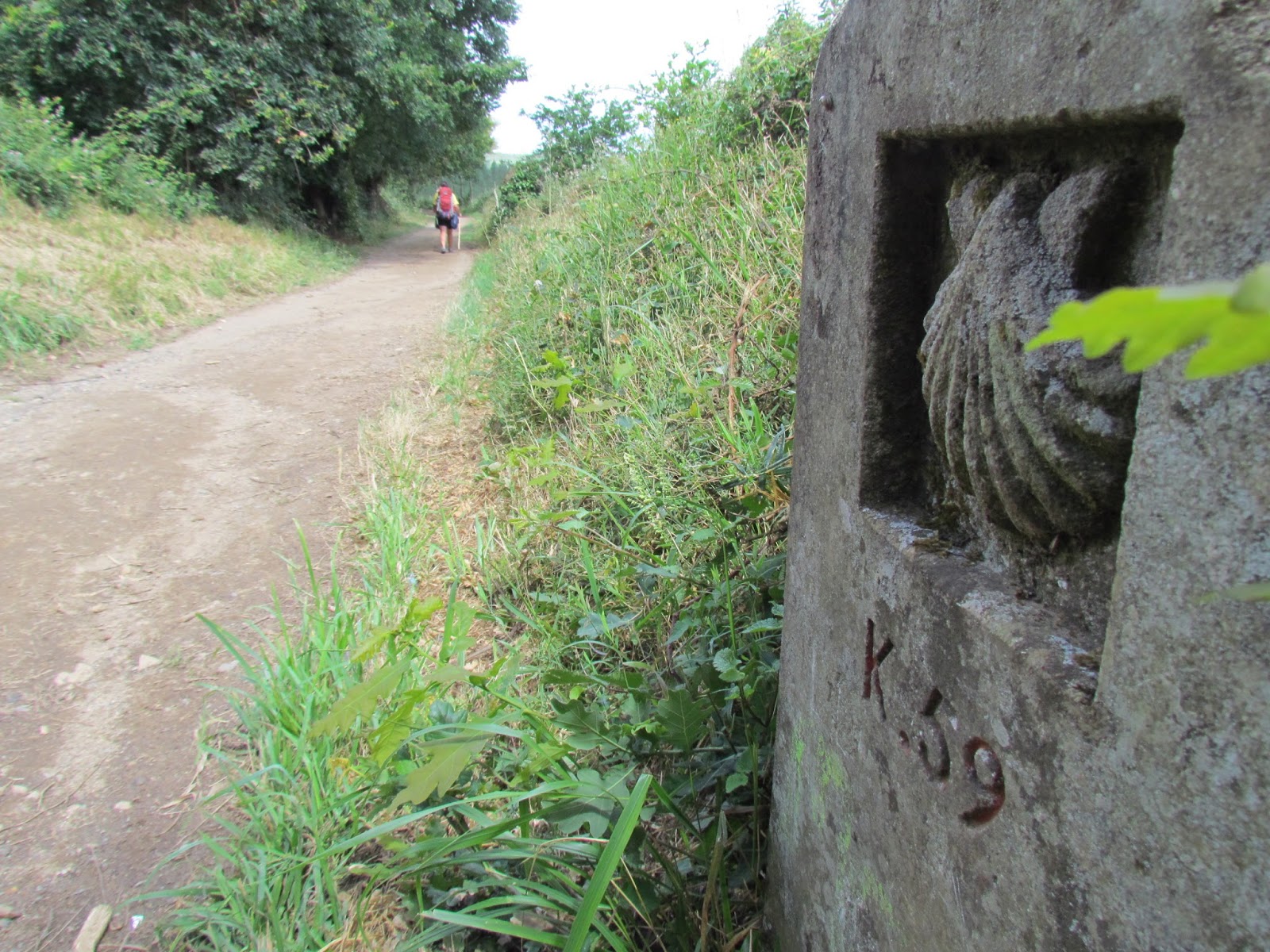
In the summer of 2014, I walked the Camino de Santiago.  It was 500 miles across northern Spain and I carried all my possessions on my back for just over a month.  While it was a beautiful experience, I was sometimes frustrated to always be packing up my things and moving to some place new.  I didn’t have a home and I found myself wanting to spend two nights in the same place.  Over half way through the walk, it happened when we stayed at a Benedictine pilgrim house.  What a joy it was to leave our packs in our room and roam the town, knowing we would be sleeping in the same place that night and didn’t have to carry our packs that day.

Homelessness is not like that experience.  It often doesn’t include a bed or a mat to sleep on.  You aren’t stopping for a mid-morning cafe con leche or a sit-down lunch on a leisurely day.  There is no communal cooking with lots of wine flowing into the evening.  There isn’t the knowledge that if something goes wrong, you can use your VISA or ATM card to pull you through the dilemma.

In a minuscule way, I understood the struggle of not having a place of one’s own.  I felt a desire to have roots, to remain in one place with a familiar system and order.  I understood not having the luxury of a car and using only my feet to get everywhere, even after a long day of walking.

But, in all reality, I have no idea what it would mean to be homeless.

Last week, I went to help decorate a homeless shelter.  I had little concerns and fears as I walked in, but mostly I found myself frustrated for feeling so awkward.  It is far easier to write a check and donate to an organization rather than to encounter the homeless in the flesh.

“To love God and neighbor is not something abstract, but profoundly concrete: it means seeing in every person and face of the Lord to be served, to serve him concretely. And you are, dear brothers and sisters, in the face of Jesus.”     -Pope Francis

I was embarrassed to feel out of sorts and out of place.  Instead, I wanted to just interact with the guests as though they were ordinary people.  Mentally, I couldn’t help but note the disparity between our lives.  My inconvenience of a cool basement bedroom was utterly ridiculous in the face of the cold outdoors as a bedroom.

And I did a laughably small thing: I decorated the kitchen and helped bend the branches of a fake Christmas tree.

There was a man washing dishes in the kitchen.  He noticed my arrival and would look over at me every now and then, making a little small talk as I worked.  Internally, I was kicking myself for not being able to think of any good questions to ask him.  I would comment on how many trips he made to get dirty soup bowls and he would comment on me struggling to, once again, find the end of the roll of tape.

Finally, I was stringing up the last bit of garland and he said, “You should have brought your boyfriend to help you.”  I laughed, probably blushed a bit, and said, “Well, if I had one, I would have brought him.”  He said he was surprised “a pretty girl like you” didn’t have a boyfriend.  I laughed and said, “I’m still young, though, right?”  (My one semi-consolation.)  He said I was, but that he was alone, too.

Then, he did it.  He opened a bit of his heart up to me, someone he didn’t even know.

“My wife died.  It was three years ago.  She died three days after Christmas.”

And, suddenly, this wasn’t a man doing dishes at a homeless shelter, but he was a man with real struggles and pain.  He wasn’t looking for sympathy and he didn’t elaborate with a story.  I didn’t ask him to, either.  Instead, I told him I was sorry and said it must be very difficult.  In a warm kitchen with crumbs on the counters and the heavy aroma of chili, I met a stranger concretely in a brief sharing of the heart.

After leaving the kitchen, I went to the entry way to help finish setting up the trees.  Guests from the shelter kept walking by and I wanted to be certain to greet them with a smile, if I could.  Because it would have been too easy to just ignore their presence.  Excuse me, please.  Carry along.  We are setting up these trees for you, but we don’t want to actually interact with you.  So I would smile as they walked past or move out of the way if they were trying to pass by.  In many ways, it was easier to focus on the task at hand (setting up Christmas decorations) than to remember the underlying reason for all of it (the homeless who would be staying there).  I tried to force myself to remember this central reason, rather than obsess over the exact angle of the ribbon on the tree.

Once again, I felt a smallness.  Yet, once again, I felt a desire to do more.  What if I did more than set up a tree?  What if I volunteered far more of my time?  Not to the idealized homeless person in my mind, but to the actual homeless people that I would encounter.  In the midst of their hardship, I want to bestow upon them all kinds of virtues that aren’t necessarily there.  I expect gratitude and humility and kindness.  But why would I expect it more from them than from my students or co-workers?  Rather than set them on a pedestal, I want to concretely encounter them.  In the midst of their brokenness, their chaos, their efforts, and their failures.  Because that is humanity.  They have stories and lives and I choose not to romanticize them because they are real people.

I don’t know how these desires will be lived out, but I want to pursue them.  It is not enough to feel sorry for the idea or concept of homelessness.  Each of these people staying at the shelter and each person I encounter daily, has the face of Christ, if I have the grace to see it.  We are all on the quest for a true home, walking toward the Heavenly kingdom much like I made the trek to Santiago de Compostela: day by day, carrying only what is necessary, walking even if we don’t want to, and journeying to a place that will justify all our suffering and wipe away every tear.

What other homeless pilgrim will you meet on the way today?  Whose face will they have?

Tireless

The Lord isn’t tired of you.

If He hasn’t tired of me, then I know He isn’t tired of you.

Don’t we sometimes assume He is, though?

I apply human attributes to God and figure He must want to respond to me as I want to respond: grabbing me by the shoulders, slightly shaking me, and telling me to snap out of it.  Or something along those lines, sometimes more or less intense.

He is unfailingly patient.  God is able to endure our imperfections better than we are.  Where we can be short-tempered and over hasty, God is slow and long-suffering.  I think I am a fairly patient person, but at times I am the most impatient with myself.

He waits for us.

It is a struggle to extend that same act of kindness to myself.  To wait for my heart to catch up, to wait for my mind to grasp the concept, to wait for my body to gain the strength.  We want it right now and we think we should be able to conquer all now.  Sometimes, though, we need to accept that we are in a specific place.  Instead of being angry with my heart, I can acknowledge where it is struggling and be patient with it.  Instead of frustration over what my body can’t now accomplish, I can see the difficulties and move forward gradually.

The heart is probably the most difficult for me to wait for.  I want it to quickly recover or never get wounded.  The Lord, in His inscrutable wisdom, gave me a heart that is very tender.  And life can be pretty rough on such a heart.  Having a tender heart isn’t a coveted aspect in our culture.  Instead, we are taught to not care what others think, to do our own thing, and to take whatever doesn’t kill you and let it make you stronger.  But sometimes it just hurts.  So I find myself fighting against the desire to shield my heart behind indifference or coldness.  Or I use my best-learned defense: sarcasm.

I will fight, nearly to the death, in defense of sarcasm being a valid sense of humor.  When used in the right situations, I think it is fantastic.  However, I will admit that I use it to shield my little heart all too often.  If my heart can’t handle the pain of honesty or sincerity, it will hide behind quick remarks and witty comebacks.  In the moment, it is a fight or flight instinct and I guess I choose both: fly away with the tender heart and fight with words of steel.  I know that it will not help my heart, but sometimes the conditioning takes over with little regard to what I should do.

The goal is to tell myself, “Trish, today you will not hide your hurt behind sarcasm.  You will be sincere and meaningful in your words.  And you, impatient one, will be patient with your own heart.  It is a gift.”  Perhaps, someday, I will listen to myself.

I need to be reminded that God sees me in a way that is different than I would initially imagine.  In Isaiah 43: 4-5a, God speaks to Israel of a love that is unsurpassed by any other.  It can be helpful to remember that this covenantal love also extends to us today.

Because you are precious in my sight, and honored, and I love you, I give people in return for you, nations in exchange for your life.  Do not fear, for I am with you…

He is present, long-suffering, patient, and waiting for you.  Not for you to drag your feet, but for you to let all the many conflicted parts of yourself come together.  To wait for your heart to catch up to where the situation requires it be and to not be frustrated that it isn’t there yet.  To remind the head that there is more to life than what makes complete sense.  God is working in the midst of your broken chaos right now and He isn’t letting it stop Him from doing what needs to be done.

Though He is moving forward in your life, He isn’t leaving any part of you behind.  Because despite all of it (the situations, the emotions, the problems, the pride, etc.), He isn’t tired of you.

A Lesson from Snow

I like to think of driving in the winter as a lesson in teamwork.  Usually, I don’t like to drive in the winter, but sometimes I get surprisingly excited after a new snowfall or some slick ice.  I go out to my car and think, “Alright, Humanity!!!  You can do it!  If you don’t get impatient when I turn slowly around a corner, I won’t get mad when you slide through a red light because you are afraid to hit your brakes.  We will all work together and it will be OK!”

Yesterday, I was able to live that experience out again.  I was slipping and sliding up to a stoplight, praying that Jesus would stop my car before it went into the back of the vehicle ahead of me.  Then I looked in my rear view mirror to see a car careening towards mine.  It isn’t going to stop in time.  I just knew it.  Sure enough, almost in a dream-like way, she slid into the back of my car.

Put car into park, activate flashers, and open car door to confront the person who played bumper cars.  She was apologetic and young while I was surprised to see no damage.  I got her information and carried on my way to school.  No yelling (not really my style, anyway) and no attempts to make her feel bad.  Besides, I had so very nearly done the same thing to the car in front of me.

The rest of the day, I was willing humanity to be patient with one another.  Yes, it is going to take longer to get anywhere.  But, if we work together, we can all get home in one piece.  At times it leads me to inordinate pride in the human race: no honking horns, no dramatic zooming away, and no freaking out over slight delays.

You did it, Humanity!!!!  You treated other humans like they mattered!  

Like I said, sometimes new snow makes me a bit excited.  It gives us the chance to show a little patience and see the needs of others as important.  And we could always use a little bit more of that.

A Shift of Perspective

I just wanted this day to be over.  It felt unnecessarily long and drawn out.  In fact, this whole week had felt tiring.

On Tuesday, near the end of my last class, I decided to start thinking that it was actually Friday.  With growing excitement, I started to wrap the class up, thinking, How could I have forgotten all day that it was Friday?  When I told them that we would discuss their assignment on Monday, I suddenly realized (spurred on in part by some confused faces) that it was really Tuesday.  Each day since then has been more of the same desire to get to Saturday.

As I followed my class to the computer lab, I internally rolled my eyes.  Such a rough day.

Then I mentally interrogated my self-pitying soul:

Why is this such a rough day?
Because the computers didn’t work like they were supposed to and now we have to go to a lab.
Did you get enough to eat?
Yeah…
Did you fear for your life?
No…
Is it really that big of a deal?
No…

I’m not saying I was chipper and happy-go-lucky the rest of the day, but it helped slap me out of my first-world troubles.  The computers didn’t cooperate: get over this little difficulty, get over yourself, and be thankful for what you do have.  It isn’t worth getting stressed out over and it shouldn’t ruin the rest of your day, but rather it was a little mishap.

The change in perspective was very needed.  Let little things stay little.

Be Perfect as Your Heavenly Father is Perfect

Confession: I have a problem with perfectionism.

And I think I am only just now realizing the depths of this noxious weed in my soul.  Perfectionism is easy to portray well and make it seem like a good thing, rather than the lie that it is.  It can actually be stifling.  While I know this theoretically, it is entirely another thing to believe it with my actions.

One memory I have of perfectionism having the upper hand is when my dad was teaching me how to drive.  I was pretty resistant.  Every teenager seems to yearn for the day when they can take the keys and drive to places on their own.  I wanted to drive, but I didn’t want to learn to drive on the manual transmission car that my dad had for me.  With an automatic car, you just drive.  You focus on the road, on the signs, on the other cars, but the rest is condensed to brake and gas pedals.  Manuals will stall and quit at the most inconvenient times: like a small town stop sign after the high school graduation and everyone is behind you on their way to open houses.  If I had any hopes that my dad would give in, I would have tried to avoid learning how to drive that car and wait for him to get me an automatic.  However, I understood the stubbornness of the person with whom I was dealing; he was adamant: learn to drive this car or ride the bus.

The first time he took me out to drive, I probably sat in the car for twenty minutes before we even moved.  My younger sister was sprawled out on the deck, eagerly awaiting my driving experience.  After a few minutes, she went into the house and told my mom, “I would have been long gone by now.”  My mom said that was what she feared.

My dad had demonstrated driving the car, so I could watch him shift.  I was cautious and made him go over what I was supposed to do several times.  Then I repeated it back to him because I wanted to get it right the first time.  I didn’t want the car to start moving and then die, only to have to start the process all over again.  Eventually, I put the clutch to the floor, eased off the brake and onto the gas pedal, and we moved forward slowly.  And then it died.  The process happened over and over again.  I drove up the driveway and out onto the gravel road, running the car in first gear when second would have been kinder to it.

One time while I was still in the early learning stages, my dad asked if I wanted to drive to our property on the other side of the creek.  I said no because I didn’t want to practice.  So he asked my younger sister if she wanted to and, of course, she said yes.

I was furious.  I wanted to get out of the car and walk home.  She was seemingly unafraid to try and fail.  At this point, I found a sudden desire to drive, but it was too late.  I was riding with my 11-year-old sister at the wheel.  To my young melodramatic heart, it was an injustice.  My desire to do it perfectly or not at all was shot to pieces by my sister volunteering to take on the challenge.

I have never actually thought that I could be perfect or that I was perfect.  My flaws (or some of them) are well-known to me.  Perfectionism doesn’t mean I have a room that is always tidy, a desk that is clean and orderly, or that I’m always pulled together.  I have simply tried to avoid making mistakes.  Some of this is a good desire.  We are to strive for excellence.  Other times, it makes the mistakes feel so much more burdensome or weighty then they actually are.  It can lead to feeling hemmed in since any option could result in failure.

Nobody likes to fail, I get it.  But some do it better than others.  I read an article about Stephen Colbert and he had an interesting “motto,” if you will: Learn to love the bomb.  In the midst of failing, learn to love it and not be afraid of it.

To me, that is a crazy notion, one that I want to let him run with into a nice little box of, “Well, he is a comedian, of course that would be helpful in his profession.”  But, in truth, I cannot stand by that.  My mental picture of his motto is like skydiving…without a parachute.  Or one that you don’t know if it will open.  And you are loving the drop, the racing heart, the pit in your stomach that tells you: This. Is. Crazy.

I prefer to be in control.  I’ve never thought of myself as needing to be charge, because most of the time I don’t want to lead anything, ever.  Yet I do love my ability to say no or to not do what others are doing.  Sometimes, I am stubborn simply to be stubborn.  Perhaps it is so that I won’t be seen as just “nice” or a push-over.  I learned the “don’t give in to peer pressure” thing really well.  Few can make me do something I don’t want to do.  I’ll maybe even do the opposite of what you want me to do.  For some reason, I like it to be known that if I’m complying with requests, it is because it is my choice, since I could very well do the opposite.

So what does this have to do with perfectionism?  I spend much of my life refusing to put myself in positions where I might fail.  Activities, relationships, conversations, new experiences: all things that could potentially not end perfectly or require failure in the process of learning are less than palatable to me.  Yes, I know what you are thinking, “But you can’t succeed if you don’t risk something.”  I chalk it all up to logic: why make mistakes when you can avoid them?

Which is all fine until you find yourself in a position that requires a risk.  If you don’t risk, you will definitely lose and maybe God doesn’t want you to just pray it out.  Maybe He wants an action.  Maybe the lesson is in trusting yourself less and trusting more that He can and will pick you up when you fall.  Maybe you are supposed to fail.  Yet the very idea of the risk makes my heart threaten self-eviction.  I want to think of every possible outcome before I take that first step, so I can be prepared if things come crashing down.

Or the risk might turn out to be a successful leap.  It might be worth it, there might be joy, there might be happiness and peace.  What if the risk turned out to produce the best type of reward?

This quote comes to mind:

My melancholic pessimism sneaks up again and whispers, “But, seriously, what if you fall?

As I’ve been writing this, I’ve been trying to think of a way out of a perfectionism that can feel a bit stifling at times.  How do you move beyond it?

“Be OK with failing.”  Sure–but how?
“Put yourself out there.”  Out where?  And when?

This is where the head and the heart are in utter conflict again.

This imperfect soul has no neat conclusion to this dilemma.  I have no solution that can be quickly applied, no wisdom to pull me out of the mire, and no lesson to contrive from these words.

In an attempt to combat this perfectionism, I’m going to end this post imperfectly.

I’m going to be striving for Heaven, but I’m going to fall on my face many, many times.  But Jesus knows that and so I’m trying to be okay with that.

***And, in unexpected irony, of all my blog posts, this post on perfectionism was the most difficult to get to the point where I wanted to publish it.

Because I wanted to at least phrase it perfectly…

In His Hands

I pictured placing my little heart in His hands.  And He held it with a tenderness that could only come from Him.

There it was: small and without adornment.

It was devoid of all excuses or justifications.  Yet it was completely known, in a way that the potter knows every intricacy of the work of his hands.  Even with knowing all that was stored away within it, the little heart was completely loved.

That was true rest.

To be loved, but to know that it is without false impressions or because you have successfully hidden your flaws.  As a member of a family, I have experienced this love to a degree.  But to have your heart laid bare with all of the not-quaint details exposed is another matter.

When the world seems to be too much and I have difficulty taking it all in, I find comfort resting in His hands.  There I am known and there I am loved and those facts still astound me.  To be known to the core and loved to the core is what we all desire.  To know that it is without merit and yet entirely good to be received in such a way is another gift.  Nothing I did caused me to be loved like this, but I am.

For a little heart doing so much seeking, it is good to simply be found.

Comparatively Speaking

When I was younger, people often compared me to my older sisters.

For the most part, I liked it.  My older sisters were involved in many activities at our small school and they were both really smart.  To me, several years younger than them, they were the type of person I wanted to be when I got older.  I enjoyed being known as the younger sister.

Following in their footsteps wasn’t something I minded, even to the point of telling people that part of the reason I chose the college I did was because my sisters went there.  When I went to college, I always hoped that I would run into someone who had known either one of my sisters.  Too much time had passed, but anytime I met an alumni who attended college the same time my sisters did, I would ask if they knew them.  In fact, it was strange to be in a place where my last name meant nothing and nobody had any expectations for me based on prior knowledge of my family.

The first feelings I had of not wanting to be compared to my sisters were when they entered the convent.  People assumed my following in their footsteps would lead me to the door of a convent.  For one of the first times, I wanted my path to be markedly different than my sisters.

“When will you enter the convent?” was a question I heard more times than I can count.  The fact that I liked Mass, Jesus, and my faith in general (combined with an introverted temperament) made people assume that I was going to become a sister, too.

My younger sister responded differently to people’s expectations.  She oftentimes felt annoyed by the comparison that inevitably happened in a small school.  I remember her battle cry in high school being something along the lines of, “I am my own person!  I am different from my sisters!”  And in many ways, I understand why she felt that way.  Her talents were different from mine and the comparisons she faced seemed to say she didn’t measure up.  People assumed she chose her college because her sisters had gone there but she was quick to declare that was not true.  She picked her college, she said, because she wanted to go there, not because of anyone else who went there.  In fact, it almost made her choose to go somewhere else.

I try to remember these differing views on comparison when I am teaching.  Sometimes the siblings are so much like each other, I can see the older sibling in the younger sibling’s expressions or phrases.  Other times, I have to keep myself from saying, “You are nothing like your sibling”–whether that is for better or worse.

For competitive souls like myself, comparison can become a dangerous road to travel.  I didn’t mind being compared to my sisters when I was younger, and in many ways, I still don’t.  Yet I can push the “competition” to the limits–how does one compete with a cloistered nun?

Someone even told me that one time.  I mentioned that my two older sisters were religious sisters and their comment was something along the lines of, “How can you top that?”  My response, filled with some subtle, yet biting sarcasm, was, “I can’t.”  And internally, But thanks for reminding me.

I believe they meant the comment in jest, but I couldn’t help but walk away thinking, Why would you even tell someone that?  If I’m not planning to be a religious sister, then clearly nothing else I can do could measure up.  So many people who enter religious life feel the pressure to not enter.  My high school and college years were filled with the opposite pressure to enter.  At times I even began to feel badly about wanting to get married and have kids.

This is not how I enjoy being compared.  Who wants to have the battle over who is winning most at life, whether in a religious or secular context?  Because if I have expectations placed on me because my sisters are religious sisters, I am sure to disappoint.  But, as my younger sister recently pointed out, we love to be associated with them.  I will bring them up often and talk about their lives, but I don’t want to live life trying to compete with them.  They aren’t competing with me.

I want to run a different kind of race.  “I have fought the good fight, I have finished the race, I have kept the faith.” (2 Timothy 4: 7)  One where we are running together toward the same goal.  I can look at the people around me and see their gifts and how God is using those to help the whole Church.  People like to be seen on their own merits, not on what others expect of them based on siblings or parents.

However, sometimes the person it is hardest to get to stop with the comparison game is your own self.