He is Human

He is Human

I gave him a detention for typing something inappropriate into his graphing calculator.  Understandably, that made him upset.  As class progressed, I had them work in partners and he was not interested in doing anything I asked.

It is your fault you got in trouble, I thought to myself, as I watched him sulk.

Each of the partners was responsible for give part of the response to the rest of the class.  His partner went first and then I asked for him to give the rest of the answer.  It was brief and visibly filled with bitterness.  It was enough to qualify as disrespectful and I narrowed my eyes slightly as I deliberated about what to do. Continue reading “He is Human”

I’m Glad I Didn’t Write Her Off

I’m Glad I Didn’t Write Her Off

It was day two of teaching.  In the midst of a simple roll call, I said her name and she rolled her eyes.

A flash of anger shot through me.

Who does she think she is?  Can she hate me already?

I moved on with class and I reminded myself to love her.  Because, really, that is all I could do.  While I could have made a big deal about it, I have long since learned to choose my battles.  And while I will never say that I always pick the right battles, I have learned to not make all of them battles. Continue reading “I’m Glad I Didn’t Write Her Off”

More Than Rules

More Than Rules

“Being Christian is not the result of an ethical choice or a lofty idea, but the encounter with an event, a person, which gives life a new horizon and a decisive direction.”  (Pope Benedict XVI, Deus Caritas Est)

Sometimes I struggle to make relevant connections for my students.  Other times, the perfect words come to mind and I am pleased that, despite myself, I was able to connect it to their lives.

I was reviewing the above quote from Pope Benedict XVI’s encyclical Deus Caritas Est.  Ethics, I told them, are a part of Christian living but they are not the reason we are Christian.  Intellectual Theology, while beautiful and true, is also not the primary focus of Christianity.  Instead, we are Christian because we have encountered the Living God.  I told them that if Christianity was merely a system of rules, then I could not do what I do.  I would never be able to remain passionate, day in and day out, if I simply presented an intricate system of rules.  It would not bring such joy to my life to belong to an institution situated around rules.

In a similar way, I told them that our relationship with God should in some ways mirror our relationships with friends.

“What are some of the ‘unwritten rules’ of friendship?” I asked them.
“Listen to the other person.”
“Don’t tell their secrets.”
“Be nice to them.” Continue reading “More Than Rules”

When God Wills the Ordinary

When God Wills the Ordinary

It is incredibly easy for me to think that everyone else has a far better job than I do.  Over the past few years, I seem to have perfected the skill of viewing the neat ways that everyone else can live out their job as an apostolate for Jesus.  Yet I seem to miss the ways in which I can do the same thing…in a Catholic school…teaching Theology.

Parked outside the Cathedral the other day, I thought of how neat it would be to show up to such a place for work.  Wouldn’t it be neat to work for the Diocese?  Or I’ll go to a restaurant and think about how wonderful it could be to subtly evangelize while serving people their food.  Just a few weeks ago I had my students make lists of different secular jobs and then brainstorm ways to live the Gospel in the midst of such work.  And I can give you a decent list for most jobs that are not immoral.  I miss, however, the ability to live it out in the midst of a job that is so clearly evangelistic.

Because, so often, I want something else.  Something easy.  Something challenging.  Just something different than the lot I have been given. Continue reading “When God Wills the Ordinary”

To Affirm is to be Vulnerable

To Affirm is to be Vulnerable

I dislike feeling vulnerable.  This doesn’t mean that I never share my thoughts or feelings with others because I definitely do.  Rather, I need it to be in a safe place.  My students, generally speaking, are not that safe place.  Some classes have been exceptionally open and I’ve found it easy to share my heart with them, but that is not the norm.

As far as I can remember, those classes have always been my sophomore classes.  Sometimes I force myself to be vulnerable with them, though.  It is difficult because: they are teenagers, they don’t understand the significance, and I feel like it places me in the position to get hurt.  And I, human that I am, don’t like to be hurt. Continue reading “To Affirm is to be Vulnerable”

Praying for Them

Praying for Them

Maybe the reason God arranged it so that I would be “randomly” selected to chaperone the dance was because He knew my response.  If my internal dialogue could have been heard by my fellow chaperones, I’m certain I would have been given all kinds of weird looks.  As I was being filled in on the less-than-admirable extra-curricular activities of the students, I was praying for them.  I was looking out at the dance floor, vaguely picking up on the words of music I don’t listen to, and praying that the Blood of Jesus would cover them.

I watched them.  And I wished I could force-feed them some of my experiences, some of my certain knowledge.  They are fervently racing after fulfillment, happiness, and satisfaction.  Yet they are running in the wrong directions.  I almost felt like I was in a burning building with them as they ran around, looking for the exit.  Meanwhile, I am standing near the exit, holding an emergency manual, but they are convinced that there must be some other way.  It made my heart ache for them in a new way.

Taking in the scene make me grateful, though.  In a fairly affluent school, I could see a definite materialism within them.  Success seems to be clearly defined as making money or making a name for yourself.  And I was grateful that I was not raised with such expectations.  I’ve wanted to be a teacher since third grade and my parents supported me: proof that making money wasn’t a part of their philosophy of success.  I don’t blame the students for seeking money and success if they are what are taught as the most important things in life.  But I know that isn’t where true fulfillment is found.  I know I have great freedom because I don’t place tons of value in money, expensive things, or positions of authority and power.

Despite the times they make me want to pull my hair out or roll my eyes or end the day early, I have an affection for my students that is abiding.  A student who is struggling stopped by my classroom and although we aren’t particularly close, my heart was moved by them.  I smiled at the student and briefly reviewed the recent class work.  But when the student had walked out of my room, I realized the great look of vulnerability in their eyes.  Even though I was talking about videos and projects, I wanted to convey a sincerity and kindness toward them.  The only other thing I wanted to say but didn’t think of until later was simply, “It is good to see you.”  I’m glad you exist.

Because I am.  Frustrations and disappointments aside, I am glad my students exist.  I am glad I have them in my room and that I get to spend time with them.  And, because they are what they are and I am what I am, I will continue to pray for them, even if my prayers would cause people to look at me askance if they heard them.

Precious Blood of Jesus, pour over my students.  Sanctify, purify, and save them.

George Bailey

I never really associated myself with George Bailey.  “It’s a Wonderful Life” is a classic movie, but I’ve always viewed it as a movie, not something that seemed to speak into my own life.  A couple days ago I re-watched it.  Apparently, the wanderlust desire to see the world and do incredible things is more an aspect of the human condition rather than my generation.  So I watched the classic film, shed some tears, and realized that the longing George Bailey had was fiercely beating within my own heart.

I’m shakin’ the dust of this crummy little town off my feet and I’m gonna see the world. Italy, Greece, the Parthenon, the Colosseum. Then, I’m comin’ back here to go to college and see what they know. And then I’m gonna build things. I’m gonna build airfields, I’m gonna build skyscrapers a hundred stories high, I’m gonna build bridges a mile long…

As high school neared its end, I was never one of the students who couldn’t wait to get out of the small town.  It just happened to be that I chose a school hundreds of miles away from home and was only able to come back for Christmas and summer breaks.  When college was finished, I moved back home because moving far away for a job seemed strange to me.  Now I’m in my fourth year of teaching high school and I live about thirty minutes from where I spent my childhood.

Young adult life is filled with many different experiences, but I keep coming back to a desire to pursue greatness, a desire that filled George Bailey his entire life.  He wanted to see the world, to travel, to build structures that will last years, and to pursue adventure.  Yet he ends up spending his life in Bedford Falls, a seemingly idyllic town that feels like a prison if one doesn’t want to spend the entirety of one’s life there.

Any place can feel like a prison, though, if one is constantly desiring to be elsewhere.  The greatness found in the little and the simple can be overlooked so quickly.  St. John Vianney would spend hour after hour in the confessional.  Looking at his life from my vantage point, I can see how much fruit his life of simple faithfulness bore.  Yet in that moment of waking up early to say Mass and then spend the whole day in the confessional, he might not have felt this aura of greatness surrounding himself.  St. John Bosco rallied together the poor street children from Turin and taught them how to be men.  In the daily grind of loving them in the midst of their flaws, he might not have recognized the monumental work he was doing.

And I teach.  It isn’t much.  My younger sister was watching “Freedom Writers” with me and she said each time she watched the movie, she thought of me as the teacher.  I am laughably not like Mrs. Gruwell.  I’m not taking on extra jobs to buy supplies for my students or going to bat for them against a racist administration or devoting all my time to helping them graduate from high school.  There are many teachers who spend hours with their students after school as they guide them through problems (academic or otherwise) and leave this deep impression on their very beings as an adult who cared and sacrificed for them.  I am not that teacher.

During finals, one of my students walked into my classroom with a card.  She told me she was giving me this card because she was thankful that I would go over the study guides with her before tests.  All I did was spend fifteen to twenty minutes after school with her the day before the test to review her answers and go over any questions she had.  But the gesture she made was worth ten cards.  Hidden within that quiet exchange, one done without any fanfare or balloons, was the greatness I am seeking.

Greatness is found in the simple, in the little.  I’ve written about this before.  I write about it again not to convince you, but to convince myself.  As a teacher, affirmations are few and far between.  Even if administration affirms your work, you want to hear it from those you spend day after day with.  Students are unaware how powerful their words are about their teachers.  I don’t need their support or affirmation, but I love it when I receive it.  It means something is sinking in, something is being passed from my soul to theirs.  I don’t have state standardized tests to rely on as a Theology teacher.  I want to know if they know the Lord, rather than if they can ace my tests.  That is when I know that I am successful.

George Bailey wanted a blazing kind of greatness, one that tears through towns and astounds people.  What he finds instead is the greatness of enduring friendships, believing in the dreams of others, helping others pursue human dignity, and building a family that bands together.  A greatness that his father pursued in that very town.

There is greatness in simplicity.  There is simple greatness.  There is unassuming greatness.  Perhaps greatness is found not in doing wild things or going to exotic places but in doing what you do to the best of your ability.  Maybe greatness is simply living your own life well, even if you remain unaware of the impact it makes on the lives of others.

Pa Bailey: I know it’s soon to talk about it.
George Bailey: Oh, now Pop, I couldn’t. I couldn’t face being cooped up for the rest of my life in a shabby little office… Oh, I’m sorry Pop, I didn’t mean that, but this business of nickels and dimes and spending all your life trying to figure out how to save three cents on a length of pipe… I’d go crazy. I want to do something big and something important.
Pa Bailey: You know, George, I feel that in a small way we are doing something important. Satisfying a fundamental urge. It’s deep in the race for a man to want his own roof and walls and fireplace, and we’re helping him get those things in our shabby little office.
George Bailey: I know, Dad. I wish I felt… But I’ve been hoarding pennies like a miser in order to… Most of my friends have already finished college. I just feel like if I don’t get away, I’d bust.
Pa Bailey: Yes… yes… You’re right son.
George Bailey: You see what I mean, don’t you, Pop?
Pa Bailey: This town is no place for any man unless he’s willing to crawl to Potter. You’ve got talent, son. I’ve seen it. You get yourself an education. Then get out of here.
George Bailey: Pop, you want a shock? I think you’re a great guy.
Running for Them

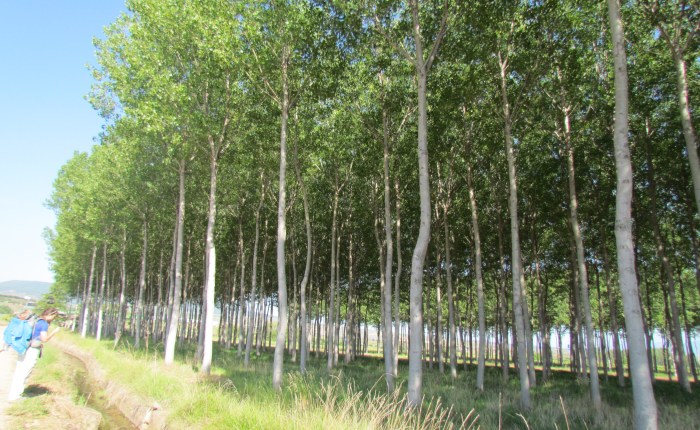
This might be premature, but I find it interesting that what has motivated me to take up running is teaching.  More specifically, my students.  “Take up running” means I’ve gone for four runs in the past week.  It could all fall apart very soon (definitely has happened before), but I think this might be here to stay for the time being.

A couple weeks ago I came to a realization: I don’t sacrifice for my students.  They come up in my prayers and I hope the best for them.  However, I don’t often find myself tangibly offering things up for them, other than allowing them to keep living after a particularly trying class period.

I’ve realized this lack of sacrifice before.  This time I was compelled to do something about it.  Running is something good for me and good for them.  I find myself thinking about them as I run and offering up my labored breaths for them.

Yet the more I run (think: slow jog), the more reasons I find to keep doing it.  I’ve run twice through my neighborhood and while I don’t like it as much, I think I might keep it up because it gives a new perspective and new prayer intentions.  I run past a home and I hear the muffled sound of a man and woman arguing.  Or I run around a bend and see two kids in front of a house, a larger pre-teen girl slapping the head of a smaller pre-teen boy.  The girl looks belligerent and the boy has his defenses up but is angry.  She glances at me and there are no more blows while I run by the house.

I find myself praying for peace as I meander the streets of my neighborhood.  This little heart inexplicably finds itself aching for situations I will never know about, fights I will never see, hurtful words I will never hear, but that are happening in these places so near to me.  I prayed for peace to flow through these houses.  For homes to be places of peace, not places where we take up arms against our flesh and blood.  For parents to show their children how to love.  For people to experience the love and peace of Christ that I have experienced.

It is not that much, and I should in all rights probably be doing far more.  But for now, I am running for my students.  For their addictions, depression, relationships, struggles, and hearts.  When I nearly convince myself to not go for a planned run, I remember them and realize I’m not doing it for me, but for them.  And it makes me run.

First Week, Fourth Year

The first week of a new school year seems to feel the longest.  It was Tuesday this week when I realized it was only Tuesday and it felt like it should be Friday.  Yet by the time I reached Friday, I was getting into the swing of things.

As a veteran teacher (hello, fourth year!), I am enjoying knowing what I am doing some of the time.  When students ask me questions, it is often to rules or practices I have already established, questions that I have already answered in previous years.  Perhaps I am most excited about the fact that each year I feel more and more comfortable in my role as teacher.  I’m not completely at ease with my students, but I feel the most myself this first week that I ever have.  I know difficulties will arise, arguments, tough questions, senioritis, and sass, but I will take it in stride.  Thankfully, the Lord has been giving me the grace over the last few years of letting my students’ attitudes dictate less and less how I respond.  I don’t take things quite so personally anymore and it is only something that time could help me achieve.

Overall, my classes are pretty good.  My sophomore classes appear fun and respectful and my seniors seem to be willing to listen.  Yet I am going to refrain from naming too many more wholesome traits because it is only the end of the first week.  Time and homework will reveal their true colors.  My mind recalls my first year of teaching as being one of the most stressful and the students who made life difficult for me still stand out in my memory.  It is hard to tell if the classes are really that different or if the difference lies mainly within myself.  I am prone to think it is a bit of both but mostly the latter.

So here is to a good school year, one richly overflowing with blessings and all that the Lord desires to do in His good time.  And if all goes awry, I can turn to the intercession of a teacher who didn’t always have the most receptive audience, sometimes aroused anger, and whom we celebrate today–St. John the Baptist.  

The Love of a Father


“To the weak I became weak, to win over the weak.  I have become all things to all, to save at least some.  All this I do for the sake of the gospel, so that I too may have a share in it.”  
1 Corinthians 9:22-23
 
Be all things to all people.  That is a tall order.  An impossible order, I suppose.  There will always be a way that you fall short or don’t live the way someone expects or wants you to live.  Yet I saw this “all things to all” being lived out in a beautiful way.
We celebrated a large Mass with all of the Catholic students of our diocese.  In the thirty minutes following Mass, I watched the eager crowds of children gradually disperse.  While they waited, I watched my parish priest as he made his rounds.  He stopped by the section where students from his previous parish were seated.  A large group of them began to wave excitedly.  To them, he was a star and they were excited to see him again after his absence.  After a few minutes of talking to students and teachers, he migrated to his current parish and greeted the children.  I kept waiting for him to walk away, but he didn’t.  One-by-one as the students left their rows to go to the bus, he greeted them.  Some wanted a high-five, others wanted a hug, and some simply waved.
It was beautiful to watch them each pass under his fatherly gaze, often accompanied by a pat on the head or shoulder and always a smile.  This is not the first time I have been amazed by his fatherly care.  During his homilies at Mass, it is easy to get that sense that he is our spiritual father.  Yet the way he lives it out does not remain simply spiritual.  It is not just in prayers and sacrifices that he seeks to be our father.  Rather, he greets the people of his parish and goes to their homes.  His heart is filled with a tender fatherly love for his children, some of them biologically older then him.
My experience with priests has led to me to harbor a deep love for them.  While I would not relate to all of them in a fatherly way, I have found many who are living out the call to encounter people where they are “for the sake of the gospel” in order to “have a share in it” also.  The priest who instructed my summers of Totus Tuus also lived out the role of a father.  We were primarily young college students and he laughed with us, taught us, and loved us.  At the end of the first summer, he thanked us for “calling out the fatherhood” in him.
For all of the things that the secular media says about the institution of the priesthood and all the ways it seeks to change it, I am inspired to continually meet young, holy priests (or not-young, holy priests) who have sacrificed having their own families so as to welcome an entire parish as a family.  Regardless of your upbringing and family background, in the beauty of the Catholic Church, everyone has a father who reveals to us, in part, the person of God the Father.