In The Heart of Our Darkness

In The Heart of Our Darkness

My heart is filled with so much longing.

Is it the season of Advent which fills it with yearning and anticipation? Or is it the state of my being at this time? Or is it simply what it means to be human?

Regardless of the cause, I am left in the agony of waiting during these shortening winter days. In some ways, anticipation is delightful, inviting a sense of looking forward to something and a source of hope for the future. Yet in other ways it can be draining, one’s being filled with a fervent desire for a fulfillment which is not yet here and the remembrance of that lack is persistent. While we cannot change that we wait, we can change how we wait. In recent days, two things have come into my mind and heart which have invited me to consider how I’m waiting even if they don’t completely change my experience of it.

The first was a moment in prayer a few weeks ago. It can be easy for me to feel that while God has a plan for me, He has perhaps overlooked moving forward with the next step. Yet I know that God wastes nothing, forgets nothing, overlooks nothing, and is in no way negligent with any aspect of any person. So what came into my prayer was the image of my whole heart, my whole being, every drop of my present life and circumstances being poured out into His hands. Like a bucket of water, it flowed from me and was captured tenderly, completely in His cradled hands. As individual drops moved toward the edges, seemingly prepared to fall carelessly to the ground, Our Lord managed to keep them all within the crevice of His hands.

Nothing was lost.

No fleeting emotion was unworthy of His attention, no aching wound escaped His notice or care, no mundane moment of my life was devoid of His presence and acknowledgement. I’ve come back to this image many times. My whole life, the complexities of my heart, the things I love and hate are all held by Jesus. Nothing escapes His notice or loving gaze.

The second is the idea of not letting my heart be troubled. It has come up in various ways and in different devotionals I’m listening to or reading. What has caught my attention most recently is the idea of letting my heart be troubled. So perhaps my life is filled with waiting and uncertainties. At least I can strive to not be troubled by the lack of clarity, to receive what is offered from the Lord and trust that He will provide. The storm can rage around us, but we can seek to not let the storm become interior. Not being troubled becomes an incredibly active thing rather than the passive thing it might sometimes seem to be.

Continue reading “In The Heart of Our Darkness”


You Can Waste It

You Can Waste It

Not too long ago, I was helping with a retreat and someone at the table was commenting about experiencing a cold shower that morning. It wasn’t presented as a major concern, but it was definitely something not desired by the individual. Another person at the table mentioned that he could offer up the cold shower. His reply was, “I don’t want to.” And I, quick with a witty and brisk response, jabbed, “You don’t have to offer it up. You can waste it.”

My own words have kept, for lack of a better word, haunting me over the weeks since that moment. Alongside it is the recurring question, Am I wasting it? Am I wasting my present suffering?

It is incredibly easy to look at someone else’s life and to see the moments when they should choose virtue. While it might take some learning and study, it is simple to offer words of wisdom, guidance for how one ought to live. Yet it is remarkably difficult to choose to accept one’s own wisdom or to live in the way one knows one should. The words which easily rolled out of my mouth have continued to stare back at me, probing me and provoking me, asking if they bear any resemblance to my own life.

I don’t want to waste my suffering.

Yet it seems that to offer up my suffering means I need to really be aware of it and consider it more deeply. If I’m going to offer it to the Lord, I need to recognize it. This, however, it not what I want to spend my time doing. Ignoring the present pain is a bit more comfortable. Instead of staring my longings and unfulfilled desires in the face, I want to avoid them and distract myself with something else. I think I tend to waste my suffering because I don’t want to keep acknowledging it and relating it to the Lord.

Underlying this avoidance of facing my suffering is perhaps the fear that if I keep looking at it, really seeing the tender point of pain and longing, then I might be prone to bitterness. It is already far too easy for my heart to grow bitter, with the Lord or anyone else. I think there is a worry woven into my heart that if I keep seeing this suffering and keep offering it back to the Lord that I will instead just tire of the process and get angry. If I avoid it, the slow-burn of annoyance will maybe just stay in the background. If I continually confront it, who knows what it will become?

Continue reading “You Can Waste It”

Tears Are Good For The Heart

Tears Are Good For The Heart

One of the gifts of having a spiritual director is experiencing in a new way the love of the Father.  My spiritual director hears about the good, the bad, and the ugly–and, believe me, there’s plenty of each in my life.  Yet what amazes me is his gaze, how it never wavers, how it doesn’t narrow as I describe melt-downs or frustrations.

I’m a woman (obviously) and yet one of the things that has taken years for me to understand is that it’s alright to cry.  The fairer sex is usually portrayed as emotional and weepy.  Perhaps it is for that very reason that I never wanted to be that way.  My innate desire to be other than what is expected caused me to desire toughness and logic.  Despite being logical and (fairly) tough, I still have emotions to deal with and my spiritual director has told me over and over that tears are good.

Yet even after hearing tears are good dozens of times, it is hard to believe it in the moment that the tears want to come.  I’ve had several difficult conversations in recent weeks and they have been truncated by my need to either cry or yell.  Neither seemed appropriate at the time.  Neither seemed to be things from which I could tactfully recover.  So the conversations had to end because tears seemed to be the only thing that could accompany more words.

However, when I don’t cry and when I don’t say what needs to be said, I do not remain the same.  I steel myself against the tears, which can be helpful at times (like in my “early years” of teaching and students’ comments made me want to cry), but sometimes it just makes my heart like steel.

“Moreover, I will give you a new heart and put a new spirit within you; and I will remove the heart of stone from your flesh and give you a heart of flesh.”
(Ezekiel 36:26)

This must be the struggle of the Christian life: to keep our hearts ones of flesh and not of stone.  There is a false security in letting one’s heart become a piece of rock.  It makes me imagine that hurt will not come and that hopes won’t be disappointed.  If I have a heart of stone, then I will be steady and be secure.

Those assurances of security are all lies.  A heart needs to be a real heart of flesh.  Which means that it also must be capable of being wounded, bent, and broken.  And that, I am nearly convinced, is worth the joy that comes with being real. Continue reading “Tears Are Good For The Heart”

Healing, Truth, and This is Us

Healing, Truth, and This is Us

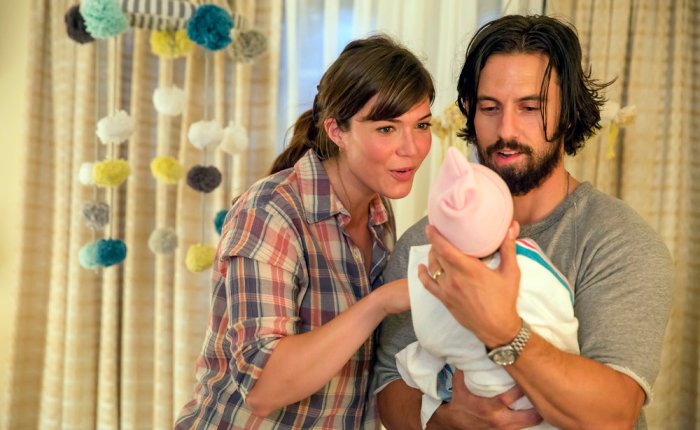
It is necessary for me to fight the urge to write about each episode of This is Us.  Although God is rarely mentioned, I discover ribbons of truth interwoven into every episode.  The authenticity and genuine growth of the characters is unlike anything I have seen in a TV show before.  I encounter truth in their interactions and truth in their experience of a beautiful, broken family.

One aspect I have particularly appreciated is the way they show that past hurts influence our current perspective of the world.  The viewers see glimpses from different points in the characters lives and we begin to understand why different experiences crush them or fill them with joy or anger them.  Through beautiful storytelling, we see, perhaps clearer than the characters do themselves, why they respond in different ways.  In a brief flash, we are shown a moment of their life from twenty years earlier and then see how they respond to something similar as adults.  They don’t respond entirely as we would expect, yet we are able to see how their choices are colored by past experience.

As the audience, we have questions about what happened in the missing years that we haven’t been shown, but I appreciate that there are few nice, easy answers for the characters.  Situations aren’t simple.  The correct move or response isn’t always obvious.  Life isn’t always clear and we don’t always grasp how the past has a hold on our present.  Yet This is Us attempts to show that facing our past, with all the hurts and wounds, seems necessary if we desire to move forward in wholeness and freedom.

Or perhaps that is what I read into it.  Either way, it seems relevant in my life.  Over the past few years, I have been going to spiritual direction and that poor priest has watched me dissolve into tears innumerable times.  Sometimes it is because of a situation that recently happened, but many times it is due to something I thought I was “over” but was not.

The past is a powerful force.  Our negative experiences are real, valid experiences and yet they should not be given the freedom to wreak havoc in our present life.  Running away from these moments doesn’t transform the past nor does burying them deep within and trying to forget them.  It is only in confronting them, in the light of the Father’s love, that we release ourselves from the chains our wounds can form.
Continue reading “Healing, Truth, and This is Us”

Seeking the Face of God, Even in Tragedy

Seeking the Face of God, Even in Tragedy

“We live in a crazy world,” I told my class near the beginning of a class period.

“One of you asked if I had heard of the truck bombing and I thought I had, but I wasn’t sure if it was from last week or this week.  Then I looked it up.  Two hundred and seventy people died and it just sounded an awful lot like several other events.  We live in a world where it is possible to be uncertain if a tragedy like this is news or something from a couple of weeks ago.”

This particular class period, we were reflecting on the Ignatian theme of finding God in all things.  It is easy to find God in bits of beauty–in the sunset, the splendor of fall foliage, or the smile of a newborn.  The difficulty is found in seeing the face of God in tragedy–the shooting in Las Vegas, the 9/11 attacks, or the truck bombing in Somalia.

Practice makes perfect, though, right?  Or, at least, better?

So our class time was spent in small groups brainstorming a few tragedies and then considering how we can see God in the midst of these situations.  I challenged them to go beyond the cliché lines they hear or the standard Theology class answers.  Instead, I wanted them to delve into these painful situations and to truly seek the face of God.

This class period had the most somber tone of all my classes and I found myself telling them that I viewed this exercise in a hopeful way.  Yes, we were talking about a loved one being diagnosed with cancer, terrorist attacks, natural disasters, and struggles in relationships, but we were doing so because we believe God can be found even there.  Perhaps, especially there.

After a group presented how they found God in a particular situation, I opened it up to the entire class.  Time after time, I asked, “Anything else?  Any other ways you can see God in that situation?”  There wasn’t a particular answer I wanted from them, I just wanted them to deeply reflect on all the possible ways God could be found in difficulty.  My hope was that if they did this while a bit removed from some situations, they will be able to try to do it in the midst of suffering.  I want them to remember that God can be found in all suffering.  And I want them to know it in a visceral, heart-wrenching way and not simply a pat answer on a Theology exam. Continue reading “Seeking the Face of God, Even in Tragedy”

When the Exciting Journey Becomes Tiring, Carry On

When the Exciting Journey Becomes Tiring, Carry On

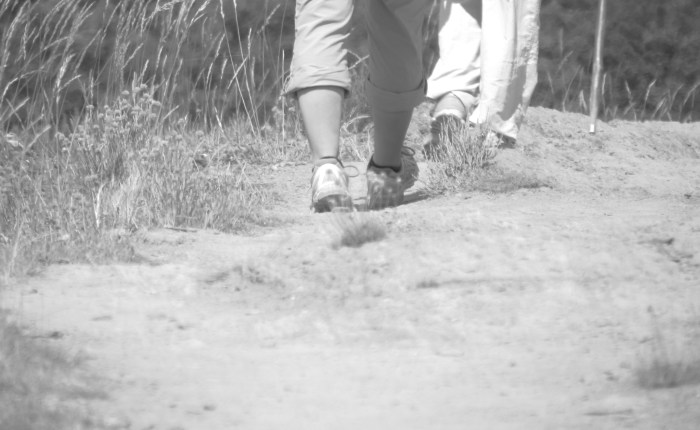
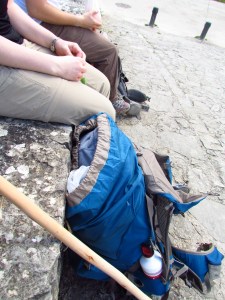
Over three years ago, I filled a hiking backpack, flew to Europe, and walked El Camino de Santiago.  The first day on the Camino, though difficult, was exhilarating.  We walked from the beautiful little town of Saint-Jean-Pied-de-Port in France, over the Pyrenees, and into Roncesvalles in Spain.  The newness of the adventure combined with spectacular views made me excited nearly every step of the way.

The next morning, we were tired and sore, but eager to continue this 500-mile trek.  So we set out again, walking for hours, taking in gorgeous scenery, and dining at little cafes or from our packed lunches.

IMG_4301

Then we did that again.  And again.

Sleep, rise, walk, eat, walk, Mass, eat, sleep.  Repeat.

IMG_4255

The tiredness soon was eclipsed by pain.  My feet ached in a way they never had before.  Blisters developed in tender places.  The beginning of the day meant pressing my feet into my shoes and then starting the delicate process of walking.  After a while, the pain dulled and seemed to fade into my subconscious.  However, if we ever paused, my feet gave a fiery reminder to sit down or keep walking.

Yet even these blisters didn’t completely dampen my spirits.  I knew they could happen and it was, in a way, part of the Camino adventure.  Each day, I offered up my pain for different intentions and this made the journey a pilgrimage instead of a hiking trip.

One day, I no longer wanted to walk.  

The intense desires to sleep in, be in the same place for more than 15 hours, or watch a movie were things I hadn’t anticipated when I started walking.  There was a definite shift from “This is fun!” to “This is a pilgrimage.”  Internally resistant to another day of plodding along, I realized that this adventure would require work and an embracing of the daily struggle.

And then I realized, this is a lot like life. Continue reading “When the Exciting Journey Becomes Tiring, Carry On”

This Is Us

This Is Us

I have a friend who once said that some things are cliché because they are true.  Phrases that seem trite and overused are sometimes the best way to say what we want to say.  They have become clichés because they express a truth like nothing else really can.

At times, I fight against what it seems a lot of people like or consider to be the best.  But sometimes, it is because it is actually good that so many people rave about specific things.  On Facebook, I’ve seen quite a few people talking about how much they loved the show “This Is Us.”  With the school year wrapped up, I decided to give it a try.

I don’t think a show has ever pulled at my heart as much as this one has.

I love how they portray the complexity of the human heart.  In this show, families are messy, imperfect, and crucial to our own identity.  As the show unfolds, perfect facades crumble to reveal that everyone is striving to get through life doing the best they can and making numerous mistakes along the way.  It is very human, which makes it simultaneously beautiful and frustrating.  Though the families can be chaotic, a theme interwoven in the show is the importance of family.  Whether they are blood relations or adopted family, the experiences we have in our homes shape how we interact with the rest of the world.

This Is Us- Season 1
THIS IS US — Pictured: “This Is Us” Horizontal Key Art — (Photo by: NBCUniversal)

In a world that seems to insist that families can be replaced with technology or friend groups, it is refreshing to see families upheld as the place where we grow, change, and become who we are.  Imperfect families, with parents fighting their own struggles and children feeling their own unique pains, are the places that shape us and show us how to love.  “This Is Us” doesn’t claim that all families are perfect or should be perfect.  I would say they are simply claiming that the role of family is irreplaceable.   Continue reading “This Is Us”