Why I Will Drink Coffee on Sundays

Why I Will Drink Coffee on Sundays

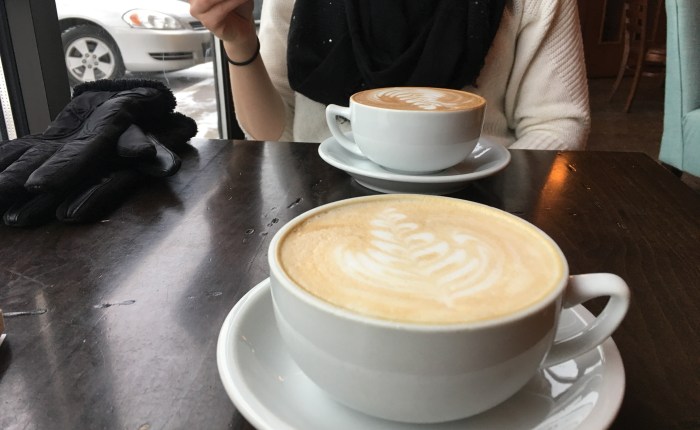
In my youth, giving something up for Lent meant you didn’t have it from Ash Wednesday until Easter Sunday.  When one of my sisters came home from college, she revealed a secret: you can have the things you gave up for Lent on Sundays.  She claimed it was a “mini-Easter.”  At the time, though, it seemed like cheating and an excuse for people who couldn’t handle giving something up for the entirety of Lent.  I didn’t need a cheat day, I reasoned, I was strong enough to last all of Lent.

Over the past few years, I have come to realize the wisdom in allowing Sunday to be a relaxed day in the midst of a penitential season.  There is a particular wisdom found when I remember my own temperament.

I like a good challenge.  Tell me I can’t do something and I will probably try to do that thing (if I care enough).  I’m stubborn and prideful to a fault.  So when I tell myself that I can go without coffee for the entirety of Lent, I start to feel a little smug.  It sounds challenging and I can already feel a sense of pride within myself.  Of course, it is a sacrifice for the Lord and yet I am quick to make it about what I can do.

However, if I acknowledge that I will go six days without coffee and then break that fast on Sunday, it is hard to get overly prideful about that.  Really?  That’s it?  Six days?  And I find myself almost convincing myself to “be strong” and go through all of Lent without it.

The purpose of Lent, though, is not to build up my ego and pat myself on the back for all of the difficult things I did.  Hopefully, Lent is a time of challenging ourselves and saying no to our own habits and desires.  Yet if I walk into Mass on Easter Sunday, bursting at the seams that I was able to forego a long list of comforts, I might miss the fact that Jesus is the one saving me. Continue reading “Why I Will Drink Coffee on Sundays”

Maranatha!

Maranatha!

“Tell me, what is it you plan to do with your one wild and precious life?”  (The Summer Day, Mary Oliver)

We are on the brink of something new and something old.  Hundreds of years have passed since the birth of Christ and yet we have never before been in this place, at this time, with these graces being offered.  What will we do with it all?

Never again will I be right where I am right now.  And part of me rejoices that this will not always be my lot because I eagerly look forward to the future.  I want my life to change and be different than it is now.  Yet in some future day, I may look back at right now and realize only then all that was good about this time.  I do not want it be that way–I want to, right now, recognize the blessings of this moment, subtle though they may seem to my slow heart.

How is Christ being born into my life this day?  How is He striving to shake up the world I’ve known for twenty-six years and say, “Behold, I am doing something new”?  The graces He offers me today are not the same graces offered yesterday or the day before.  They are always new.  Jesus doesn’t offer left-overs, but rather He offers what is most fitting for the moment.  He only ever offers the best to us.

In a special way, Christ is offering the gift of His birth this weekend.  I cannot go to Bethlehem and see Him be born, but I can experience His birth in my life.  Scripture is living and effective.  It is not a nice story from hundreds of years ago, but rather it is a living reality now.  How am I the innkeeper, refusing room to Jesus?  How am I a shepherd, kneeling before a king yet uncertain of what He is asking of me?  How am I St. Joseph, following the promptings of the Lord when He speaks to me?  How am I the wise man, leaving home in search of a king for my life?   Continue reading “Maranatha!”

A Lot Can Happen in a Year

A Lot Can Happen in a Year

A phrase I have found myself repeating over the last few months is, “A lot can happen in a year.”  It has come up when reflecting on different friends and how their lives have changed.  Sometimes it relates to jobs or relationships or babies.  And, sometimes, when I’m being a bit more pessimistic and thinking about my own life, I’ll add to the end of that phrase, “…or not change.”

Yet, mostly, I utter this phrase in hope.  Whatever state my life is in now, in a year, it could be very different.  Who knows what the Lord has planned for tomorrow?  or next week?  or next month?  His promises and blessings for this next year will definitely be different from what I imagine, but they will continue to change and transform me.

Sometimes change can be a bit scary.  And at other times, change can be prayed for and longed for.  I have numerous desires in my heart that I long for the Lord to fulfill.  But I also can be led to worry about how He will fulfill them and if I am actually ready for Him to fulfill them.  Whatever my current feelings may be, a lot can and will happen in the next year.

This week we are wrapping up one liturgical year and preparing for the advent of another.  Now is a good time to consider how the Lord has poured out His blessings upon our lives.  The past year of grace has changed and transformed us.  What are specific ways the Lord has caused us to grow?  What encounters have we had with the Lord and how have they changed us?  How have they not changed us as much as they ought?  The next year will continue to do the same in new and unexpected ways.  As we sit on the cusp of a new year, let us pray to be filled with a deeper desire to enter into salvation history in a new way.  May this next year not leave us unchanged.  Come, Lord Jesus, reign in my life.  Let a lot happen in this next year.

In one moment, I can give you more than you are able to desire.
(Jesus to St. Faustina, Diary 1169)

Aging Gracefully

Aging Gracefully

“My hair is really getting gray,” she says to me as she combs her fingers through a couple inches of waves.  “Do I look old?”

“You look your age,” I say.  And, because I know that doesn’t seem comforting enough, “You have a young face, but I like that you look your age.  We have enough people trying to act like they are younger than they are.  Culturally, we need more witnesses of how to get older.”

My mom is not one of those moms that causes people to ask us, “Are you girls sisters?”  She has not insisted on celebrating her “39th” birthday for years ad infinitum.  As a woman in her early 60s, her short hair is graying more and more with every year.  While I never really knew my mom as a young woman, I know from pictures that over the years she has changed shapes, sizes, and styles.   Continue reading “Aging Gracefully”

Receive Mercy

Receive Mercy

For we have not a high priest who is unable to sympathize with our weaknesses, but one who in every respect has been tempted as we are, yet without sinning.  Let us then with confidence draw near to the throne of grace, that we may receive mercy and find grace to help in time of need.  (Hebrew 4:15-16)

One of the first times I really heard this passage, several things about it struck me as completely perfect for my life in that moment.  And even if I don’t remember the specific state of my life, I am able to point to several parts of this passage that have a perennial blast of truth. Continue reading “Receive Mercy”

Graced

Graced

Anger is like a dead weight.

The fool thinks that anger will invade only one area of his life.  He thinks that anger can be compartmentalized from the rest of one’s feelings and actions.  That fool thinks that the heart can be subdivided, anger for some and happiness for the rest.  He is wrong.  

Or she.  

Or me.

After days of being angry, I decided to not be.  I will not, of course, downplay the workings of grace.  Grace was imperative for me to see what I was choosing to do to my own heart.  In the beautiful mystery that is God, the Holy Spirit prepared my heart to receive the graces needed to take a step away from the anger and frustration. Continue reading “Graced”

The Grace of the Present

I’m not opposed to making memories.  As an introvert, I spend a decent amount of time inside my own head, thinking over what has or will transpire.  However, the other day I was scrolling through Facebook and I was seeing pictures and albums that were presented as “making memories.”  Do we prefer to make memories rather than live in the present moment?

Is something off if we spend a large amount of our time documenting for the future moments of the past?  Could it be that the present is not actually as great as we will remember it to be once it is firmly grounded in the past?

I’m sporadically reading One Thousand Gifts and the other day I read about how Ann Voskamp, the author, was struggling to encounter God’s face in the moments where she is stressed and angry.  Seeing God’s face in the brilliance of the morning sunrise or the contented cooing of a newborn is easy.  Yet it stretches us to see God’s face in a belligerent student or a quarrel with a friend.  As I read, I thought of how just that day I had been annoyed with my students not listening to my directions.  It never even crossed my mind to stop and consider, “How are they revealing God’s face to me right now?”

The present moment is the place where we encounter God.

We are making strides when we are able to go back to a difficult situation and see how God was present in that moment.  Yet it is supremely better to be able to, in that very moment, see the face of God present.  If only I could look at my students, complaining and upset about their work, and see Christ in them.  It would take re-training my mind and my heart.

In One Thousand Gifts, Ann Voskamp reveals an experience she had with her son that changed them both.  At one point in the conversation, she tells her son that the only way to combat feelings is to have other feelings.  The central feeling we can use to combat unwelcome feelings, she presents, is gratitude.  In the midst of frustration, fatigue, anger, sadness, or annoyance, what a difference it would make if we would begin to be thankful.  Not gratitude for something of the past or the future, but gratitude for that present moment.  What would it be like if in our most trying moments we saw the face of God in His perennial presence?  Surely it would change things.

If we spend our lives trying to simply “make memories,” I fear that the best moments of life will not be what we actually experience, but always events of the past.  I run the risk of sabotaging my present for the glorification of a past that never really existed.

When I look at my semester that I spent studying abroad, I don’t initially recall the tiredness, the inevitable frustrations of group planning, or the desire for American comforts.  Yet those were very real aspects of my semester.  I cannot expect my present moment to measure up to my idealized past experiences.

God is present in the here and now.  In this moment, despite the commonness.  In my quiet study hall on a random Wednesday.  In the lukewarm coffee I’m still enjoying from this morning.  In the satisfaction of checking another item off my to-do list.

This present moment is a moment of grace.  Because grace is only offered in the present.

I desire to teach myself to accept each moment as the grace-filled, soul-transforming, heart-deepening, wound-healing, saint-making, God-given moment that it is.  This present moment is where we encounter God.  Let us not overlook His presence in the now in an effort to live in the past.

Follow my blog with Bloglovin

Perhaps my saving grace

Even though I no longer have my beautiful 7th period Scripture class from last year, I think they may be my saving grace this year.  I’m not ruling out falling in love with all of my classes this year (although, admittedly, I think I have discovered on the first day the class that will be the most difficult to love), but with my students from last year, there is no need to win their approval–I already have it.  One of them stopped by twice today, pretending he was in my class again this year.  Two stood in my doorway after school to ask about my summer and told me they planned to say “hi” everyday after school.  I’ve seen a few in the halls and many have greeted me with big smiles.

I’m human.  I enjoy being liked and accepted for who I am.  As I start the process of learning the dynamics of new classes and new students, I am enjoying the chance to still bask in the glories of my hard work from last year.  The Lord truly blessed me and is continuing to show me those blessings.  The Lord must know I will need that grace for this upcoming year.

Independence and Surrender

Our entire lives seem to be a battle between independence and surrender.  We seek independence at an early age and relish it for much of our lives.  My two year old niece enjoys the freedom of saying “no” and running where she wants, when she wants.  My nephews want to help with chores and frequently refuse help for themselves, instead wanting to demonstrate their ability to do it on their own.  As adults, we are quick to forget there is any uniqueness in driving where we want, buying what we want, and living how we want.

Age or misfortune catches up to us and we soon find ourselves losing our independence.  We can fight this inevitable fate, but it will only breed bitterness and malcontent.  Eventually, we must surrender.  In the spiritual life, we can learn this gift of surrender earlier.  Relinquishing control of our lives, realizing that we are not the ones in control or willing our own existence, can prepare us for the gradual physical surrender that must happen.

My grandparents are aging and I see the fighting that takes place within them.  I do not blame their desire to grasp their dwindling freedom or to express frustration at a body that is now turning against them.  The simple freedoms are gradually slipping away–no walking around the block, no trips to the grocery store, no single bed for them to share.  The task of getting ready for bed, something so mundane one often forgets it, is now one that requires help.  Waiting outside their bedroom as they were ushered to bed, I thought of how someday that will be me, helping my parents.  And perhaps someday it will be me, being helped to bed.  Inwardly, I rebel at the thought.  I think that I will break the mold, I will not need the help, I will do it on my own.

When visiting them, I can sense the mounting frustration.  There seems to be both a desire to return to health and a desire to die.  My grandparents have not aged prematurely.  In their late 80s-early 90s, they are as fit as one might expect them to be.  Thankfully, they are ill in body but, apart from a little confusion, sound in mind.  I wonder what to say—do I speak of suffering?  Do I remind them to be thankful of their blessings?  Do I try to lighten the mood?  Mostly, I just listen.  I listen to my grandpa tell me about the picture of grandma now on the piano.  He says he wanted it there because that is how she looked when they met.  Her beauty floored him.  I listen to my grandma talk about one of my many cousins.  Her life for so many years has been about others, even now she finds it difficult to draw conversation to herself.  I listen to my grandpa’s worries and fears.  I listen to my grandma attempt to follow my mom around the kitchen, asking what she needs help with and telling her what to do.

While age has forced my grandparents to lose independence, illness can do the same for others far younger.  I have a friend from college who has been battling a debilitating illness for the last three years.  It causes her intelligent brain to rebel against reading more than a few lines at a time and forces her marathon trained body to be weak and unpredictable.  I refuse to canonize her yet, but I have witnessed the beauty of her striving to surrender herself to God in His inscrutable plan.  Such a situation could easily lead to depression and bitterness, but she is fighting the good fight, ironically by striving to lay down her arms.

How do we surrender?  It is a choice.  We can see physically our limitations.  I can really want to do something yet find myself incapable.  The spiritual limitations are less clear.  With those, we can fool ourselves into thinking they aren’t there or that we have surrendered, simply by virtue of thinking the words once or twice.

In surrendering, we choose to not manipulate the situation, we choose to not be in control.  After years of being told that we can do it and that we are the ones running our lives, it is counter-cultural to step back and release control.  I can drive myself anywhere I want, I can eat whatever food I want, and I can spend my time as I choose.  But I do not will my heart to keep beating, I cannot control the replication of my cells, and I am powerless in making myself continue to exist.  For all the little things I doggedly control, I am incapable of controlling all the major aspects of my life.  Accepting God’s authority in my life is central to becoming the saint He desires me to be.

Lord, help us to surrender, to admit with our lives that we are not the ones in control.  In our inmost being we desire to belong to You and to give ourselves over to You.  Grant us the grace to do so.

“Amen, amen, I say to you, when you were younger, you used to dress yourself and go where you wanted; but when you grow old, you will stretch out your hands, and someone else will dress you and lead you where you do not want to go.”  John 21: 18