Are You Envious Because I Am Generous?

Are You Envious Because I Am Generous?

The Gospel reading from this past Sunday is one that I find intriguing.  Jesus presents a parable that speaks to the nature of God.  Yet it is a nature that we struggle to understand since it is far beyond what seems natural to our humanity.  The line that stood out to me was near the end.  It was a lovingly spoken parting blow from Jesus, aimed at the egos of His followers down through the ages.

“Are you envious because I am generous?”

Sometimes.

The situation that came to mind was from a recent class as we discussed a few attributes of God.  We spoke of the limitlessness of God’s knowledge, love, and power.  As we waded into what it means that God knows all, questions arose, as I was certain would happen.

“If God knows everything, then why did He…”

You can fill in the blank with whatever you would like.  Sometimes they questioned why God would create specific people, knowing the hurt and pain they would inflict.  Other times they questioned if we truly have free will since God knows everything we will do.  They are interesting questions and ones I try to wrestle with for my students.

The closer to home I can make the examples, the more they seem to understand.  Why would God create people who do evil things when He knows they will do them?  I connected it to free will and asked, rather than answered, another question.

“Is it free will if God only chooses to create the people He knows will be good?  What would it mean if God surveyed our lives and then only created the people who would follow Him anyway?”

While still a difficult concept, I believe they began to see that God loves and creates people regardless of their future actions.  As humans, we are quick to separate ourselves into different groups.  There is Hitler and other really bad people on one side.  On the other, good people like you and me.  So I decided to pose another question to them, one that tries to pry into their idea of “good people.”

“If God chose to only create the people who were good, would we have been created?”

Our instinctual reaction of “I’m a good person” kicks in, only to be checked by, “Am I?”  I do not know what I will do in my future, maybe it will be something awful.  From my vantage point of the present, I can see the mean and sinful things I have done in the past.  I want my students to realize that appearances can be deceiving and goodness difficult to measure if we use subjective standards.

“I am uncertain that I would have been created if God only made the good people.”

This is where I think it connects to St. Matthew’s Gospel from Sunday.  At times, I question why God permits certain things to happen, certain atrocities to be committed by other humans.  Why does He create them at all?

Granted, this is a different situation than the Gospel, but it makes me pause and wonder.  Am I envious that God generously creates everyone, even when I find it difficult to love people who willingly hurt others?  Do I wish He applied a stricter test to people’s futures before He made them?  I don’t think I do, but I question His level of generosity. Continue reading “Are You Envious Because I Am Generous?”

Heroic Action or Infringement of Rights?

Heroic Action or Infringement of Rights?

As much as our world changes and the values and morals alter concurrently, sometimes it is good to see that embedded deep within us is a natural understanding of how we should respond.  Many health situations that create controversy and endless disagreements often start from a good intention that is found within us as human beings.  The push for assisted suicide generally comes from seeing someone suffering and acknowledging that things shouldn’t be that way.  Our desire to eliminate suffering in others is good, but we don’t always pursue the correct course of action.

What this tends to create in society is the belief that each individual should be able to do what they think is best.  As an individualistic society, we are quick to argue that nobody can force their beliefs and opinions on me.  I am free to do whatever I want, whenever I want.  Sometimes we will add the caveat “as long as I am not hurting anyone,” but often, culturally, we see our freedom as the one objective truth.  

Do you remember hearing roughly a month ago about a MLB umpire who saved a woman from jumping off the Roberto Clemente bridge in Pittsburgh?  I found the story a beautiful testament of someone caring about a stranger and doing something when others just walked by.  What I find particularly interesting about the story is how it was reported.  People came together to help a woman who was trying to jump off the bridge and commit suicide.  John Tumpane, the man who first started helping the woman, is spoken of as a hero and as someone who saved another person’s life.  These weren’t Christian news agencies, but this event was reported very similarly in several mainstream secular articles.

I agree that he was able to help save someone’s life, but I find the cultural inconsistency obvious.

This woman didn’t want to live.  She made a plan, she started to carry out that plan, and then she was stopped by someone walking by.  Most people will look at this as a positive ending to a story that could have been tragic.  We see someone wanting to end it all and we rejoice that someone noticed and she was able to hopefully receive the help she needed.

In a purely individualistic sense, what I see is a woman who was not allowed to make a choice she wanted to make.  She wanted to end her life, but other people decided that her life was worth living, worth saving.  To us, it is easy to see this as heroism in action.

Why do we as a culture not view this as an infringement on her rights?   Continue reading “Heroic Action or Infringement of Rights?”

This Is Us

This Is Us

I have a friend who once said that some things are cliché because they are true.  Phrases that seem trite and overused are sometimes the best way to say what we want to say.  They have become clichés because they express a truth like nothing else really can.

At times, I fight against what it seems a lot of people like or consider to be the best.  But sometimes, it is because it is actually good that so many people rave about specific things.  On Facebook, I’ve seen quite a few people talking about how much they loved the show “This Is Us.”  With the school year wrapped up, I decided to give it a try.

I don’t think a show has ever pulled at my heart as much as this one has.

I love how they portray the complexity of the human heart.  In this show, families are messy, imperfect, and crucial to our own identity.  As the show unfolds, perfect facades crumble to reveal that everyone is striving to get through life doing the best they can and making numerous mistakes along the way.  It is very human, which makes it simultaneously beautiful and frustrating.  Though the families can be chaotic, a theme interwoven in the show is the importance of family.  Whether they are blood relations or adopted family, the experiences we have in our homes shape how we interact with the rest of the world.

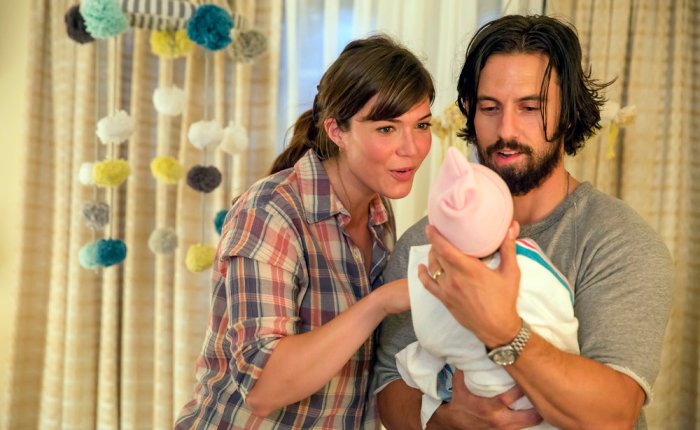
This Is Us- Season 1
THIS IS US — Pictured: “This Is Us” Horizontal Key Art — (Photo by: NBCUniversal)

In a world that seems to insist that families can be replaced with technology or friend groups, it is refreshing to see families upheld as the place where we grow, change, and become who we are.  Imperfect families, with parents fighting their own struggles and children feeling their own unique pains, are the places that shape us and show us how to love.  “This Is Us” doesn’t claim that all families are perfect or should be perfect.  I would say they are simply claiming that the role of family is irreplaceable.   Continue reading “This Is Us”

The Deepest Longing of Our Hearts

The Deepest Longing of Our Hearts

“I guess I don’t like the argument from desire because I’ve never felt a desire for something that can’t be satisfied on earth.”

As a melancholic who has nearly always longed for something beyond this world, I was a bit surprised by this admission.  My class was reviewing arguments for God’s existence and as we went over each one, I would ask a few students to share if they liked or disliked the argument.  Then they needed to voice why, perhaps the most difficult part of it all for them.

I wanted them to reflect on the arguments and see which ones they found personally compelling.  Each person is different and so I wasn’t too concerned if they liked all of the arguments or not.  Yet it is always interesting to me which ones they dislike and why.  Some other students voiced a dislike for the desire argument, but the declaration that they had never desired something beyond this world seemed foreign to me.

Melancholic that I am, I have always longed for perfection.  Ever since high school and college, that has translated into a longing for Heaven.  So as my students were voicing that they have never experienced this unfulfilled desire for something beyond this world, I was left wondering why they don’t have a longing that I never remember being without.

In my first year of teaching, I prayed frequently for death.  Not in a morbid way, but in a longing-for-home-and-yet-knowing-everything-around-me-is-temporary way.  The more I battled with my students over Church teaching, the more I wanted to be in a place of eternal Goodness, Truth, and Beauty.  Yet that was far from the first time that I had felt an unfulfilled desire.  Why are my students not experiencing this also? Continue reading “The Deepest Longing of Our Hearts”