Love Stories Through the Generations

I grew up hearing the love stories of my parents and grandparents.  My parents knew of each other throughout their youth, since they were both from two large families in the same town, with many of their siblings being in the same grades.  When my mom was trying to avoid a young man who was interested in her, she chose to sit with my dad at a graduation reception.  That event turned into dates (my dad saying my mom begged him and my mom saying that my dad asked for a date) and eventually a relationship, with a breakup to ensure my mom had found the right man.  She had.

My paternal grandparents met in a “romantic” meat-packing plant.  After a couple dates, my grandpa proposed and six months later they were married.  They were together for over sixty years, until my grandmother passed away from lung cancer.  My maternal grandparents met at a dance and my grandma’s brother asked my grandpa to drive her home.  The rest seemed to be history–marriage shortly followed and a brood of children. Over sixty years later and they are still married, my grandpa cracking jokes and my grandma still thinking he isn’t funny.

My mom and grandmas all got married fairly young.  At times, it is easy for me to begin to do the calculations.  “If I was my mother…..I would be married, with a toddler and another baby due in a couple months.”  These thoughts aren’t really comforting, nor are they intended to be.  Instead, they instill a sense of urgency, a feeling that I am missing out.  It’s the all-too-dreaded ticking of the biological clock.  It is enough to make me panic, even as others around me are saying, “You’re young, you have plenty of time.”

The other day I came to a greater realization of life.  At times a relationship and marriage dominate much of my thoughts and desires.  But marriage is only a means to an end.  If the goal is Heaven, marriage is meant to get me there.  Life is meant to be spent striving for spiritual perfection and Heaven.  That mission is one that relates to me now.  No, I don’t have a beau or a marriage to invest in.  Yet if God knows everything, He must have intended this time to be used for something other than just waiting for my life to start, because it has clearly already begun.

Someday I hope to have a story of how I met my husband.  Inevitably, it will be different than my mother’s story.  Yet I’ve been blessed to have experiences and adventures that my mother did not have.  Even as I desire a life of wedded bliss, I strive to embrace my present state in life so that I will be prepared for the next state and for the next life.
Independence and Surrender

Our entire lives seem to be a battle between independence and surrender.  We seek independence at an early age and relish it for much of our lives.  My two year old niece enjoys the freedom of saying “no” and running where she wants, when she wants.  My nephews want to help with chores and frequently refuse help for themselves, instead wanting to demonstrate their ability to do it on their own.  As adults, we are quick to forget there is any uniqueness in driving where we want, buying what we want, and living how we want.

Age or misfortune catches up to us and we soon find ourselves losing our independence.  We can fight this inevitable fate, but it will only breed bitterness and malcontent.  Eventually, we must surrender.  In the spiritual life, we can learn this gift of surrender earlier.  Relinquishing control of our lives, realizing that we are not the ones in control or willing our own existence, can prepare us for the gradual physical surrender that must happen.

My grandparents are aging and I see the fighting that takes place within them.  I do not blame their desire to grasp their dwindling freedom or to express frustration at a body that is now turning against them.  The simple freedoms are gradually slipping away–no walking around the block, no trips to the grocery store, no single bed for them to share.  The task of getting ready for bed, something so mundane one often forgets it, is now one that requires help.  Waiting outside their bedroom as they were ushered to bed, I thought of how someday that will be me, helping my parents.  And perhaps someday it will be me, being helped to bed.  Inwardly, I rebel at the thought.  I think that I will break the mold, I will not need the help, I will do it on my own.

When visiting them, I can sense the mounting frustration.  There seems to be both a desire to return to health and a desire to die.  My grandparents have not aged prematurely.  In their late 80s-early 90s, they are as fit as one might expect them to be.  Thankfully, they are ill in body but, apart from a little confusion, sound in mind.  I wonder what to say—do I speak of suffering?  Do I remind them to be thankful of their blessings?  Do I try to lighten the mood?  Mostly, I just listen.  I listen to my grandpa tell me about the picture of grandma now on the piano.  He says he wanted it there because that is how she looked when they met.  Her beauty floored him.  I listen to my grandma talk about one of my many cousins.  Her life for so many years has been about others, even now she finds it difficult to draw conversation to herself.  I listen to my grandpa’s worries and fears.  I listen to my grandma attempt to follow my mom around the kitchen, asking what she needs help with and telling her what to do.

While age has forced my grandparents to lose independence, illness can do the same for others far younger.  I have a friend from college who has been battling a debilitating illness for the last three years.  It causes her intelligent brain to rebel against reading more than a few lines at a time and forces her marathon trained body to be weak and unpredictable.  I refuse to canonize her yet, but I have witnessed the beauty of her striving to surrender herself to God in His inscrutable plan.  Such a situation could easily lead to depression and bitterness, but she is fighting the good fight, ironically by striving to lay down her arms.

How do we surrender?  It is a choice.  We can see physically our limitations.  I can really want to do something yet find myself incapable.  The spiritual limitations are less clear.  With those, we can fool ourselves into thinking they aren’t there or that we have surrendered, simply by virtue of thinking the words once or twice.

In surrendering, we choose to not manipulate the situation, we choose to not be in control.  After years of being told that we can do it and that we are the ones running our lives, it is counter-cultural to step back and release control.  I can drive myself anywhere I want, I can eat whatever food I want, and I can spend my time as I choose.  But I do not will my heart to keep beating, I cannot control the replication of my cells, and I am powerless in making myself continue to exist.  For all the little things I doggedly control, I am incapable of controlling all the major aspects of my life.  Accepting God’s authority in my life is central to becoming the saint He desires me to be.

Lord, help us to surrender, to admit with our lives that we are not the ones in control.  In our inmost being we desire to belong to You and to give ourselves over to You.  Grant us the grace to do so.

“Amen, amen, I say to you, when you were younger, you used to dress yourself and go where you wanted; but when you grow old, you will stretch out your hands, and someone else will dress you and lead you where you do not want to go.”  John 21: 18

Sacred Transplant

“I’m looking for my heart because I feel like I’ve lost it.”  I was surprised by the honesty from the young Canadian friend I made on the Camino.  It made one ache just to hear of the quest and immediately hope for the success of the mission.

Interestingly enough, my Camino quest was different.  Instead of finding my heart, I wanted to give it away.  Not to just anyone.  I was seeking clarity and hope in regards to my vocation, but early on, I knew that I wanted to give my heart more fully to Jesus as I walked the next five hundred miles with Him.

The days on the Camino were simple, idealized in my memory now that blisters have healed.  As an introvert, I relished the time spent walking alone, gazing at the beauty of nature and contemplating Beauty Himself.

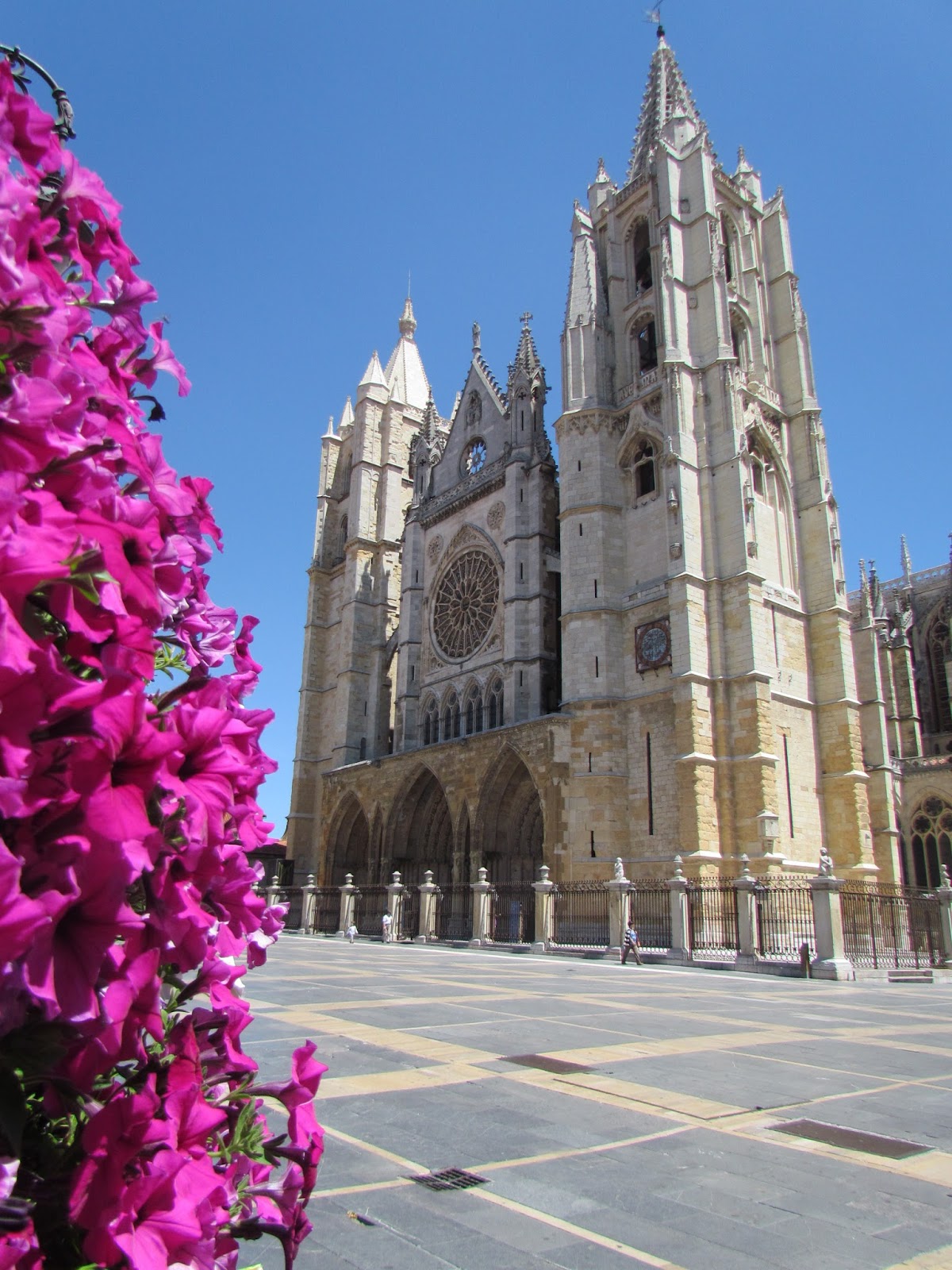
In Leon, we went to Mass in the side chapel of the massive Cathedral.  Refreshingly enough, we weren’t ousted from the chapel right at the end of Mass, permitting us some time to pray.  Often throughout my walk I would picture myself with Jesus.  In the chapel, I did the same thing.  My intended meditation was hijacked by the Holy Spirit and instead of meditating on Mary, I was taken to an operating table.  Jesus took my heart and gave me His Heart.  It was simple but profound.  Then He picked me up and carried me.

Oh, I’m His cross,” I thought at first.  But in the next thought/prayer, one that completely alters the initial perception, I contemplated, “No, I’m His Bride.

Not a burden or a sacrifice, but a joy, a Beloved one.  In that prayer in Leon, I experienced the reality of Christ’s desires.  Longing to give my heart away, Christ is longing to receive my heart and give me His own heart.  In a method of Divine Sacred Heart Transplant, He impressed upon me the knowledge that His home is in me and that my ache to give my heart away was matched by my less articulated ache to receive Him fully.

Potent

Don’t judge a book based on the cover.

It is a true sentiment, but sometimes I do it.  While strolling through a bookshop, I am innately drawn to the beautiful, leather-bound books, particularly if they look old or have a bookmark sewn into the spine.  Gold etching adorns the spine of the book and I cannot help but think there are few joys I hold more closely to my heart than the book I excitedly cradle in my arms.

There is power in the printed word.  I’ve been told this and have experienced the truth of it.  I’ve discovered that writing fills a longing and desire in me that cannot be met in any other way.  My ability to express myself is best if I can write the words rather than speak them.  At times I am jealous of the way other art forms can express themselves.  One can admire a painting for several minutes, incline an ear to an intricate selection of music, gaze at a photograph with delight, or take in the rapture of a play.  But the written word must be read and unless one is including pictures, there is little to call extra attention to the black words on white paper.  The words, to be sure, speak for themselves, but there must be time and attention given to them.  Quite often, the words are overlooked.

At times I speak too little and other times I speak too much.  If you don’t know me well, I can come off as quiet, standoffish, and serious.  More time can reveal different qualities or attributes, ones not readily ascertained by a quick appraisal of the cover.

The words used matter.  I have a difficult time convincing my students that using the appropriate and precise words theologically are crucial.  To them, saying nearly the same thing is close enough.  Even when they are explaining concepts and ideas verbally, they find themselves slipping very easily into something nearly true, yet in the end still wrong.  With a barrage of words surrounding them, they seem to find it difficult to say what they mean and mean what they say.

A closely related problem is honesty.  It has been a long time since I’ve consciously lied.  Sometimes I say things that are false out of ignorance or misinformation and other times I mean what I say but forget to follow through or am prevented from doing so.  Yet it seems as a culture that we find it too easy to say something false.  What is perhaps worse is that we are quick to defend ourselves or to minimize the seriousness of the situation.  It wasn’t a serious matter that we lied about or it was simply easier to say a lie than to explain the truth.  We absolve ourselves before we’ve contemplated our error.  If one insists upon the truth, one can be seen as being too scrupulous or moralistic.

Words appear simple and unassuming.  We can judge them to be of little value or worth when we tell a lie or do not care to put in the effort to be precise.  Yet we are also well aware of the power of words when we hear a moving talk, listen to sharp criticism, or hear someone say “I love you” for the first time.  Words have a potency, a vibrancy that is found within the way they are paired with one another and printed on the page or spoken out loud.  Do not be fooled by the humility of the written or spoken word.  Though they be small, they have power.  Use them well.  

You Do Not Belong to the World

“If the world hates you, realize that it hated me first.  If you belonged to the world, the world would love its own; but because you do not belong to the world, and I have chosen you out of the world, the world hates you.” 
 -John 15: 18-19
The last two days of the semester, I decided to discuss areas where the culture and the Church are at odds.  I knew this would result in a list of topics that often are discussed with passion and heat.  The areas where the Church has a politically incorrect stance that is unforgivable according to moderns.  Overall, the days went well, I believe.  My goal was not to incite riots, but to try to have them apply 12 years of Catholic education to what they will undoubtedly encounter in their secular lives.  
On the board they listed as many of the “controversies” they could think of and then we democratically narrowed them down to the top five.  The top five list varied greatly between the different class periods, but a recurring topic was gay marriage.  Then they brainstormed the common reasons our culture has for defending the stance it holds on these topics.  We narrowed this list of reasons down and I assigned one reason to each group, some reasons taken by a few groups.  In the groups they were supposed to come up with ideas for how the Church might respond to these specific reasons.  It wasn’t a matter of finding an encyclical or Catechism reference, but of applying what they’ve learned for years to specific questions and concerns.  I believe the idea is a great one (of course, I came up with it) but the method needs some creative tweaking.  
The different groups then tell the class how the Church might respond, we discuss a bit, and then move to the next topic.  It isn’t intended to be an exhaustive treatment of the topics, but rather, an opening to begin the discussion of applied theology.  Theology that leaves the written page and textbooks and enters authentically into the human experience.  I don’t believe it is a stretch to do so, but it requires practice.
In my last class period of the day, we only got to discuss one topic.  I knew it would be heated because after five months of classroom time, I’ve come to know some of the different personalities of my students.  I knew who would be upset and I wasn’t looking forward to being seen as a backward bigot.  But if I truly believe what the Church teaches, I must refrain from presenting it in an apologetic manner, unless we mean the art of apologetics.  The order was not kept but turned into a class discussion, one I fought to not have dissolve into chaos and arguments.  I was partly successful.  
I approach the topic of gay marriage with the mentality that I love the Church and I know the Church loves me.  That is not how the culture proceeds.  To me, it seems that the culture looks to hate what the Church teaches, and sometimes feels surprised if there is an area of agreement.  A few students were content to use phrases to challenge me and sit snugly surrounded by their group of like-minded friends.  I tried hard to choose my words carefully, hoping they would convey truth and love with gentleness.  
In the end, I’m not certain I changed any minds or influenced any of them.  There came a point with ten minutes left of class that I decided to salvage what I could in a speech I’ve given different years to my out-going seniors.  I asked them to consider the Church’s motivation, even if they disagreed with her teachings.  Is the Church really holding onto these beliefs because she wants to control people’s sex lives?  Is she doing this because she loves to be hated?  No.  I challenged them, in the midst of their disagreements to consider that perhaps the Church teaches what she does out of love and because she believes it is true.  If Jesus was not met with popularity and instant agreement on His teachings, it would make sense that the Church would face a similar fate.  
The room was quiet and attentive, even if some of them were perhaps raging inwardly, plotting how they would present my intolerance to their parents and friends.  Of course, I hope they don’t hate me, but that is out of my control.  In a conversation with another Theology teacher earlier today, we spoke about how it isn’t our responsibility that the students accept or live the Truth, but it is our responsibility to teach what the Church teaches.  I believe, that with great imperfection, stumbles, and ignorance, I have done that.  So I take comfort in knowing that my minimal discomfort today, a little drop in the oceans of pain others have experienced, is united to the sufferings Christ bore.  
“Remember the word I spoke to you, ‘No slave is greater than his master.’  If they persecuted me, they will also persecute you.”  –John 15:20a

You’re not crazy

Sometimes all we really need to hear is, “You’re not crazy.”

I had a student come in and talk to me after school.  She described a few things and seemed worried about my response.  I told her a couple times that I didn’t think she was crazy.  The visible relief in her face and whole person was incredible.

Fear likes to keep us locked inside, convinced that speaking or revealing the truth would make us appear inferior.  We worry about what others would think and we worry about appearing vulnerable.  Trapped inside, fear can quickly become the ruler.

Satan seeks to destroy true peace and make us fearful, anxious, and worried.  Speaking truth into that darkness can begin to set us free from our self-made or at least self-perpetuated prison.

You’re not crazy.  Now tell Jesus about your fear and go in peace.

Rise and Take Up Your Mat

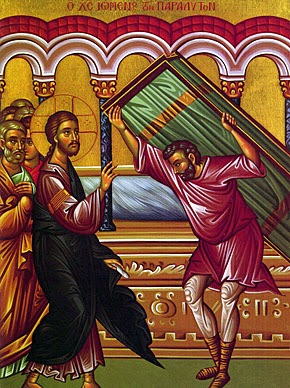
“Do you want to be healed?”

Of all the questions Jesus asks in the Gospels, this is one of the ones that I find most provoking.  The setting is Jerusalem and He is speaking to a man who has been paralyzed and lying on his mat for 38 years.  My sarcastic nature wants to respond to Jesus with raised eyebrows and a retort of, “Of course he does!  He has been lying there for THIRTY-EIGHT YEARS!”  The answer seems obvious to me.  This provoking question is why this is one of my favorite passages to discuss with my sophomores.  (I have many favorite passages…I’m not certain how many, but a lot.  Favorite depends on the day.)

Why would Jesus waste the time to ask this poor man if he wanted to be healed?  From outside the situation, we assume that healing is what is desired.  In this situation, the man desires healing and he finds it in Jesus Christ.  However, Scripture is the living Word of God, which means that there is something in this passage for me in 2015.  Jesus is presenting the same question to me today: Do you want to be healed?

One of the highlights of teaching is when you can, as an entire class, deeply enter into the passage.  Their fidgeting ceases and the room feels still.  This is where the encounter happens, I believe.  The class is led through a lecture/conversation that is like the following.  We are quick to realize the necessity of physical healing—few would have a broken leg and drag themselves around on it, insisting that it will get better or that it is no big deal.  Yet we do this with our internal wounds all the time.  Jesus pinpoints our wound and asks as the gentle God that He is, “Can I heal this?”  He asks if we want it.

As a class we discussed possible reasons why the paralytic might be scared of being healed.  Perhaps he wonders if the healing will last, maybe he doesn’t want to get his hopes up that it could happen, and perhaps he will walk oddly or trip when he walks.  I asked them in what was his identity rooted.  After being a paralytic for 38 years, it would make sense if that was how he primarily thought of himself–as someone who couldn’t walk, someone who felt abandoned by God.  Yet to be healed would mean that his identity must change–he would no longer have the characteristic he used to define himself.  That change could be frightening.  We began to see how the man is brave to seek healing from Jesus.  In seeing the importance of the paralytic accepting Jesus’ healing, we saw how we also needed to embrace the healing that Christ offers.  Ours may not be a visible, physical healing, but rather an internal one.  Yet if the Healer desires to heal, shouldn’t we embrace that?

We live in a wounded culture.  I hate that we are so wounded, yet I love that sometimes I am able to point to this woundedness and proclaim, “In the beginning, it was not so!”  We are longing for wholeness and perfection because we were made to desire that.  But first we need to see ourselves where we are—we are the paralyzed man, lying vulnerably before the Giver of all good gifts, being asked if we want to be made whole.  May we have the courage to say ‘Yes’ and to embrace all that will come of being healed, particularly if it means coming to a deeper understanding of our identity as a child of God.

“Rise, take up your pallet, and walk.” Jn. 5:8

Duc in Altum: Classroom Missionary

I’ve spent the last two months deciding if I would continue teaching next year.  There were pros and cons on both sides and I couldn’t tell which side was weightier.  Even though my mother insisted, repeatedly, that I should sit down and make a pros and cons list, doing so didn’t seem to really help.  The benefits and drawbacks of either decision seemed incapable of being captured in words to jot on one side of a t-chart.  I couldn’t go with my gut because it, too, was conflicted.  In the end, I chose to stay and while I’m still uncertain if that was the correct decision, it was a decision and I finally made it.  A part of me felt sadness to pass up a great service opportunity and another part feels concern that next year I will be climbing the walls of my classroom, wondering what momentary weakness caused me to sign another year of my life away.  Despite these concerns, I am beginning to make plans about what this next year of life will look like.  As a teacher, life stills comes about on a yearly schedule, broken neatly into semesters with lovely summer and winter breaks.

Last semester I was growing more and more convinced that I would love to not teach next year.  It wasn’t one thing in particular, but it was a bunch of things all wrapped up together.  Yet after applying for and being offered (even if only temporarily) another job, the joys of teaching became clearer to me.  The things that I would miss stood out in my mind and I didn’t even want to think of telling my department head that I would be leaving or cleaning out my classroom.  Yet I didn’t want to stay just because I didn’t want to do those things.

As frustrating and foolish as students can be at times, they can also be hilarious, witty, deep, encouraging, and beautiful souls.  Yes, they complain, test my patience, seem incapable of following simple directions, make me question my own sanity, and relentlessly insist on moving the far row of desks next to the wall so they have a backrest.  Yet at times we laugh together, we can reach a beautiful depth at times, we develop a relationship that is unlike any other relationship I have formed before–one of student and teacher.  Over the past three years I’ve grown more comfortable with my students.  Today I gave a test to my seniors and after they were finished, I couldn’t help but look at them and feel pleased.  We aren’t best friends, but it is my class and we do have a unique dynamic.

I don’t know how long I will teach for and how long I want to teach for depends on the day.  In the midst of my crisis (the I-have-only-two-days-to-know-if-I-am-going-to-sign-my-contract-and-I-don’t-know-what-I’m-doing crisis), I called my sister.  She asked me questions that I didn’t know how to answer about my personal desires and feeling peace.

“Answer this as quickly as you think of an answer,” my sister told me.  “If you could do anything, what would you do or be?”
Pause.
“A missionary.”

Then she read me something.  At first, I wasn’t quite certain what she was reading me.  After a little while, I realized she was reading me one of my very first blog entries.  “Young,” first-year teacher Trish was writing about how she was a missionary of the classroom and how even as she longed for greater missions, she was called to be a teacher and minister in the seeming mundane aspects of life.  And that young teacher inspired me.  As my sister read my writing, I felt inspired to truly take up the mission of being a teacher and to live it with a radical zeal that I had forgotten.  At some point I had begun to resign myself to having a job rather than being a missionary.

So even in the midst of uncertainty, I am starting to look forward to another school year (of course, after my (I believe) well-deserved summer break) to be a missionary in a high school classroom.  Because Christ instructed us to put out into the deep and I intend to cast my nets into the high school ocean.  Because the harvest is abundant and the laborers are few.  Because the Church needs the youth.  Because Jesus says there is a millstone with my name on it if I fail to bring the little ones to Him.  Because, for some unknown reason in God’s inscrutable Will, I am called to teach.

The Triduum

The Triduum is an experience for all of the senses.  While I’ve never been anything but Catholic, I cannot imagine another church matching the beauty of the Triduum and the way the liturgies invite us into the Pascal Mystery.

Holy Thursday begins with joy and beckoning us to the table of Our Lord’s Last Supper.  I can imagine Christ bending low to wash my feet as the priest in persona Christi stoops to wash the feet of the young men called forward.  After the Eucharistic prayer, I approach the priest to receive from him my Lord, the Word made flesh and remaining in the appearance of bread and wine.  Tonight, I am an apostle from another century, experiencing the Last Supper and encountering Christ in a tangible way.  My senses are alive as the Eucharistic procession weaves its way around the church.  An incense thurible fills my nose with the sweet, rich odor I link only to the Eucharist.  The priest is embracing Jesus as we sing Pange Lingua Gloriosi.  Our Lord is carried to an altar and the faithful are invited to come and wait with Him.

I fulfill my role of a disciple well.  In the intimately dim chapel, I wait with Jesus and I drift off to sleep at times.  Can I not wait one hour?  Apparently not.  It is beautiful to see the others in adoration, praying with Jesus before He is hidden from us, when the stark reality of the Pascal Mystery will become more obvious.  Then the time of waiting in the Garden is over and we depart in silence.  Talking seems inappropriate.  Nearly anything seems inappropriate on such an evening.

Good Friday is spent anticipating and remembering the Passion of Jesus.  The simplicity of the Good Friday service is unnerving and striking.  I can always feel an ache in my heart.  The tabernacle is left open and I am continually reminded that He is gone.  Approaching the cross so as to venerate it, I am questioning where to kiss Jesus.  My stomach feels the hunger of fasting and I kiss the crucifix with the kiss of Judas, with the kiss of John the beloved.  Good Friday fills me with a longing and with a sorrow.  The rest of the world seems to be continuing at its typical pace but I cannot carry on as normal.

The waiting of Holy Saturday is difficult.  Christ has been crucified and laid in the tomb.  He has yet to rise, though.  Fasting is not obligatory yet the feasting of Easter is still premature.  We wait.  Waiting is perhaps the focal point of Holy Saturday and it makes it all the more difficult.

Yet the Easter Vigil will arrive with its dark and quiet entrance.  A fire lit and from it, a flame passed to light all the candles in the darkened church.  There is a stillness of expectation.  We know the story, we know Christ will rise, and yet we are waiting for it to be lived out, to be fulfilled in this sacrifice.  Darkness turns into light.  As a church we are led through salvation history, to hear how God remains ever-faithful and is responding to the longings and yearnings of His people in an unforeseen way.  We are reminded that we are a part of something far larger than ourselves or our parish.  We are united to a Church that is truly universal and timeless.  Joy mounts in my soul as we continue through the Mass. As the beautiful music announces a living reality in my life: Christ has risen.  He rose 2,000 years ago and He rises today in my heart.  The highest feast of the Church is celebrated with all the pomp owed to a King who mounts a cross as a throne and gives Himself as the food for the wedding banquet.

Easter Sunday is bright and joyful, a renewal of the joy felt the night before.  While Easter Vigil tends to hold a heavy joy for me, Easter Sunday is a light, uplifting joy.  The sun must shine on such a day and if it does not, the joy of the feast becomes a light of its own right.  The lilies decorate the Church and we sing words that we have refrained from saying for weeks.  It adds a depth to the joy that would not be found if one simply arrived at Easter without the Lent.  The Easter Sunday celebration continues for the Easter Octave, each day the Church repeating the joy of the resurrection.  Liturgically, we celebrate the Easter Mass repeatedly.  We cannot move on, we must make it known that this is the highest of all celebrations.

The Triduum and Easter season are for all of the senses.  Breathing in the incense from the Eucharistic procession, waiting with Jesus in the Garden, saying the words of the angry crowd as Jesus is condemned to death, kissing the cross of Our Lord, waiting as Jesus is held in the tomb, lighting our candle from the Easter candle representing the light of Christ Himself, and singing with exultation the joy central to the Catholic faith: we worship a God made man who rose from the dead.  The Triduum calls us to live out the final days of Christ and to enter into the mystery by which we are saved.  In a beautiful combination of music, art, sights, and sounds, the Church transports us to the time of Jesus Christ.  Or, perhaps, she causes us to acknowledge that the Passion, Death, and Resurrection of Jesus are truly timeless events that we experience now through the beauty of the Body of Christ, the Church in her tri-fold magnificence.

What is your withered hand?

“How are we each like the man with the withered hand?”

It was seventh period and my students were, as usual, talkative and eager to laugh with their fellow students.  We are in the midst of learning about the Gospel of Mark and today found us reviewing the story of the man with the withered hand.

One of the goals I have for my Scripture classes is to convince them that this is the Living Word of God and that it should be impacting their lives now.  I tell them that Jesus desires to speak to each of us, today, in this very moment, through events that happened and were written about a couple thousand years ago.

“How are we each like the man with the withered hand?”

It was a rhetorical question and I continued on with one of my little preaching sessions.  The man had a disfigured hand and yet Jesus asked the man to come before the crowd of people and stretch out his hand.  This requires a deep trust that Jesus will be gentle and that He can heal.  The part that the man most wanted to hide from other people, Jesus was asking the man to openly show to Him.

The words seemed to flow naturally from my mouth as I asked them to consider what part of them Jesus desires to heal.

“Perhaps you don’t have physical disabilities.  Jesus wants to provide emotional, spiritual, mental healing.  What if Jesus called you in front of the crowd and asked you, “How is your relationship with your mom?”  Or if He asked you, “How did you feel when your friend betrayed you?”  Jesus wants to come to you in the midst of your brokenness and heal you.  Christ desires complete wholeness for us.”

As I said these words, I was looking at them and their solemn little faces spoke of hurts that I will never know or understand.  Faces that a few minutes before were laughing, now would quickly drop their eyes when mine would rest on their face.  I told them that Jesus desires to heal them.  That whatever part of them they most want to hide from Jesus, is the place He most wants to come.

It was, I believe, a moment of the Holy Spirit working through me.  The room had a stillness to it that revealed an attentiveness that went beyond the typical atmosphere for notes or theological discussions.  I could feel the weight of the room and the weight of the Holy Spirit.  In the momentary pause before I continued on with notes, I thought briefly, “I love talking about healing.”  It was never something I had thought before, but I knew it to be true.  There is a certain life that fills me when I am able to speak about the transforming effect that Christ desires to have on us.

How does Jesus desire to heal your withered hand today?  Let’s let Him do it.  Amen. Amen.