Whoever Has Ears Ought To Hear

Whoever Has Ears Ought To Hear

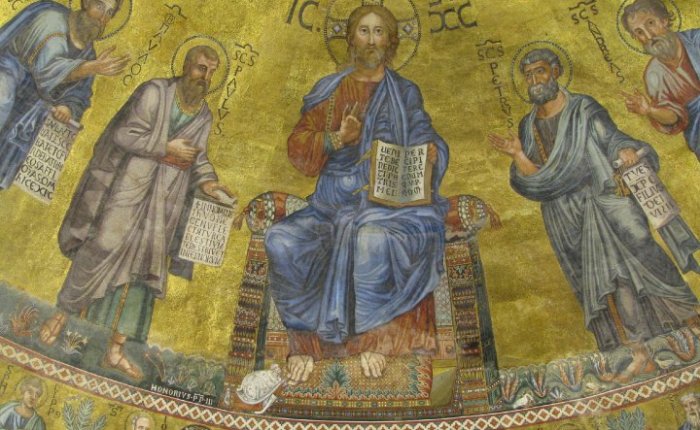
What if St. Paul didn’t respond to God’s call in his life?

Too often, I assume that the saints would, naturally, follow God’s will in their lives.  I mistakenly believe that it was easy for them–of course they responded correctly, they are saints.

Now we hold them to be saints, but they were not always so.  They had free will and probably had many compelling reasons for not following God.  It probably seemed just as inconvenient to them as it does for us at times.

St. Paul is bound for Damascus and Jesus intervenes into his life in a very dramatic way.  The bright light, the physical blinding, and the clear voice all point to a powerful divine intervention.  “Saul, Saul, why are you persecuting me?”  What if, after this encounter, Saul instead returned to his original mission of hunting down the Christians?  In many ways, it might have appeared to be a better life decision.  Or he stops pursuing the Christians, but he doesn’t start to follow Christ.

Following his conversion, Paul goes off to immerse himself in the study of the Gospel.  Then, he presented himself to the Apostles and they were hesitant to accept him.  For a while, he is then considered a traitor by the Jews and someone not to be trusted by the Christians.  When he goes on his journeys to preach the Gospel, riots will frequently spring up as he evangelizes.  At one point, they pick up stones and hurl them at Paul, intent upon killing him.  Dragging him outside the city, they leave him for dead.  When his disciples surround him, he gets to his feet and continues preaching the next day.  In the end, he will be beheaded in Rome, a death he underwent since he was a Roman citizen.

The Lord gave St. Paul the grace of an indomitable spirit, but that doesn’t mean that each movement was filled with absolute certainty.  Perhaps some mornings, Paul woke up and was tired, not wanting to preach and be ridiculed yet again.  Maybe as his feet pounded over miles and miles of Roman roads, his heart was constantly uttering, “Lord, come again.  Lord, end this suffering.  Lord, take me home.”  In the spirit of St. Teresa of Avila, maybe St. Paul experienced the pain of being pummeled with rocks and as he pulled himself to his feet said, “Is this how you treat your friends, Lord?  It is no wonder you have so few.”  St. Paul was a dedicated and faithful evangelist, but that doesn’t mean the Lord surrounded him in constant reassurance or prevented any doubts from entering his mind.  The beauty is that Paul chose Christ daily, even when it seemed foolish in the eyes of his friends and family.

These thoughts about Paul came to mind when I started to watch a video about him in preparation for one of my classes.  The movie opened proclaiming what a great evangelist he was after encountering Jesus and the thought came to mind, “What if he didn’t answer that call?”  The realization was similar to when I realized that perhaps in Old Testament times, God called other people, but it isn’t recorded because they didn’t say “Yes.”  St. Paul had a free choice.  Although God revealed Himself in an undeniable way, it didn’t require St. Paul to choose to follow Him.

My students received the assignment to write an imaginative story about either being a traveling companion of Paul or being a villager in one of the places Paul preached the Gospel.  The goal of the writing was to consider how they would respond to his preaching and to think about what it would be like to experience those events first hand.  Scripture isn’t a nice storybook about events from hundreds of years ago, but rather it is alive and applies to us right now.  So the underlying question to consider is: how am I now responding to the compelling, radical message of the Gospel?

Familiarity with the message of Christianity makes it appear dull and commonplace.  Yet it is anything but that.  We preach of a God who loved so much that He entered into humanity so that He might pay the price to reconcile all of humanity with Himself.  All of salvation history is God reaching out to humanity and working with our “Yes” to bring about transformation.  God knows how we will respond but He never takes away our free will in order to get a “Yes.”  And even if He knows we will refuse, He still asks and offers us a chance to follow Him.

The beauty of the life of St. Paul is not so much that God called him.  God calls each of us to a unique mission that leads us closer to His heart.  The beauty of St. Paul’s life is that he heard the voice of God and he responded with zeal.  His fervent “Yes” opened the pathway for others to hear the Gospel and commit their lives to Jesus.  May we, in this world that is thirsting for the Gospel in all of its truth and radicality, present the beauty, truth, and goodness found in the message of Jesus Christ.  One that is compelling enough to sacrifice home, family, social status, and all worldly goods to pursue.

St. Paul responded wholeheartedly to God’s call in his life.  What if we didn’t?       
The Good Thief

Jesus said to his disciples: “Be sure of this: if the master of the house had known the hour when the thief was coming, he would not have let his house be broken into.  You also must be prepared, for at an hour you do not expect, the Son of Man will come.”  (Luke 12: 39-40)

Jesus compares His Second Coming to a thief coming at night.  As the Gospel was being proclaimed at Mass, I was struck by the phrase “he would not have let his house be broken into.”  Of the many ways Jesus could describe His Second Coming, He chooses at this time to say that He is like a thief who breaks into a home.  Obviously, the master of the house would want to protect himself against any thief forcing entrance into the house.  The immediate connotation is a negative one: be prepared so Jesus doesn’t break in.  What is the other option?

In John’s Gospel, Jesus is the Good Shepherd and also He is the door.  Entrance through His door means salvation.  But He mentions a thief and says that a thief doesn’t enter through the door but comes only to steal, kill, and destroy.  So is Jesus like a thief or is He a door?

What about if He is actually both?  Jesus stands at our hearts, knocking, gently persistent, asking for entrance into the deepest recesses of our being.  We choose if we open the door to Him or not.  He waits, patiently.  Yet there will come a day when waiting is no longer an option, when our refusal to acknowledge Him will come face-to-face with the reality of Who He is.

Will you open the door for Him?  If not, He will not be kept out and He will find a way in, like a thief, stealing through the chinks in our armor, stealthily slipping into the cracks in our fortress.  Yet if Jesus came to give us life, how could He also come to “steal, kill, and destroy” like a thief?  To us in the midst of our sinfulness, the act of taking away our addictions, habits, and struggles will seem like thievery.  It may seem like it is killing and destroying us to be stripped of that which we have made to be our personal god.  An experience of authentic self-denial can help us see the death that must occur when we have not opened wide our hearts to Christ.

He will break into our house.

That experience of a break-in will be unique, but He daily breaks into our world.  He isn’t hiding, but He isn’t forcing us to acknowledge Him today.  He is breaking into my world through the sky filling with a sunrise palette.  He is breaking into my world through the student who insists on keeping a ten-minute running commentary during a surprise fire drill.  He is breaking into my world by placing me in difficult situations I never thought I would have to encounter.

I can recognize His breaking in, or I can pretend like it never happened.  He can be a door or a thief.  Either way, He will enter into my life, it is simply a matter of method and perspective.

And so we strive to let the Good Thief in through the Door.

The One who persistently calls your name, knocks on the door of your heart, and ushers you into an abundant life.

He will come again whether it be His Second Coming on earth or at our death.  We will encounter Him in His glory and realize, with total certainty, who He is.

Do you want the Thief or the Door?

Follow my blog with Bloglovin

Perhaps my saving grace

Even though I no longer have my beautiful 7th period Scripture class from last year, I think they may be my saving grace this year.  I’m not ruling out falling in love with all of my classes this year (although, admittedly, I think I have discovered on the first day the class that will be the most difficult to love), but with my students from last year, there is no need to win their approval–I already have it.  One of them stopped by twice today, pretending he was in my class again this year.  Two stood in my doorway after school to ask about my summer and told me they planned to say “hi” everyday after school.  I’ve seen a few in the halls and many have greeted me with big smiles.

I’m human.  I enjoy being liked and accepted for who I am.  As I start the process of learning the dynamics of new classes and new students, I am enjoying the chance to still bask in the glories of my hard work from last year.  The Lord truly blessed me and is continuing to show me those blessings.  The Lord must know I will need that grace for this upcoming year.

Rise and Take Up Your Mat

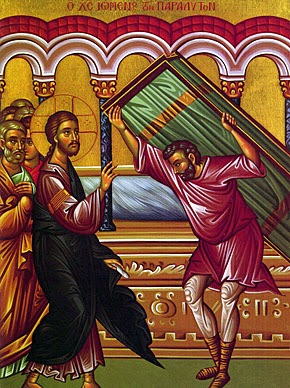
“Do you want to be healed?”

Of all the questions Jesus asks in the Gospels, this is one of the ones that I find most provoking.  The setting is Jerusalem and He is speaking to a man who has been paralyzed and lying on his mat for 38 years.  My sarcastic nature wants to respond to Jesus with raised eyebrows and a retort of, “Of course he does!  He has been lying there for THIRTY-EIGHT YEARS!”  The answer seems obvious to me.  This provoking question is why this is one of my favorite passages to discuss with my sophomores.  (I have many favorite passages…I’m not certain how many, but a lot.  Favorite depends on the day.)

Why would Jesus waste the time to ask this poor man if he wanted to be healed?  From outside the situation, we assume that healing is what is desired.  In this situation, the man desires healing and he finds it in Jesus Christ.  However, Scripture is the living Word of God, which means that there is something in this passage for me in 2015.  Jesus is presenting the same question to me today: Do you want to be healed?

One of the highlights of teaching is when you can, as an entire class, deeply enter into the passage.  Their fidgeting ceases and the room feels still.  This is where the encounter happens, I believe.  The class is led through a lecture/conversation that is like the following.  We are quick to realize the necessity of physical healing—few would have a broken leg and drag themselves around on it, insisting that it will get better or that it is no big deal.  Yet we do this with our internal wounds all the time.  Jesus pinpoints our wound and asks as the gentle God that He is, “Can I heal this?”  He asks if we want it.

As a class we discussed possible reasons why the paralytic might be scared of being healed.  Perhaps he wonders if the healing will last, maybe he doesn’t want to get his hopes up that it could happen, and perhaps he will walk oddly or trip when he walks.  I asked them in what was his identity rooted.  After being a paralytic for 38 years, it would make sense if that was how he primarily thought of himself–as someone who couldn’t walk, someone who felt abandoned by God.  Yet to be healed would mean that his identity must change–he would no longer have the characteristic he used to define himself.  That change could be frightening.  We began to see how the man is brave to seek healing from Jesus.  In seeing the importance of the paralytic accepting Jesus’ healing, we saw how we also needed to embrace the healing that Christ offers.  Ours may not be a visible, physical healing, but rather an internal one.  Yet if the Healer desires to heal, shouldn’t we embrace that?

We live in a wounded culture.  I hate that we are so wounded, yet I love that sometimes I am able to point to this woundedness and proclaim, “In the beginning, it was not so!”  We are longing for wholeness and perfection because we were made to desire that.  But first we need to see ourselves where we are—we are the paralyzed man, lying vulnerably before the Giver of all good gifts, being asked if we want to be made whole.  May we have the courage to say ‘Yes’ and to embrace all that will come of being healed, particularly if it means coming to a deeper understanding of our identity as a child of God.

“Rise, take up your pallet, and walk.” Jn. 5:8

What is your withered hand?

“How are we each like the man with the withered hand?”

It was seventh period and my students were, as usual, talkative and eager to laugh with their fellow students.  We are in the midst of learning about the Gospel of Mark and today found us reviewing the story of the man with the withered hand.

One of the goals I have for my Scripture classes is to convince them that this is the Living Word of God and that it should be impacting their lives now.  I tell them that Jesus desires to speak to each of us, today, in this very moment, through events that happened and were written about a couple thousand years ago.

“How are we each like the man with the withered hand?”

It was a rhetorical question and I continued on with one of my little preaching sessions.  The man had a disfigured hand and yet Jesus asked the man to come before the crowd of people and stretch out his hand.  This requires a deep trust that Jesus will be gentle and that He can heal.  The part that the man most wanted to hide from other people, Jesus was asking the man to openly show to Him.

The words seemed to flow naturally from my mouth as I asked them to consider what part of them Jesus desires to heal.

“Perhaps you don’t have physical disabilities.  Jesus wants to provide emotional, spiritual, mental healing.  What if Jesus called you in front of the crowd and asked you, “How is your relationship with your mom?”  Or if He asked you, “How did you feel when your friend betrayed you?”  Jesus wants to come to you in the midst of your brokenness and heal you.  Christ desires complete wholeness for us.”

As I said these words, I was looking at them and their solemn little faces spoke of hurts that I will never know or understand.  Faces that a few minutes before were laughing, now would quickly drop their eyes when mine would rest on their face.  I told them that Jesus desires to heal them.  That whatever part of them they most want to hide from Jesus, is the place He most wants to come.

It was, I believe, a moment of the Holy Spirit working through me.  The room had a stillness to it that revealed an attentiveness that went beyond the typical atmosphere for notes or theological discussions.  I could feel the weight of the room and the weight of the Holy Spirit.  In the momentary pause before I continued on with notes, I thought briefly, “I love talking about healing.”  It was never something I had thought before, but I knew it to be true.  There is a certain life that fills me when I am able to speak about the transforming effect that Christ desires to have on us.

How does Jesus desire to heal your withered hand today?  Let’s let Him do it.  Amen. Amen.

Who is your father?

“Who is your father?”

The words are spoken by the silver-tongued devil as Jesus agonizes in the garden.  I am always struck by the way Satan is portrayed in “The Passion of the Christ” and how perfectly it is done.  Part of me thinks he should be far more evil in appearance and words but I think they actually did it correctly.  Satan doesn’t tempt us with murder at first.  Rather he sows seeds of doubt and distrust.  Jesus agonizes in the garden and Satan is attacking His very identity.  To attack His identity means to attack the very relationship that defines Him, that defines us.

Who is your father?  The question is laden with subtle hints that a loving father would not subject His only beloved son to such torture.  Such suffering is unnecessary, it is unkind, it is not good.  Satan is trying to shake the belief that God is all-good and all-loving.  Once the question of doubt is placed about the Father, then he attempts to destroy the very image of the Son.

“Who are you?”  Such simple questions.  With such simple answers.  Yet in the midst of despair and confusion, the answers can be hard to come by.  I am….who am I?  Once the relationship with the Father is cut, then it is much easier to destroy who you are.  Think of the Lion King.  Mufasa appears to Simba and says that because Simba has forgotten who he is, he has also forgotten who his father is.  We also can fall into the same trap.  We forget ourselves because we have forgotten who the Father is.

Satan plants these little lies, these questions, these doubts and then lets them wreck havoc in our lives.  Who are we?  “You are my son (daughter), the one true king…and you must take your place in the circle of life.”  Theological translation?  You are the son/daughter of the one true King and you must take your place in the Body of Christ.

He is.

You are because He is.

Never think that He is because you are.  You are the dependent being.  You are the one who relies on Him for everything.  Do not let Satan shake your foundation.  One of the best things I have learned (and strive to put into practice) is simply asking, “Would Jesus speak to me in this way?”  Jesus challenges us and pushes us forward but He doesn’t do this by tearing us apart.

St. Francis of Assisi prayed, “Who are you, Lord my God, and who am I?”  This is very different from how Satan approaches the issue.  He attacks when we are weak and questioning.  He uses the questions to create distance, not to draw us nearer to Our Lord.  Satan’s questions cause unrest, lack of peace, and sow doubt.  The prayer of St. Francis encourages depth and seeking the Truth about God.

Who is your father?  Who are you?  You are the Beloved of the Father.  The Father is transcendent and immanent.  He is Mercy, Love, Goodness.  He is the great I AM.  He doesn’t need you but He loves you radically.  He is the origin of all things, the Creator of the Universe.  He is wonder, awe, and beauty that we find all around us.  He is.  And because He is, we are.

“here is the deepest secret nobody knows
(here is the root of the root and the bud of the bud
and the sky of the sky of a tree called life;which grows
higher than soul can hope or mind can hide)
and this is the wonder that’s keeping the stars apart
i carry your heart(i carry it in my heart)”
–excerpt from ee cummings [i carry your heart with me (i carry it in]

Making Excuses with Moses

Moses and I might as well be twins.  Yes, I am aware of the historical, ethnic, and cultural difficulties associated with that type of relation, but it is very true.  Moses and I both balk at what the Lord asks of us and then we make excuses.  Not just one excuse that can be neatly answered, but multiple.  And if we run out of excuses, we start re-using the old ones, just in case they appear any stronger after a period of neglect.  I don’t even need to alter much to make the excuses of Moses my own.

Granted Moses faced a bit more of a challenging task then I do.  He was saved from infanticide, raised in Pharaoh’s house, sent into exile after killing an Egyptian, and called by God from a burning bush to march his people (that he never really lived with) out of slavery and into a Promised Land.  No big deal, right?  I, on the other hand, am simply told to be the best teacher I can be, proclaim the truth without fear of the consequences, and become of a disciple for the Lord.  When placed in that light, Moses had very good reason to throw up excuses while my position has a much weaker foundation for it.

Q: “Who am I that I should…?” (Ex. 3:11)
A: “But I will be with you…”
Q: “If…they ask me, ‘What is his name?’ what shall I say to them?”
A: “I AM who I AM.”

Excuse: “But behold, they will not believe me or listen to my voice…” (Ex. 4: 1)
Reply: “Do not say, ‘I am only a youth’; for to all to whom I send you you shall go, and whatever I command you you shall speak.  Be not afraid of them, for I am with you to deliver you, says the Lord.” (Jer. 1: 7-8)
Excuse: “Oh, my Lord, I am not eloquent…”
Reply: “Who has made man’s mouth?  Who makes him mute, or deaf, or seeing, or blind?  Is it not I, the Lord?  Now therefore go, and I will be with your mouth and teach you what you shall speak.”

Final plea: “Oh, my Lord, send, I pray, some other person.” (Ex 4: 13)

This final plea is sometimes what I find myself reduced to.  Just send anyone but me, Lord.  I think of others who are clearly more qualified for the job than me.  I wonder how the Lord could make such a large mistake, could have overlooked their finer qualities and overlooked my giant deficiencies.  This feeling of “Please, Lord, someone else!” isn’t just with large missions, but is with lesser things.  When there is gossip taking place and I feel uncomfortable, but I don’t want to be the one to squelch it.  If I see something that is wrong but wish I hadn’t seen it so that I could simply be naïve. 

When I was offered the teaching job I felt incredibly inadequate.  I had just finished convincing people quite a bit older than me that I was the person they wanted for the job.  Then I was offered the job and I had a more difficult time convincing myself that I was the person for the job.  In fact, I began to compile a mental list of people that would be better at teaching than I would be.  I thought of intelligent priests I knew, passionate young adults filled with both knowledge and fire, and young religious sisters who would be able to articulate the faith in an eloquent manner.  Then I thought of my own abilities and talents.  The list seemed to be woefully short.  I hadn’t lied to the interviewers…I had simply spoken with more confidence than I actually had.  Who would hire someone who said, “I am pretty sure that I can do this job, I think.  _________ and ___________ would be perfect for this job but they aren’t available.  At the very least, I think I could be a decent babysitter for high schoolers.  Hire me.  Please.”  That probably wouldn’t be sufficient.

Instead of relying on my own incredible speaking abilities (which I don’t have) or my limitless intellect (again, fictional), I was forced to rely on the Lord.  Of course, I failed in that but I was forced to try more than if I was gifted with all that was required of me.  I knew that I could not do the task properly on my own.  However, I did know that the Lord could use me to do His will. 

How did I know this?

Past experience, yes.  Bible stories, yes.  Witness of the saints, yes. 

Abraham.
Moses.
David.
Our Lady.
Padre Pio.
St. Margaret Mary Alacoque.
St. Faustina.

It is not my job to tell the Lord that He has chosen the wrong person or that I am under-qualified.  He already knows my gifts and He knows my weaknesses.  I am convinced that often the Lord chooses people with major weaknesses so that it may be evident to the world that He is doing the work and it is not his/her own skill.

The requirement is a wholehearted yes.  Or at least an openness to being used for God’s will.  It is saying, “Please, Lord, choose somebody more qualified” and then going to talk to Pharaoh anyway when the Lord tells you to.  You are required to be uncertain of the future yet entirely certain of He who already knows the future.  It is surrendering your weaknesses to the bridegroom on the altar of sacrifice and welcoming into yourself the bread of the angels, the strength from heaven, the necessary graces.  It is allowing His to overflow in you and into those in your life.  It is hands wide open, entrusting everything to Our Lord even when we don’t know what that everything even is.

Moses and I both question the Lord and ask Him to choose someone else to do the hard work.  Yet God is unrelenting. 

He crafts our souls, breathes life into us, nourishes us, and then poses a question to us that is hard to refuse. 

“Trish, I created you to reveal an aspect of Myself that nobody else can reveal.  I have a plan for you, I have graces for you, I have a mission for you.  Will you reveal Me to the world and be a part of salvation history?”

Whoa. 

How can I refuse?

God can use you…..yes, despite that quality or tendancy

Reading the Bible is a source of encouragement.

Really.  And I don’t necessarily mean huge spiritual insights and an experience of the infinite.  Yes, that can occur and it is wonderful if it does.

What I mean is this: Scripture paints pictures of people with really big flaws…and then shows us how God uses them.  I am more and more convinced that if God can use Abraham, Jacob, and Adam, then He can use me.  These men all had their strong points but they also had a sizable amount of flaws.

Today we continued to read through Genesis and sometimes I almost laugh when I think of these stories.  Jacob tricks Isaac to get the blessing designated for the first born.  Rebekah helps Jacob escape the murderous rage of Esau.  Jacob goes to his uncle Laban’s and falls in love with Rachel.  The seven years spent working for the privilege to marry Rachel pass in a flash.  Jacob is secretly wed to Leah.  Jacob, upset with the trickery, works another seven years for the chance to marry Rachel.  God sees that Rachel is loved but Leah is not and so He blesses Leah’s womb.  Rachel remains barren.  The sisters start to fight, giving their maids to Jacob so they may have children through them.  Then Jacob’s children fight because he has a favorite.  The favorite ends up being taken and sold to passers-by and Jacob mourns him for dead.  No worries, though, because Joseph can interpret dreams and is, after a couple missteps, second in command in Egypt.  Then he saves the Egyptians and his entire family from starvation.  After toying with them for a bit, Joseph forgives his brothers and they all live happily ever after….until a pharaoh decides to impose infanticide on the numerous Israelites.

Jacob definitely wasn’t perfect.  God blessed him and God punished him.  As one reads the story, it is almost impossible to not think of all of the difficulties they are creating for themselves.  Two wives?  And sisters?  Of course there will be discord!  Then a battle with childbearing?

The squabbles are almost laughable until you remember how you battle over such inanities as doing the dishes or taking out the trash.

Yes, if the Lord can bring about a Redeemer through the bumbling ways of Christ’s fore-bearers, then He can most certainly use you to do His will.

Never fear, we serve a God who can write straight with our crooked lines.

"Really?!" Semi-Awkward, Semi-Hilarious, Entirely my Life

Sometimes I have to look at events that occur and simply ask, “Really?!”  It doesn’t have to be that huge of an event but sometimes the way things work, or don’t, is almost comical.

Take today, for example.  My Scripture class learned what the phrase “nakedness of his father” actually meant.  For the record, I had no intention of revealing this little tid-bit to my classes.  I didn’t last year, and I had every intention to continue that trend this year.  Nevertheless, I decide to tell them when I learned the other teacher had told his classes what it meant.  I figured it would prevent any questions about it arising later but now I think it never would have surfaced.  The topic was broached and passed over in my third period class.  The idea that Ham committed incest with his mother was repulsive, as evidenced by the looks on their faces, but I moved on fairly quickly to the story of the Tower of Babel.  Class moved slower for my sixth period class because I had to give a lecture about respect to my students.  With a mere ten minutes left of class I was nearing the time to reveal to them what the euphemism actually meant.

Lo and behold, in walks my principal.  For a brief moment I considered bypassing the phrase and going on to the Tower of Babel.  Was it really that important anyway?  What point did it prove?  Despite my hesitation, I committed myself to proceeding in the intended manner because the presence of my principal shouldn’t alter what I teach.  This class is naturally a more reactive class so I wasn’t surprised when the murmuring began.  You can only tip-toe around the matter for so long before it is necessary to plunge in and just say what it means.  He appeared quite interested as I tried to guide my students around this delicate event.  I placed my emphasis largely on what Ham was saying by this action.  Time soon ran out and the bell rang.

He just couldn’t come when I talked about the flood, when we read different Scripture passages from the Old and New Testaments about the flood, when we read about the covenant that God makes with Noah, or when we drew pictures about the different covenants.  Today I actually managed to vary the class and incorporate different teaching aspects.  Yet all that was seen was a ten minute lecture at the end of class about how Ham had relations with his mother.

I’m not sure if I am more horrified by the events or if I simply find it awkwardly hilarious.

All I could think when the door handle turned and I saw my principal walk in was, “Really?  Really!”

On the plus side–perhaps he learned something and I subtly proved that I do have a degree in Theology that has afforded me unique knowledge about Sacred Scripture.  Or I am simply ruining my students’ opinions of the characters of the Bible.

It could have been worse, right?