It doesn’t have to be perfect

It doesn’t have to be perfect

It doesn’t have to be perfect.

I’m sitting in my college Honors class.  The two hour class occurs twice each week and is entirely discussion based.  We are reading the classics and then we discuss them, seated in a circled with annotated copies of Western Civilization’s greatest works at hand.  I cannot bring myself to talk and I feel helpless as class after class passes and I say nothing.  The longer my silence goes, the more convinced I am that the first time I say something, it must be brilliant.  It must be perfect.  It must redeem the previous hours of silence.  But with such pressure, how can I ever speak?  After a class mid-way through the semester, one of my peers tells me that I have things to say, I just need to say them.  The perfectly sculpted answer never comes into my head, though.

It doesn’t have to be perfect.

It is my senior year of college and I am sitting in my boyfriend’s car.  It doesn’t matter what the question was that he had just asked me.  It wasn’t a one time occurrence.  He asks me a question and the little introvert retreats into her mind.  Maybe the question really required some deep thought, but sometimes it was just trying to come up with the perfect way to phrase my response.  Sometimes we sat there for fifteen minutes, the silence heavy and my brain actively trying to arrive at perfection.  I was asked to just say something and I found it difficult.  It needed to be just right.  It should be a perfect answer after twenty minutes of deep thought.  

It doesn’t have to be perfect.

But I want it to be perfect.

Twice over the past week it has been presented to me that it is alright that something is not perfect.  I am an idealist through and through.  While I live in this reality, my mind is often caught up in a world of what should be.  After a talk I recently attended, there was a bit of discussion.  One of the women who attended shared a bit of her heart with the group and one of the guys there responded to her.  There was an exchange of dialogue and then a couple beats of awkward silence, the group trying to transition to the next subject.   I found that the awkward transition bothered me.  My idealistic self wanted the conversation to flow naturally, for people to share their hearts and for everyone to respond in the perfect way.

It doesn’t have to be perfect, Trish.  

Humanity is a sea of imperfection.  I should be used to it: I’m a little pool of imperfection.  And yet I find myself wanting for things to play out as they do in the movies or in book: perfectly scripted where everybody knows their cues.  But it is fine for things to not be perfect.

Then I went to a retreat and there were a few times when people were able to share a little witness of what they had received in prayer.  When people got up to speak, I felt sorry for them if they seemed a bit nervous.  Yet I found myself internally willing them to not be nervous and hoping they would say everything perfectly.

It made me pause: what is my hopeless addiction to things being perfect?  I’ve scripted and re-scripted how I meet the man I will marry.  I look through food blogs and I pin recipe after recipe of perfectly photographed culinary delights.  I imagine running race after race to become perfectly in shape.

It doesn’t have to be perfect.  In the midst of someone’s suffering, some words spoken in comfort are far better than the nothingness while you seek for perfection.  When hungry, something adequate is far better than the perfectly pulled together meal that never happens.  When training for a race, the ugly flailing of limbs is better than waiting for perfection to spontaneously take root in you.

I am now beginning to understand the phrase that a dear priest would say repeatedly: if something is worth doing, it is worth doing badly.  So he was quoting dear G.K. Chesterton, but I will always think of him with that phrase.  And now I am getting it.  At the time I probably thought: wouldn’t it be best to do it well?  Of course, if one can do it well, they should do it well.  But some things, one must simply do, whether or not they do it well.  If the race is worth running at all, then I should do it, even if I do poorly.  If the class is worth teaching, then I should teach it, even if I don’t do it perfectly.  If the words are worth speaking, I should speak them, even if I fumble and don’t find the exact phrasing I want.

Chesterton and that dear priest were advocating trying, even if you failed.  That has not been my life motto.  Mine would be pretty close the opposite.  “If something is worth doing, think about it for a long time until you think you can do it perfectly, otherwise don’t do it at all because it might not be quite right.”  A bit of a different worldview, I would say.

I cannot advocate the absolute crushing of the ideals I have, but I can propose that the ideals should be remembered as something to strive for, not the intended starting point.  The goal isn’t to be imperfect, but it is impossible to plan to arrive at perfection immediately.  Instead, the reality of humanity must be taken into full account.  It is acceptable to stumble and fall along the way, as long as we keep getting back up and moving forward.  If I come to terms with the imperfection that is naturally within others, perhaps I can give myself greater permission to come to terms with the imperfection that is overflowing within me.  Instead of masking it, I could acknowledge it and then set about pursuing something more, something better.   

Reality isn’t perfect.  It is flawed, messy, and doesn’t follow a neat set of rules.  But it is what I have.

If life is worth living at all, then it is worth living badly while in the pursuit of something great.  And this little heart of my deeply needs to just live without the strain of perfection.  Jesus said His yoke is easy and the burden is light.  Being perfect is not a part of that easy and light.

I’m not perfect and I don’t need to be…yet.
Being the Adventure

“Someday, I want to be the adventure someone chooses.”

The words resonate in my heart, even though I’ve never quite thought of it like that.  My friend is telling me that she has encouraged men she was interested in to pursue their dreams.  Yet what she really wants is to be the adventure they choose to pursue.  I hear her ache and I feel a similar one in my own heart.

We are millennials.  In many ways, I do not believe I fit into my generation.  However, in this regard, I do: I desire greatness.  I do not mean that I long to be recognized or praised in front of all.  Nor do I want empty words of admiration or platitudes repeated just to satisfy a longing to be great.

No.

I want to contribute, in some meaningful way, to society.  I want to leave an impression.  I want to fill a need.  I want to embrace adventure and travel and see new sights.  I want to feel the exhilarating rush of being absolutely, irrevocably alive.  I don’t want to do this by getting high, imbibing too much alcohol, or living a way that is less than I am.  I want to live fully my humanity.

At times I feel like I haven’t done much in my twenty-something years of living.  And by some standards, I haven’t.

I have:
-graduated from high school
-graduated from college (and completed English and Theology theses at 20 pages each)
-studied abroad
-gone on three mission trips, leading one of them
-been a small part in saving at least one child from abortion during my time sidewalk counseling
-been a Confirmation sponsor for two people and godmother to two others
-been published in two newspapers and a college student publication
-traveled to: Mexico, Canada, Honduras, Ireland, Northern Ireland, Scotland, Spain, Portugal, France, Switzerland, Germany, Poland, Austria, Czech Republic, Italy, Vatican City, and 32 of the states in the US
-successfully taught high school for 3.5 years
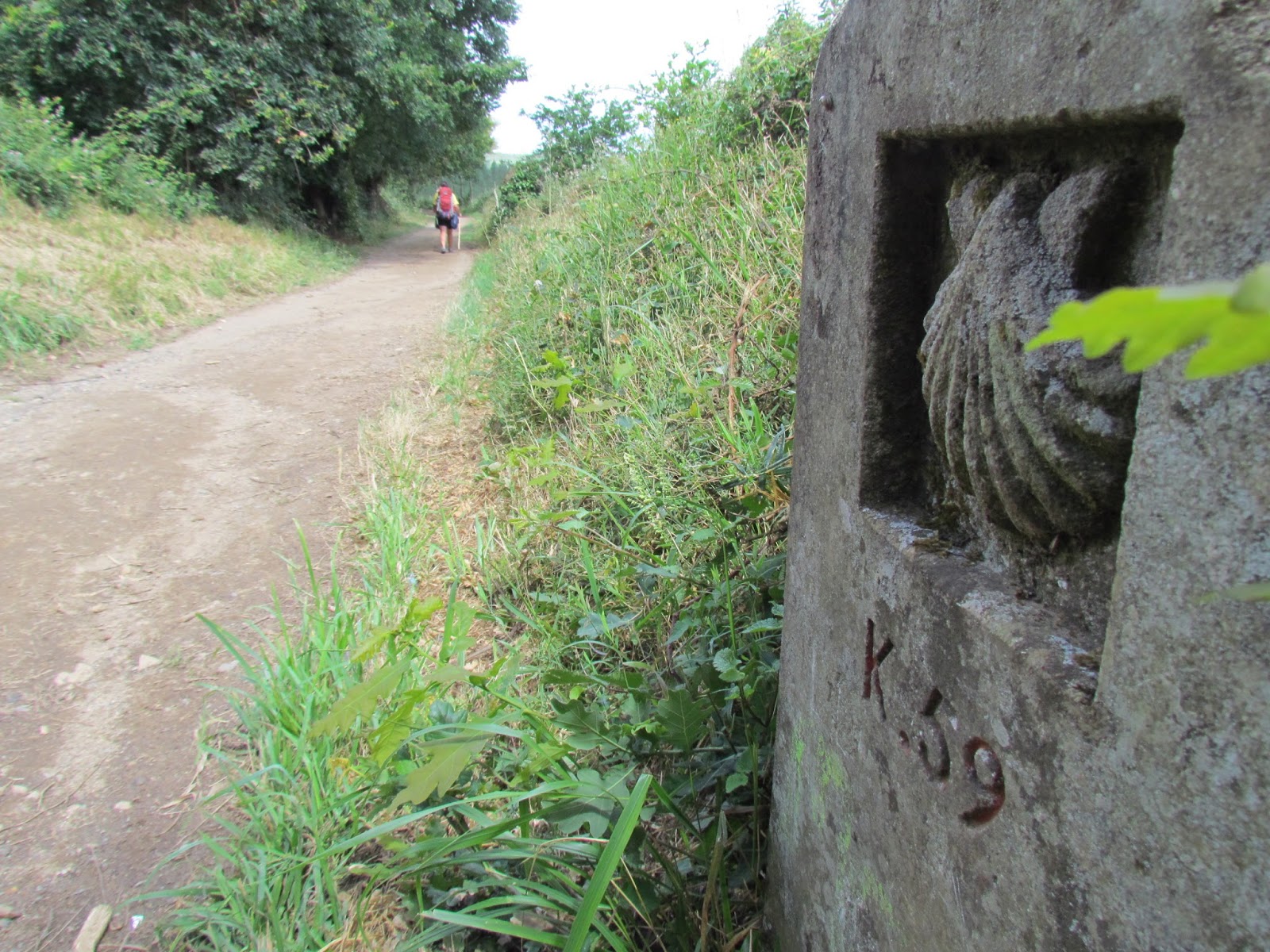
-walked El Camino de Santiago


Yet despite these “accomplishments” I am left longing for more adventures.  Namely, the adventure of marriage and family.  The person I immediately turn to when thinking of marriage as an adventure is the ever-endearing G.K. Chesterton.

The supreme adventure is being born.  There we do walk suddenly into a splendid startling trap.  There we do see something of which we have not dreamed before.  Our father and mother do lie in wait for us and leap out on us, like brigands from a bush.  Our uncle is a surprise.  Our aunt is, in the beautiful common expression, a bolt from the blue.  When we step into the family, by the act of being born, we do step into a world which is incalculable, into a world which has its own strange laws, into a world which could do without us, into a world that we have not made.  In other words, when we step into the family we step into a fairy-tale.

So my dear Chesterton would tell me that I am already living the supreme adventure: I have been born into it.  I would argue with him (since it is often my nature to be non-compliant) that my current life is not the familial adventure he speaks of since I am in the “in between” time.  I have a house but it is rented.  I live with friends and not a family of my own.  It is good, but not what I long for.  Perhaps he would agree with me in these points.  In this hypothetical argument, he might remind me that marriage, for all my silly idealism, is not perfection.  He might say this:

When we defend the family we do not mean it is always a peaceful family; when we maintain the thesis of marriage we do not mean that it is always a happy marriage.  We mean that it is the theatre of the spiritual drama, the place where things happen, especially the things that matter.  It is not so much the place where a man kills his wife as the place where he can take the equally sensational step of not killing his wife.

I remember the look of confusion and a bit of shock on my mom’s face when I read her that quote once.  But isn’t it true?  Sometimes the more sensational thing is two human beings, undeniably different even if undeniably in love, not killing each other.  Clearly, Chesterton was a married man.

However, I do not wish to simply quote Chesterton all day, though I love his writings even if I haven’t read many of them.  Rooted deep in the hearts of modern man, I believe, is the desire to give entirely of oneself, wholly and without reserve or end.  This is the longing for marriage.  The desire we have to be the adventure that someone else undertakes.  What adventure (apart from that of pursuing God) could be greater than looking at another human being and saying, “You.  I choose you and only you forever.  I choose to journey through life with you, come what may.  I choose your heart to pursue and cherish always.  And I know time will change us.  In ten years, you will not be the same person I married.  But I will still choose you.

It is the nature of love to bind itself, and the institution of marriage merely paid the average man the compliment of taking him at his word.

As much as this millennial longs to do all kinds of things and pursue all sorts of adventures (pilgrimage to the Holy Land, run a half marathon, go to jail for a night*, or fly a plane), I long for the simple adventure of a home and a family.  In many ways, my desires are not so adventurous or dramatic after all.  They are little things, daily things.  The adventure of simply being the adventure.

The old-fashioned Englishman, like my father, sold houses for his living but filled his own house with his life.

*Naturally, when I say I wish to go to jail for a night, it is with the idea that I went standing up for something I deeply believe in.

The Wal-Mart Heart Change

I could feel it increasing in my heart.  My fingers tapped on the shopping cart as the impatience within escalated.

Standing in the speedy checkout line at Wal-Mart, I was feeling pressed for time.  I hadn’t wanted to stop at Wal-Mart, but I needed glitter.  Never in my life have I purchased glitter, so it took a bit of meandering before I found what I needed.  A few other items found their way into my hands and then I was at the checkout.  Waiting.

The sense of urgency was palpable in Wal-Mart.  I could feel it because I had places to be, things to do, and the rush of shoppers waiting at the checkout lines declared that they had similar situations.  The clerk tending the cash register was taking care of one customer and it seemed to take a while.  His credit card wasn’t accepted and he was on the phone.

Minutes passed.  I kept eyeing other lines, watching them line up and pass through while I waited.  Finally, the woman ahead of me moved forward in line.  Change needed to be dispensed into the tray and we watched her unroll two packs of quarters.  Then the cashier counted the gifts bags.

1…2…3…4…5…6…7…8…9…10

10 gifts bags.  Then she swiped one.  And repeated the act seven more times.  She stopped and began to count the number of bags on the screen.  But she must have lost track of which line she was on so she took a piece of paper, holding it up to guide herself line by line.  The customer told her that she had only scanned eight but there were ten.  The cashier finished counting, swiped another, and then keyed in another.

I’m feeling impatient, inwardly reminding myself that it is Advent, the season of waiting.  But for some reason, my time feels more important.  Perhaps it is part of the human condition.  We are quick to hurry others, almost insulted that they should waste our precious time.

I will my heart to stop pounding with impatience.  Almost like hushing a baby, I remind my heart that there is enough time for what is necessary.  Slow down, slow down.  Do what you tell your students to do: practice patience, seek holiness in the simple, ordinary things in life.  Be faithful in small matters.

And my heart slows.  When I approach the cashier, I am greeting her as though I never waited.  I am striving to not make myself the most important person in the situation.  The anxious tapping of impatience is brushed away for a moment, and I try to hang onto this as I navigate the parking lot and the line of cars waiting to exit.

Later, I will lose this patience and peace.  I will rush about, attempting to do in a couple hours what should have been done in days.  And I will miss the joy of the present moment and seek to tend to things rather than to people.  But for all the missteps that will later follow, I am reminded of that moment in the checkout line.  That moment when my agitated heart encountered the peace that it was always meant to have.

Say to the fainthearted, “Take courage and fear not. Behold, our God will come and will save us.” -Isaiah 35:4

There He is: saving me from myself in the Wal-Mart checkout line.

Why I Am a Catholic

For the last couple days of class for the semester (before preparation for finals), I decided to try something new.  It was an idea I had a while ago, but it just seemed to work to implement it this year.  The section is dubbed, “Why I Am a Catholic.”  After weeks of (hopefully) learning Apologetics, I wanted to have them consider why they are Catholic.  I challenged them to find something beautiful, compelling, or desirable within the Church, even if they struggle with different facets of the faith.

I listed off for them Peter Kreeft’s seven reasons why he is a Catholic.  I read a line from G.K. Chesterton’s “Why I Am a Catholic” essay.  Then, because I wanted this to be real for them, I told them my reason for being Catholic.

In all actuality, it cannot be boiled down to one reason that I am Catholic.  Yet, for the sake of simplicity, I picked what was central to my faith and declared that it was the reason why I was Catholic.  What I didn’t expect, though, was that I would nearly cry in every Apologetics class as I told my story.

Honestly, I was a little annoyed with myself.  “Really, Trish, get it together!  It isn’t as though you have never talked about this before.”  I’m still a little confused, but I think the primary reason is that I was opening my heart to them.

I’ve shared with my students different experiences I’ve had, places I have traveled to, and stories I have heard.  As a Theology teacher, I am daily speaking of persons and ideas that are very close to my heart.  But to open my heart, to share part of “my story,” and to point to something so personal, in a classroom setting, is difficult.

I told them that I am Catholic because of the Eucharist.  Yet I had to give a bit of a back story for why the Eucharist is so pivotal personally, not just theologically.  So I had to go to the beginning of my faith hitting the pavement, nearly the beginning of a heart that aches yet keeps it all tucked away within.

Naturally, it was a story about my sisters.

My two older sisters, specifically.  And my throat became scratchy and I prayed that Jesus would just let me get through these stories without crying.  The feelings I was portraying aren’t ones I typically feel now, but ones that were jettisoned across time from nearly 12 years ago.

When I was in 8th grade, my older sister entered a Carmelite cloister.  She was the one who seemed to know me.  As an introverted melancholic, I’ve always ached to be known.  While she was still my sister, our relationship was dramatically altered.  I could pour out my heart to her in writing, but then I would need to wait months for any sort of response.  I became angry and bitter, yet still had to present a happy exterior, because that was expected of one with a nun for a sister.  When I was a junior in high school, my other older sister joined a different convent about twenty-four hours from home by car.  The feelings of bitterness and anger were once again kindled.

I was teaching myself something that is untrue about God.  Internally, I was learning that God will take from you that which you hold dearest.  Whatever you don’t want to do, He will ask it of you.  I was learning the sacrificial part of Catholicism without the love or joy that must accompany it.

As I’m telling my little stories, I am looking into their eyes.  For once, the classroom is mostly silent and their eyes are on me.  I’m wondering, as my insides quake a little and my hands shake, if they can see that I’m opening up part of my heart to them.  I’m hoping that even though their story is different, that they are open to discovering the beauty of Catholicism, too.

So how do my sisters entering the convent make the Eucharist the reason I am Catholic?  When my sister was entering the cloister, she turned around and said, “I’ll see you in the Eucharist.”  Eighth grade me wasn’t impressed.  That’s nice….but how about you see me on my birthday and at Christmas?  How about you hold my children and are answering the phone when I want to talk?  Despite the minimal impact it made initially, it eventually became a central point of my personal spirituality.

When we go to Mass and receive the Eucharist, we are receiving the Body of Christ.  The Church is the Body of Christ.  When I receive the Eucharist, I receive the entire universal Church, the Church inside and outside of space and time.  As I missed my sisters, I would receive the Eucharist and know that this union that I tangibly experienced in Holy Communion was the deepest union I would have with them.  It was comforting when I went off to college eighteen hours away and I missed my family.  The Eucharist bound me to all my loved ones.  Moving from college back home and being separated from beautiful friends, I found solace in the ties of the Eucharist, bonds that even death cannot break.

Why I am a Catholic cannot be simplified to only one reason for me.  There are many factors and influences, but the central point is the Eucharist, God Himself.

“The difficulty of explaining “why I am a Catholic” is that there are ten thousand reasons all amounting to one reason: that Catholicism is true.”    -G.K. Chesterton 

Tireless

The Lord isn’t tired of you.

If He hasn’t tired of me, then I know He isn’t tired of you.

Don’t we sometimes assume He is, though?

I apply human attributes to God and figure He must want to respond to me as I want to respond: grabbing me by the shoulders, slightly shaking me, and telling me to snap out of it.  Or something along those lines, sometimes more or less intense.

He is unfailingly patient.  God is able to endure our imperfections better than we are.  Where we can be short-tempered and over hasty, God is slow and long-suffering.  I think I am a fairly patient person, but at times I am the most impatient with myself.

He waits for us.

It is a struggle to extend that same act of kindness to myself.  To wait for my heart to catch up, to wait for my mind to grasp the concept, to wait for my body to gain the strength.  We want it right now and we think we should be able to conquer all now.  Sometimes, though, we need to accept that we are in a specific place.  Instead of being angry with my heart, I can acknowledge where it is struggling and be patient with it.  Instead of frustration over what my body can’t now accomplish, I can see the difficulties and move forward gradually.

The heart is probably the most difficult for me to wait for.  I want it to quickly recover or never get wounded.  The Lord, in His inscrutable wisdom, gave me a heart that is very tender.  And life can be pretty rough on such a heart.  Having a tender heart isn’t a coveted aspect in our culture.  Instead, we are taught to not care what others think, to do our own thing, and to take whatever doesn’t kill you and let it make you stronger.  But sometimes it just hurts.  So I find myself fighting against the desire to shield my heart behind indifference or coldness.  Or I use my best-learned defense: sarcasm.

I will fight, nearly to the death, in defense of sarcasm being a valid sense of humor.  When used in the right situations, I think it is fantastic.  However, I will admit that I use it to shield my little heart all too often.  If my heart can’t handle the pain of honesty or sincerity, it will hide behind quick remarks and witty comebacks.  In the moment, it is a fight or flight instinct and I guess I choose both: fly away with the tender heart and fight with words of steel.  I know that it will not help my heart, but sometimes the conditioning takes over with little regard to what I should do.

The goal is to tell myself, “Trish, today you will not hide your hurt behind sarcasm.  You will be sincere and meaningful in your words.  And you, impatient one, will be patient with your own heart.  It is a gift.”  Perhaps, someday, I will listen to myself.

I need to be reminded that God sees me in a way that is different than I would initially imagine.  In Isaiah 43: 4-5a, God speaks to Israel of a love that is unsurpassed by any other.  It can be helpful to remember that this covenantal love also extends to us today.

Because you are precious in my sight, and honored, and I love you, I give people in return for you, nations in exchange for your life.  Do not fear, for I am with you…

He is present, long-suffering, patient, and waiting for you.  Not for you to drag your feet, but for you to let all the many conflicted parts of yourself come together.  To wait for your heart to catch up to where the situation requires it be and to not be frustrated that it isn’t there yet.  To remind the head that there is more to life than what makes complete sense.  God is working in the midst of your broken chaos right now and He isn’t letting it stop Him from doing what needs to be done.

Though He is moving forward in your life, He isn’t leaving any part of you behind.  Because despite all of it (the situations, the emotions, the problems, the pride, etc.), He isn’t tired of you.

Be Perfect as Your Heavenly Father is Perfect

Confession: I have a problem with perfectionism.

And I think I am only just now realizing the depths of this noxious weed in my soul.  Perfectionism is easy to portray well and make it seem like a good thing, rather than the lie that it is.  It can actually be stifling.  While I know this theoretically, it is entirely another thing to believe it with my actions.

One memory I have of perfectionism having the upper hand is when my dad was teaching me how to drive.  I was pretty resistant.  Every teenager seems to yearn for the day when they can take the keys and drive to places on their own.  I wanted to drive, but I didn’t want to learn to drive on the manual transmission car that my dad had for me.  With an automatic car, you just drive.  You focus on the road, on the signs, on the other cars, but the rest is condensed to brake and gas pedals.  Manuals will stall and quit at the most inconvenient times: like a small town stop sign after the high school graduation and everyone is behind you on their way to open houses.  If I had any hopes that my dad would give in, I would have tried to avoid learning how to drive that car and wait for him to get me an automatic.  However, I understood the stubbornness of the person with whom I was dealing; he was adamant: learn to drive this car or ride the bus.

The first time he took me out to drive, I probably sat in the car for twenty minutes before we even moved.  My younger sister was sprawled out on the deck, eagerly awaiting my driving experience.  After a few minutes, she went into the house and told my mom, “I would have been long gone by now.”  My mom said that was what she feared.

My dad had demonstrated driving the car, so I could watch him shift.  I was cautious and made him go over what I was supposed to do several times.  Then I repeated it back to him because I wanted to get it right the first time.  I didn’t want the car to start moving and then die, only to have to start the process all over again.  Eventually, I put the clutch to the floor, eased off the brake and onto the gas pedal, and we moved forward slowly.  And then it died.  The process happened over and over again.  I drove up the driveway and out onto the gravel road, running the car in first gear when second would have been kinder to it.

One time while I was still in the early learning stages, my dad asked if I wanted to drive to our property on the other side of the creek.  I said no because I didn’t want to practice.  So he asked my younger sister if she wanted to and, of course, she said yes.

I was furious.  I wanted to get out of the car and walk home.  She was seemingly unafraid to try and fail.  At this point, I found a sudden desire to drive, but it was too late.  I was riding with my 11-year-old sister at the wheel.  To my young melodramatic heart, it was an injustice.  My desire to do it perfectly or not at all was shot to pieces by my sister volunteering to take on the challenge.

I have never actually thought that I could be perfect or that I was perfect.  My flaws (or some of them) are well-known to me.  Perfectionism doesn’t mean I have a room that is always tidy, a desk that is clean and orderly, or that I’m always pulled together.  I have simply tried to avoid making mistakes.  Some of this is a good desire.  We are to strive for excellence.  Other times, it makes the mistakes feel so much more burdensome or weighty then they actually are.  It can lead to feeling hemmed in since any option could result in failure.

Nobody likes to fail, I get it.  But some do it better than others.  I read an article about Stephen Colbert and he had an interesting “motto,” if you will: Learn to love the bomb.  In the midst of failing, learn to love it and not be afraid of it.

To me, that is a crazy notion, one that I want to let him run with into a nice little box of, “Well, he is a comedian, of course that would be helpful in his profession.”  But, in truth, I cannot stand by that.  My mental picture of his motto is like skydiving…without a parachute.  Or one that you don’t know if it will open.  And you are loving the drop, the racing heart, the pit in your stomach that tells you: This. Is. Crazy.

I prefer to be in control.  I’ve never thought of myself as needing to be charge, because most of the time I don’t want to lead anything, ever.  Yet I do love my ability to say no or to not do what others are doing.  Sometimes, I am stubborn simply to be stubborn.  Perhaps it is so that I won’t be seen as just “nice” or a push-over.  I learned the “don’t give in to peer pressure” thing really well.  Few can make me do something I don’t want to do.  I’ll maybe even do the opposite of what you want me to do.  For some reason, I like it to be known that if I’m complying with requests, it is because it is my choice, since I could very well do the opposite.

So what does this have to do with perfectionism?  I spend much of my life refusing to put myself in positions where I might fail.  Activities, relationships, conversations, new experiences: all things that could potentially not end perfectly or require failure in the process of learning are less than palatable to me.  Yes, I know what you are thinking, “But you can’t succeed if you don’t risk something.”  I chalk it all up to logic: why make mistakes when you can avoid them?

Which is all fine until you find yourself in a position that requires a risk.  If you don’t risk, you will definitely lose and maybe God doesn’t want you to just pray it out.  Maybe He wants an action.  Maybe the lesson is in trusting yourself less and trusting more that He can and will pick you up when you fall.  Maybe you are supposed to fail.  Yet the very idea of the risk makes my heart threaten self-eviction.  I want to think of every possible outcome before I take that first step, so I can be prepared if things come crashing down.

Or the risk might turn out to be a successful leap.  It might be worth it, there might be joy, there might be happiness and peace.  What if the risk turned out to produce the best type of reward?

This quote comes to mind:

My melancholic pessimism sneaks up again and whispers, “But, seriously, what if you fall?

As I’ve been writing this, I’ve been trying to think of a way out of a perfectionism that can feel a bit stifling at times.  How do you move beyond it?

“Be OK with failing.”  Sure–but how?
“Put yourself out there.”  Out where?  And when?

This is where the head and the heart are in utter conflict again.

This imperfect soul has no neat conclusion to this dilemma.  I have no solution that can be quickly applied, no wisdom to pull me out of the mire, and no lesson to contrive from these words.

In an attempt to combat this perfectionism, I’m going to end this post imperfectly.

I’m going to be striving for Heaven, but I’m going to fall on my face many, many times.  But Jesus knows that and so I’m trying to be okay with that.

***And, in unexpected irony, of all my blog posts, this post on perfectionism was the most difficult to get to the point where I wanted to publish it.

Because I wanted to at least phrase it perfectly…

In His Hands

I pictured placing my little heart in His hands.  And He held it with a tenderness that could only come from Him.

There it was: small and without adornment.

It was devoid of all excuses or justifications.  Yet it was completely known, in a way that the potter knows every intricacy of the work of his hands.  Even with knowing all that was stored away within it, the little heart was completely loved.

That was true rest.

To be loved, but to know that it is without false impressions or because you have successfully hidden your flaws.  As a member of a family, I have experienced this love to a degree.  But to have your heart laid bare with all of the not-quaint details exposed is another matter.

When the world seems to be too much and I have difficulty taking it all in, I find comfort resting in His hands.  There I am known and there I am loved and those facts still astound me.  To be known to the core and loved to the core is what we all desire.  To know that it is without merit and yet entirely good to be received in such a way is another gift.  Nothing I did caused me to be loved like this, but I am.

For a little heart doing so much seeking, it is good to simply be found.

The Gift of a Little Heart

There is a bit of my heart in everything I write.  It is how I express my heart.  Spoken words are never quite as useful for me, but if you give me some time (perhaps the most crucial element) and paper and pen (or a computer), I can describe (to an extent) the workings of this heart.

Writing allows me the chance to tidy the messiness of a heat that feels.  Too often I rail against my own heart, how the feelings it has do not line up with logic, how I cannot control where my heart is pulled, or how the heart has a power that the head finds difficult to contest.  When I write, I give my head the chance to make sense of this little heart.  I am able to wrap up some loose ends and to really consider what is occurring deep within.

Once upon a time, way back in college, I was on the verge of dating.  In the process of trying to understand my own heart, I wasn’t very good at letting this man know what the internal conflict was over.  He wrote me a letter to say that perhaps it was best if we didn’t date.  Although I didn’t like the contents of the letter, it gave me the freedom to respond in the way that is most natural for me: in writing.  After reading through my letter, a few pages long and filled with heartfelt attempts to give a brief glimpse into my inner chaos, he said that he was able to understand me better.  Apparently, what was going on inside of me wasn’t what he had thought from his outside perspective.  Granted, in any relationship you need to have the capability to sit down and have a conversation (one cannot always be stopping the conversation to pen a lovely piece of prose about what one actually wants to say), but it can be helpful to take a step back and write it out.

As self-centered as this may seem to be, this blog has always been about me.  Well, it is about Jesus, but it has always been for me.  I need to write out the workings of my heart.  I find solutions and solace when I can express myself in this way.  Yet I’m very protective of my writings, as though they are my little children.  I am detailing the movements of my heart in words that anyone with the correct web address can access.  I try not to think about it too much, but sometimes I will see where blog views come from and I wonder, what does that person in China/Russia/Germany think about this little heart way far away?  Does a heart that feels these same emotions beat within them, too?  Do they read a few lines and then scroll away, uninterested by a heart of such meanness?  (Ahem–meaning: “poor in quality and appearance; shabby“)

Yet while this blog started and continues to be for my own benefit, I am led to wonder if perhaps, like healing, the Lord is asking for it to be about you, too.  He has this interesting way of dealing with me.  The Lord knows I am slow, so slow.  He knows He must gently ease me into anything or else I will fall into a melancholic heap and pray for death (ask my parents about my first year of teaching).  Perhaps this is what He is doing in this situation, too.  He shows my heart how to express itself and then reminds me that it is not for me alone.  And who knows what He will do with that?  I don’t, but I am beginning to get used to the idea that my littleness might be useful when placed in the shadow of His greatness.  Because isn’t that what I’ve always wanted?  To somehow have a great mission even though I am little?  Perhaps He has a plan for all this littleness.

No.  Not perhaps.  He does.  

Maybe God will change the world through each of us by utilizing something within us that seems commonplace and ordinary, but can be fantastic and wonderful when in the light of His Majesty.

Perhaps all He ever wanted anyway was our littleness.  Our hearts scribbled on paper, unadorned by anything but the Truth.  A vulnerable, sincere gift of self.

“For in sacrifice you take no delight, burnt offering from me you would refuse; my sacrifice, a contrite spirit. A humbled, contrite heart you will not spurn.”  -Psalm 51

In the Body of Christ, Your Healing Heals Others

Her response was something along the lines of, “It’s Jesus.  Of course He was doing something for both of us.”  Her certainty and lack of surprise seemed the opposite of my wide-eyed, wide-hearted realization of God’s perfect planning.

On a silent retreat, I found myself working through a painful memory I had with my sister.  I had tried a couple times during prayer to get to the root of it, but I seemed to get off course.  Finally, I was in the memory and I pictured Jesus there, too.  The pain of the moment eased and I saw things from a better perspective, one closer to what Jesus must have experienced.

Instead of recalling only my emotions, I began to see the situation as she may have experienced it.  “You are the Beloved of the Father,” I found myself telling her.

Then she said those same words back to me and a deep healing occurred in that moment.  Something wounded in me was restored by God, not through a conversation with my sister.

After the retreat, I decided to write her and tell her about that experience.  I didn’t go into detail and I didn’t explain how I had felt hurt.  I simply told her what transpired in prayer.  The next time I saw her, she brought up the letter.  She said my letter was the Lord’s response to her about something she was struggling with.  As she told me that the letter was good for her own heart, I was amazed.  Our Lord took that inclination I had to write my sister and He used it to speak to her heart in a way I didn’t know she needed.

My response was, “Woah.”  Hers was one of confident certainty that the Lord works in exactly that sort of way.

Sometimes the Lord takes the movements of our hearts and our own healing so He can use them to speak to others in a profound way that we never intended.

Sometimes my own healing allows others to experience the grace of God.

As fallen humans, we are always seeking to repair our fragile, little hearts.  But what a different perspective I have when I think of my healing being an avenue that God uses to love others.  Beyond the fact that God desires my own personal wholeness, He has a mission for me, one that requires me to seek healing for the sake of others, not just for myself.

In a way, the Church needs you to be healed.  Our personal healing is a service to the Church.

Souls need you to pursue holiness and wholeness because, though perhaps unbeknownst to you, God will use that renewal to encounter them.

The Mystical Body of Christ is a mysterious being.  God heals us for our own good and then seeks to use that healing to bring about restoration in others.  One that may rely in part on your “Yes” to Jesus entering into those wounded parts of your own heart, areas you don’t want Him to go, but which will truly revive your soul if you let Him.

Your own healing might be that catalyst for others to be healed or encounter God in a necessary way.  

And so He gently asks, “What do you want me to do for you?”  (Mark 10:51)

Your response?  Unlock that little room within your heart that you’ve walled away and invite Jesus into that place.  His healing, transformative presence will change you and that will change others.

Follow my blog with Bloglovin

The Grace of the Present

I’m not opposed to making memories.  As an introvert, I spend a decent amount of time inside my own head, thinking over what has or will transpire.  However, the other day I was scrolling through Facebook and I was seeing pictures and albums that were presented as “making memories.”  Do we prefer to make memories rather than live in the present moment?

Is something off if we spend a large amount of our time documenting for the future moments of the past?  Could it be that the present is not actually as great as we will remember it to be once it is firmly grounded in the past?

I’m sporadically reading One Thousand Gifts and the other day I read about how Ann Voskamp, the author, was struggling to encounter God’s face in the moments where she is stressed and angry.  Seeing God’s face in the brilliance of the morning sunrise or the contented cooing of a newborn is easy.  Yet it stretches us to see God’s face in a belligerent student or a quarrel with a friend.  As I read, I thought of how just that day I had been annoyed with my students not listening to my directions.  It never even crossed my mind to stop and consider, “How are they revealing God’s face to me right now?”

The present moment is the place where we encounter God.

We are making strides when we are able to go back to a difficult situation and see how God was present in that moment.  Yet it is supremely better to be able to, in that very moment, see the face of God present.  If only I could look at my students, complaining and upset about their work, and see Christ in them.  It would take re-training my mind and my heart.

In One Thousand Gifts, Ann Voskamp reveals an experience she had with her son that changed them both.  At one point in the conversation, she tells her son that the only way to combat feelings is to have other feelings.  The central feeling we can use to combat unwelcome feelings, she presents, is gratitude.  In the midst of frustration, fatigue, anger, sadness, or annoyance, what a difference it would make if we would begin to be thankful.  Not gratitude for something of the past or the future, but gratitude for that present moment.  What would it be like if in our most trying moments we saw the face of God in His perennial presence?  Surely it would change things.

If we spend our lives trying to simply “make memories,” I fear that the best moments of life will not be what we actually experience, but always events of the past.  I run the risk of sabotaging my present for the glorification of a past that never really existed.

When I look at my semester that I spent studying abroad, I don’t initially recall the tiredness, the inevitable frustrations of group planning, or the desire for American comforts.  Yet those were very real aspects of my semester.  I cannot expect my present moment to measure up to my idealized past experiences.

God is present in the here and now.  In this moment, despite the commonness.  In my quiet study hall on a random Wednesday.  In the lukewarm coffee I’m still enjoying from this morning.  In the satisfaction of checking another item off my to-do list.

This present moment is a moment of grace.  Because grace is only offered in the present.

I desire to teach myself to accept each moment as the grace-filled, soul-transforming, heart-deepening, wound-healing, saint-making, God-given moment that it is.  This present moment is where we encounter God.  Let us not overlook His presence in the now in an effort to live in the past.

Follow my blog with Bloglovin