Where Saints Are Made

Where Saints Are Made

Young St. Francis kept trying to leave home to pursue greatness. Dazzled by the heroism of knights and soldiers, St. Francis attempted twice to enter into battle or to join the military. Sickness, imprisonment, and the continued call to return home became his lot instead of armed valor and glory. While he did eventually travel great distances, St. Francis grew to be great by condescending to become very little.

On a recent pilgrimage to Italy, I was near the castle fortress overlooking Assisi as I took in the quiet beauty of the medieval town as the sun slowly lowered. The place of burial for St. Francis was awash in warm light and I soaked up the stillness of the moment. As my mind rifled through memories from the past few days, I thought of the holy places I had visited and the different talks and tours I had taken in. A simple thought came to mind and I made a note on my phone so as to not forget it.

“St. Francis kept trying to leave home to do great and noble things. Instead, it was in Assisi that he became a saint.”

It was in Assisi, the place where the follies of his youth were known and the place where people were aware of his flaws, that the Lord chose to craft Francis into St. Francis. In many ways it is easier to go elsewhere to become holy. To be holy at home, where your lack of holiness is clearly known, is one of the most difficult things. Yet it was this point that the Lord wanted to remind me of as I stood at the end of my pilgrimage. Home is where we can become holy.

I, too, like Francis often find myself wanting to run off to some corner of the world and do great and heroic things. Noble missions or bold adventures or grand quests for the Lord are enticing. To do something enduring and memorable seems to be a desire within all humans, even if what we consider memorable varies from person to person. Yet here the Lord was reminding me that in our native place, in our homes, among the people who know us, He can and does make us holy, if we permit Him.

Continue reading “Where Saints Are Made”
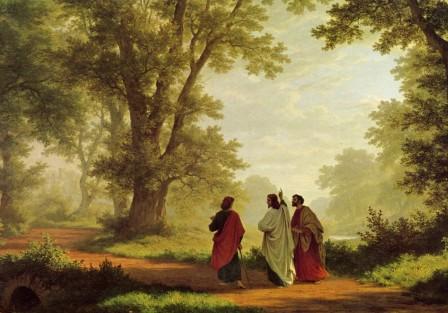
Who are You, Lord, and who am I?

“Who are You, Lord, and who am I?”

St. Francis of Assisi prayed this simple phrase.  I remember learning it in college during a class about St. Francis and St. Clare.  Part of me was consoled that even a great saint like Francis prayed to understand God and himself.  Once I went to a prayer group at college and was asked if I had any prayer intentions.  I responded with this prayer of St. Francis and I think some of them questioned if I was having a great crisis of faith.  I wasn’t, but the prayer was one I had been pondering for a while.  It came up again a couple nights ago as I sat in adoration.

My students have certain perceptions of who I am.  My co-workers, friends, and family have different perceptions of who I am.  As I sat in adoration before Our Lord, I was wondering who I really was at the core.  Am I actually how I am when I first meet someone, reserved and quiet?  Or am I more truly myself in front of my class, fairly serious but enjoying laughing with my students and sharing Jesus with them?  Or am I most the person I am when I’m home with just my parents and we’re playing cards or drinking coffee some Sunday afternoon?  Or is it when I play with nephews and niece?  Or when I am confessing my deep-rooted sins?  Or when I’m cut off in traffic?  Or when a student challenges me in front of the class?  Or when I’m deep in prayer?  When am I most myself?  My desire is to be consistent, but I find that each situation seems to pull out a different facet of my personality and I change depending on my environment and surroundings.  It isn’t that it is necessarily a bad thing, but it leads me to wonder what I am at the core.

In actuality, I think I know myself quite well.  The question, I suppose, is less one of who I am and more one of how do I bring who I know myself to be into the different situations life affords?  At times I feel a bit envious of my older sisters who are religious sisters.  People expect them to behave in certain ways.  I teach Theology in a high school, but there is still the pressure to conform, to act certain ways so that one doesn’t appear “holier-than-thou.”  I know that in many ways, I am quite innocent of the world.  Yet people often believe that innocence is the same as naive.  While they are related, I think there is a difference.  I don’t view myself as wholly lacking in wisdom or judgement.  However, there are many things I don’t know about and experiences I have never had.  That doesn’t bother me.  What bothers me is when lack of experience in some things seems equivalent to childish.  I’m young and innocent in some ways, but I’m not immature, just a bit shielded from the foolishness of the world at times.

So I found myself asking the Lord who I was to be.  How can I live for Him without bringing Him up in every conversation?  It isn’t necessary to always speak of Jesus with words.  My life should proclaim Him.  People can get frustrated if you always point to Jesus and I don’t want them to become deaf to the Gospel because I misuse it.  Yet I also don’t want to feel like I must cover up my faith because it might cause inconvenient conversations or situations.

It is quite easy to live in my little bubble and instruct my students to be bold in standing up for the faith.  Because when I find myself in those situations, it is so difficult to be bold.  Instead of asking how I can best proclaim the truth, I find myself wondering how I can adhere to my principles without making people dislike me.  Perhaps St. Francis wondered such things also.  Lord, who am I?  Who do you desire me to be?  And, Lord, help me to know the truth about You.  Who are You, Lord?  Because that answer changes everything.

*Art by Robert Zund*