Love never ends

Love never ends

“Why would the Lord be frustrated with you?  What would that accomplish?” my spiritual director asked me during our last meeting.

While I had spent days being frustrated with myself (and assuming the Lord was, too), I had never looked at it in quite that light.  And in some ways, I didn’t want to.  It was easier to assume that the Lord was throwing up His hands and sadly shaking His head in my direction.

“Why would He be frustrated with you?”

Because it seems like He should be.  I am–why wouldn’t He be? Continue reading “Love never ends”

Beloved Fatima

Beloved Fatima

My sister said that the closer we got, the larger my smile became.  I couldn’t help it.  I was returning to a place that I had visited twice before and it had a certain feeling of coming home.  The bus pulled up and let us out, excitedly spilling onto the platform before setting out on our mission.

I had returned again to my beloved Fatima, Portugal.  This was the second “Marian bookend” of my Camino in the summer of 2014.  Prior to walking the Camino, we had visited Lourdes.  Now, we were on a celebratory trip to Fatima.

2d2d8-fatima Continue reading “Beloved Fatima”

Surrendering

Surrendering

One of my friends and I were looking at a listing of the different “definitions of Hell” based on a person’s Myers-Briggs personality type.  There were a few that seemed to fit well with me, but the one that stood out was for the INTJ personality.  “Every time you open your mouth to say something intelligent, something entirely idiotic comes out instead.”

We agreed that the scenario would be pretty awful.  Then I remembered when I had my four wisdom teeth removed.  I was awake for the procedure, but my mouth was injected and numbed so that I couldn’t feel pain.  Afterwards, my mom came in to see me.  For some reason, it was incredibly important for me to convey to my mom that I was still perfectly logical, even with all of the pain meds. Continue reading “Surrendering”

Graced

Graced

Anger is like a dead weight.

The fool thinks that anger will invade only one area of his life.  He thinks that anger can be compartmentalized from the rest of one’s feelings and actions.  That fool thinks that the heart can be subdivided, anger for some and happiness for the rest.  He is wrong.  

Or she.  

Or me.

After days of being angry, I decided to not be.  I will not, of course, downplay the workings of grace.  Grace was imperative for me to see what I was choosing to do to my own heart.  In the beautiful mystery that is God, the Holy Spirit prepared my heart to receive the graces needed to take a step away from the anger and frustration. Continue reading “Graced”

To Be Known

To Be Known

After a long hiatus, I was out for a run, breathing in the distinct aroma of campfires in the cool spring evening.  The sun was setting and the sidewalks were essentially empty as I plodded along.  My mind sifted through different thoughts and different prayers.  For a while, it focused on my experience of the gaze of Jesus.

During my recent silent retreat, I was struck by the intensity and the depth of Jesus gazing at me.  I had entered into the story of the woman using her precious ointment for Jesus, but I felt I needed to go into her past more.  What made her go to Jesus and give Him her most precious possession?  To, in the eyes of the world, waste her fortune and her future?  I was drawn back to woman about to be stoned after being found in the act of adultery.  And I became her. Continue reading “To Be Known”

Ever-New

Ever-New

Do you remember?  Do you remember?

The voices are hushed but brimming with excitement.  It is dark with only flickering candlelight illuminating joyous faces.  Of course they all remember.

By all rights, this should be a story that is told with sadness, one where sorrow should be the predominant feeling.  It should be tragic and riddled with painful memories.  That is not the case, however.

They can barely keep the laughter at bay.  Wide smiles show how their hearts desire to break out of their chests.  They are simultaneously on the brink of crying and shouting, so full are their hearts.

Do you remember?  Why is this night different from all other nights?

The second question is a carryover from their Jewish roots–but it is fitting here.  It is perfectly fulfilled here.

There are numerous possible narrators to the story, each holding a piece that contributes to the full picture.  John is there and he tells of His last moments on the cross and the ache in his heart as he watched Him die.  Mary Magdalene speaks of her sleepless night, the long Sabbath, and rushing with spices to the tomb early on the first day of the week.  Peter speaks of walking into the empty tomb, marveling at the clothes that remain where the body once was placed.  Each person adds another detail to a story they have told over and over again.  Yet it is one of which they can never tire.  It isn’t simply a story from the past but rather re-tells an encounter they had with the living God.

24468_10150176064860484_8365695_n

Saturday evening as I stood in a dark church while the Easter candle was being lit, I considered something I never have before: what would it have been like to be at the second Easter?  The first Easter would have been incredible, but as I stood in the church, it was very clear that I wasn’t at the first Easter.  But the second Easter?  When they gather together to re-live what had happened a year ago?  I could imagine that.  If I closed my eyes and focused on the prayers, I could feel this uncontrollable joy welling up in my heart.  Before long, I was fighting back tears and grinning like a fool in the darkness.

I had encouraged my students to delve into Holy Week and to consider the well-known story in a new light.  Chances are really good that none of them remembered what I said, but I found myself taking my own advice.  What if I wasn’t at Easter Vigil (like I am every year) but rather was at the first anniversary of the first Easter?  They couldn’t even wait until Sunday to gather.  Instead, they gather together in the darkness to hold a vigil for the Resurrection.

A lot can change in a year.  One year earlier, they were wrapping their minds around the Passion, vacillating between numbness and crushing sorrow.  Even in the finding of the empty tomb and the first appearances of Jesus, there were still so many questions and much confusion.  A year later and they were witnesses of the Resurrection, filled with the Holy Spirit, and traveling to proclaim the Gospel.  They didn’t have all of their questions answered but their mission was certain.  Gathering together, their joy grew exponentially as they considered again those three sacred days.

Do you remember?  Do you remember?  The new followers, the ones who were not there one year earlier, listen eagerly to the story, caught up in the drama of human salvation.  Even as they re-tell the Passion and Death of Jesus there is an undercurrent of joy.  They enter into His death deeply, recalling where they had been during those moments of agony, but they know that He lives now.  With solemnity, they trace the providence of God from the beginning.  From creation to freedom from Egypt to the challenges of the prophets, they recall how God had prepared them for the fulfillment of all the old covenants.  Soon they are talking about Easter Sunday, with all the little details pouring in:
“I thought He was a gardener!”  Mary Magdalene recalls.
“I ran faster than Peter,” John says with a youthful wink at the Vicar of Christ.
“I didn’t go to the tomb, because I knew He had risen,” Mary, the mother of Jesus, says with a smile of remembrance.

The central point of Christianity is not about following rules or attending excessively long religious services.  Christianity is about encountering the person of Jesus Christ.  Everything else is aimed at fulfilling or bringing about that encounter.  As I sat in Easter Sunday Mass, listening to the priest’s homily, I couldn’t help but glance around a little and see some tired, bored faces.  And I wondered, “How many of these people here have never really encountered Jesus Christ?”  They attend Mass because their husband or wife or parents want them to or because they feel some guilt if they should stop attending.  How sad would it be if a relationship with God that is intended to be marked with joy is instead filled with simply surface level commitment.

The joy of Easter should not be mainly that we can now eat or do what we previously could not eat or do during Lent.  It should be because we once again remember that Jesus Christ is the Savior we need.  He died, He is risen, and that changes everything.  It is not old news or historical details but is something that is ever-ancient yet ever-new.  In that dark church on the eve of Easter, I thought of the joy and fulfillment that filled the hearts of the early Christians as they recalled the previous year.  And I longed for that joy only to realize that it could and should be mine.  We should be like the early Christians, gathering with hearts of praise to recall what the Lord has done for us.

Do you remember?  Do you remember?  He died, He rose, and He lives.  And it continues to change my entire life. 
A Mercy Divine

A Mercy Divine

“My people, what have I done to you or how have I offended you?  Answer me!  I led you out of Egypt, from slavery to freedom, but you led your Savior to the cross.  My people, what have I done to you?  How have I offended you?  Answer me!  For forty years I led you safely through the desert.  I fed you with manna from heaven, and brought you to a land of plenty; but you led your Savior to the cross.  What more could I have done for you?  I planted you as my fairest vine, but you yielded only bitterness: when I was thirsty you gave me vinegar to drink, and you pierced your Savior with a lance.”  (Reproaches of Good Friday)

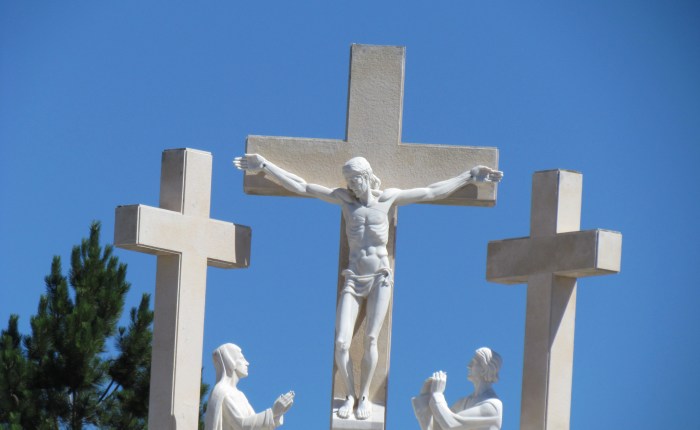
Good Friday is a day of worlds colliding.  We acknowledge the death of Our Lord and our role in it, but we also recall this as the glorious means for our salvation.  The cross is an instrument of torture and yet we take time to exalt the cross, coming forward on bended knee to kiss Our Savior as He is fastened to it.

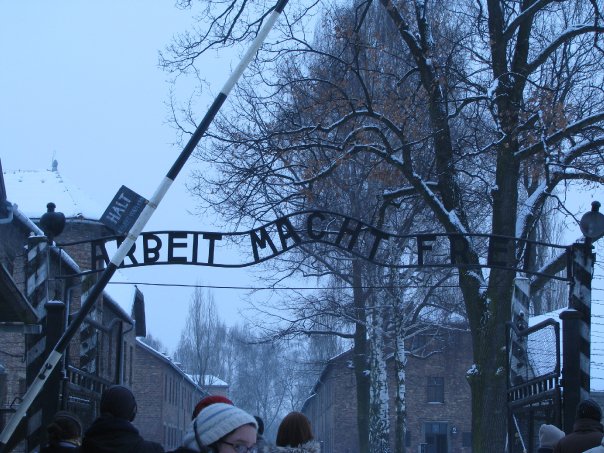
Today, we begin the Divine Mercy Novena which concludes on Divine Mercy Sunday.  After the Good Friday service, we prayed the first day of the novena.  And I couldn’t help but remember another time when I had prayed the Divine Mercy Chaplet.  It was about six years ago and I stood on the cold, snowy ground of the Auschwitz concentration camp.

20564_10150090441715484_4833116_n

For the sake of His sorrowful Passion, have mercy on us and on the whole world.

We had already toured Auschwitz I.  There I saw picture after picture of people who had entered that place of death.  Next to each picture was a little card that gave the person’s name, their entrance date, and the date of their death.  But the faces were what became engraved on my heart.  I had heard for years about the number of people who died in the Nazi concentration camps, but to see only a fraction of their pictures changed statistics into human lives.

20564_10150090441720484_7614262_n

In silence, we loaded the bus so that we could go to Auschwitz II.  Here we saw long barracks and miles of barbed wire fences.  And we struggled to understand that human beings did this to other human beings.  We saw cattle cars that humans arrived in and we surveyed the watchtowers that were situated to keep all under surveillance.

20564_10150090441795484_3301914_n

In the last few minutes of being there, we prayed the Divine Mercy Chaplet.  Because what else can you do when surrounded by such a witness to the depravity of humanity?    We could only make appeals to the mercy of God.  I could not offer to God my own merit or good works because they are insufficient in the face of such tragedy.  I can only offer His Son back to Him.

Eternal Father, I offer You the Body and Blood, Soul and Divinity of Your dearly beloved Son, Our Lord Jesus Christ, in atonement for our sins and those of the whole world.

Kneeling during the Good Friday service and during the Divine Mercy Chaplet, I could not help but consider this again.  In the wake of the death of Jesus Christ, I can offer nothing to atone for it.  These hands were not physically there, but my sins were bought and paid for with His blood on that day.  Even if I lived a perfect life, I could not make up for what has been done.  The only offering I can make is Jesus Himself.

A couple years ago, I considered the words of the Divine Mercy Chaplet and I realized that it is truly a mercy that can only come from God.  We plead our cause by offering to God the very One we killed.  In any other situation, this would seem laughably grotesque.  Imagine a murderer asking for clemency from a mother or father by invoking the name of the child killed.  Not simply through their name but asking that through the child’s death mercy and forgiveness will be shown to the murderer.  Such mercy is what can only come from God.

Good Friday comes down to accepting that I cannot do anything.  In the Passion narrative, I am the one calling for His crucifixion and claiming that He is not my king.  And I must say those words because I profess them often enough with my life.  Good Friday isn’t about beating yourself up or trying to make yourself feel lousy.  It is about accepting the role we have played in the death of Jesus Christ.  He didn’t die, though, so that we could wallow in guilt and self-pity.  He came to make us new.  He came to utterly transform us.  He came to take every part of us and to pour His perfect mercy over all the parts of our heart that most need it, yet are too fearful or prideful to plead for it.

Christ says “Give me All.  I don’t want so much of your time and so much of your money and so much of your work: I want You.  I have not come to torment your natural self, but to kill it.  No half-measures are any good.  I don’t want to cut off a branch here and there, I want to have the whole tree down.  I don’t want to drill the tooth, or crown it, or stop it, but to have it out.  Hand over the whole natural self, all the desires which you think innocent as well as the ones you think wicked–the whole outfit.  I will give you a new self instead.  In fact, I will give you Myself: my own will shall become yours.” (Mere Christianity, p. 166)

Eternal God, in whom mercy is endless and the treasury of compassion–inexhaustible,  look kindly upon us and increase Your mercy in us, that in difficult moments we might not despair nor become despondent, but with great confidence submit ourselves to Your holy will, which is Love and Mercy itself.
(Closing prayer for the Divine Mercy Chaplet)

Bold Claims

Bold Claims

The Lord is the goal of human history, the focal point of the longings of history and of civilization, the center of the human race, the joy of every heart and the answer to all its yearnings. (Gaudium et Spes, 45)

Christianity makes shockingly bold claims.  It does this because Christ made bold claims.  If the Gospel message that you have heard doesn’t ruffle feathers or irk people, then it isn’t the same Gospel that Jesus Christ proclaimed.

Think about how people responded to Jesus Christ.  Numerous times we hear about Jesus being driven to the brow of the cliff, or people picking up stones as He spoke, or people simply becoming angry at His words.  This wasn’t because He told people that they just needed to be nice people.  His words challenged.  His words provoked.  His words called people to look inside themselves and to realize that they could not save themselves.

Though we may accept the Gospel and profess to believe it, if we are honest with ourselves, each must continue to wrestle with the call of Jesus in our lives.  There are still teachings of Jesus that have yet to be fully accepted in our hearts.

And there are bound to be things in his teachings that each of us finds offensive if we look at the totality of those teachings rather than confining ourselves to comfortable and familiar ones. (The Pocket Handbook of Christian Apologetics, p. 60)

For example, Jesus tells us that we are to forgive.  The love of Christ compels us to love and forgive all.  That means the survivors of the Holocaust are to forgive the very people who imprisoned them and took the lives of their friends and family members.  It means the families of those who died in 9/11 are to forgive those who applauded themselves for being the masterminds of the attack.  No, neither of those situations have impacted me in a directly personal way.  But it is the message of Jesus Christ and it is not a message meant simply for forgiving the person who cut you off in traffic or the store clerk who is annoyed that you need her assistance.  The Gospel message is precisely for those moments that seem unforgivable.  It is then that we can recognize that it must be Christ working through us, that grace must be received in order to live out this bold life.

Christianity is not calling us to a life of ease and comfort.  The King of this kingdom was crucified and the Queen watched it all unfold.  Christianity, in its truest sense, is calling us to such a death.  But it is a death that must be experienced so that we may embrace a fullness of new life.  Once we experience that death and new life, the next death doesn’t really matter anymore.  It will be a mere parting of the veil, a stepping into the throne room of the King, entering into the Holy of Holies.  From life we will pass into Life.

With such a reward, it is no wonder that the early Christians were willing to lay down their lives for the sake of Jesus Christ.  They looked upon death with no fear, but rather with joyful anticipation.  Because, in that moment, they recognized that the Gospel of Jesus Christ was for those particularly difficult times.

We cannot accuse Christ of shielding the disciples or us from the realities of what following Him would require.  He is direct and His voice is clear: if we love anything above Him, we will need to re-order our heart, even if the beloved is our family or our own selves.  For Christ, we give all up and we received it back one hundred fold.  I do not claim to have perfected this, but I know there is a tremendous freedom that is found in giving all to Christ.  When my sisters entered the convent, the bitterness I felt was a result of not letting them go or surrendering them to the Lord.  I’m a slow learner and so years later, when I actually began to sincerely let them go, I felt a tremendous freedom in my relationships with them.  Problems may still arise in my heart regarding my sisters’ vocations, but I think God’s grace has pretty much vanquished that demon as of this past summer: but it took me eleven years.  That freedom, though, is tremendous.

The Lord seeks to answer the deepest longings of our hearts.  He boldly declares that He not only has the answer but that He is the answer.  The fulfillment of all our desires is Him.  The longings we experience are for relationship with Him.  The joy we yearn to have fill our hearts is found in none other than He who fashioned our hearts.  It isn’t Titanic-style love.  It is rugged cross, pierced with beauty and sacrifice, blood pouring out that transforms hearts of stone to hearts of flesh-style love.  And it asks for a great price.  It asks for all we have.  The return, though, is worth the investment.

Jesus said, “Truly, I say to you, there is no one who has left house or brothers or sisters or mother or father or children or lands, for my sake and for the gospel, who will not receive a hundredfold now in this time, houses and brothers and sisters and mothers and children and lands, with persecutions, and in the age to come eternal life.” (Mark 10:29-30)

Tangible

Tangible

The Lord understands the need we have for the tangible.

We have a soul gifted with intellect and free will.  In this way, we share in the likeness of God.  Yet we also have bodies and this is no small part of who we are.  We are not to have a Puritanical mindset that declares the body is bad.  Our bodies matter.  This physical world matters.  And God reaches out to us in the midst of what we know and understand.

Over the past few days, I have soaked in the beauty of the tangible in the Catholic faith.  On Ash Wednesday, we have a cross of ashes inscribed on our foreheads.  We hear, “You are dust and to dust you shall return.”  Remember, remember the brevity of life.  It is hard to miss the symbolism–our bodies will return to dust, like the dust from which Adam was formed.  Our life is fleeting and we do not hold within ourselves the meaning for our own existence.  Civilizations and generations will return to nothing.  We are called to remember that our treasure should rest in something other than these earthen vessels, something that will survive time.

Even as we are told to look beyond the physical, the very means of this heavenly gaze is found in the physically tangible.  The black ashes that seal your forehead.  The words we hear that speak of the end for our physical bodies.  Physical signs point to spiritual realities and truths.

That evening I went to a funeral home for my uncle’s wake.  My four year old nephew wanted to touch my ashes and so I tried to keep him at an arm’s length.  When he saw me the next day at the funeral, he noted that the thing on my forehead was gone.  Sometimes kids have the appropriate response.  Familiarity leads adults to see the ashes as commonplace, but my nephew was intrigued by the smudge on my face.  In a way, he saw that the ashes said something significant.

At the funeral there were numerous tangible elements.  The body is reverenced in a way that might surprise us if we pause to think about it.  No longer is this the person we knew, but yet we bring the body into the church.  The casket enclosing the body is nearest the altar, as we hope that this person is nearest the throne of God, participating in the eternal Wedding Banquet of the Lamb.  We cover the casket with a white cloth, remembering their baptism into the death of Christ and into His everlasting life.  The pallbearers, an honor given to a few friends or relatives of the deceased, carry or follow the body from the church to the hearse and from the hearse to the grave site.  This isn’t a task relegated to people paid to help with the funeral, but rather is seen as an honor.  The importance of the body causes us to have a committal ceremony where we place the body into the ground.  We mark it and return to visit this place even though the body will return to dust and the person as we knew them does not remain.

Our physical body matters.  The physical world matters.  The Catholic Church has a beautiful tradition of keeping this in mind.  Whether it is investing in beautiful basilicas or commissioning great works of art, the Church sees the beauty in calling to mind the spiritual through the physical.  Other churches see it, too, but I would say the Church has a deeper understanding.  Weekly, we come together to be nourish by the Bread of Life, by the Body of Christ.  We enter a room or a box and we hear the words that declare that our sins are forgiven.  In entering the the mystical Body of Christ, we are plunged into water as a sign of the cleansing of our soul.

The Catholic Church is all about the incarnational.  Jesus Christ entered into the physical and the tangible.  Of course, we can say that God would completely understand human nature even if He never took it on because He is all-knowing.  But it adds a depth when we acknowledge that He chose to take on human nature so that His knowledge would be experiential and His experience salvific.  

By doing this, He shows us that holiness is pursued through the physical and the spiritual realms.  It isn’t only about the soul and deep meditative prayer.  It isn’t necessary to retire to a desert cave to live on little food and spend days in ecstasy, although He does call some to that life.  The Church has the spiritual and the corporal works of mercy.  It is not enough to admonish the sinner, we must also give drink to the thirsty.  It is insufficient to teach/instruct the ignorant (although important and, technically, my job) but we must also bury the dead.  In the Catholic tradition, we have the great both/and.  We are called to pursue the delicate balance of body and soul, both seen as important aspects of who we are as human beings.

At times, we want to accuse God of being silent or distant.  We ask Him why He does not reveal more of Himself to us or why He requires such faith to believe in Him.  Yet He gives us many signs of His presence with us.  The sanctuary candle that burns in every Catholic church, indicating that the King of Kings is present.  A hand raised in absolution also involves a voice audibly telling you that all is forgiven.  The nearly scandalous declaration of love and sacrifice found in each depiction of the crucifixion.  We belong to a church that firmly declares that Christ walked with us yesterday and still walks with us today in a very concrete way.

God knows what we need.  We have one foot on earth and one in heaven.  And He meets us in both ways.  He is a God who is tangibly with us.  Emmanuel.  God with us.  Our foreheads have been sealed with ashes where we declare that we have sinned and that we are destined to return to dust.  He encounters us, mercifully, in that declaration.  We seek Christ in this desert walk, in these forty days of sacrifice.  How will we tangibly encounter Him?  How will our body and soul be in the union they were created to live in?  

Whoever Has Ears Ought To Hear

Whoever Has Ears Ought To Hear

What if St. Paul didn’t respond to God’s call in his life?

Too often, I assume that the saints would, naturally, follow God’s will in their lives.  I mistakenly believe that it was easy for them–of course they responded correctly, they are saints.

Now we hold them to be saints, but they were not always so.  They had free will and probably had many compelling reasons for not following God.  It probably seemed just as inconvenient to them as it does for us at times.

St. Paul is bound for Damascus and Jesus intervenes into his life in a very dramatic way.  The bright light, the physical blinding, and the clear voice all point to a powerful divine intervention.  “Saul, Saul, why are you persecuting me?”  What if, after this encounter, Saul instead returned to his original mission of hunting down the Christians?  In many ways, it might have appeared to be a better life decision.  Or he stops pursuing the Christians, but he doesn’t start to follow Christ.

Following his conversion, Paul goes off to immerse himself in the study of the Gospel.  Then, he presented himself to the Apostles and they were hesitant to accept him.  For a while, he is then considered a traitor by the Jews and someone not to be trusted by the Christians.  When he goes on his journeys to preach the Gospel, riots will frequently spring up as he evangelizes.  At one point, they pick up stones and hurl them at Paul, intent upon killing him.  Dragging him outside the city, they leave him for dead.  When his disciples surround him, he gets to his feet and continues preaching the next day.  In the end, he will be beheaded in Rome, a death he underwent since he was a Roman citizen.

The Lord gave St. Paul the grace of an indomitable spirit, but that doesn’t mean that each movement was filled with absolute certainty.  Perhaps some mornings, Paul woke up and was tired, not wanting to preach and be ridiculed yet again.  Maybe as his feet pounded over miles and miles of Roman roads, his heart was constantly uttering, “Lord, come again.  Lord, end this suffering.  Lord, take me home.”  In the spirit of St. Teresa of Avila, maybe St. Paul experienced the pain of being pummeled with rocks and as he pulled himself to his feet said, “Is this how you treat your friends, Lord?  It is no wonder you have so few.”  St. Paul was a dedicated and faithful evangelist, but that doesn’t mean the Lord surrounded him in constant reassurance or prevented any doubts from entering his mind.  The beauty is that Paul chose Christ daily, even when it seemed foolish in the eyes of his friends and family.

These thoughts about Paul came to mind when I started to watch a video about him in preparation for one of my classes.  The movie opened proclaiming what a great evangelist he was after encountering Jesus and the thought came to mind, “What if he didn’t answer that call?”  The realization was similar to when I realized that perhaps in Old Testament times, God called other people, but it isn’t recorded because they didn’t say “Yes.”  St. Paul had a free choice.  Although God revealed Himself in an undeniable way, it didn’t require St. Paul to choose to follow Him.

My students received the assignment to write an imaginative story about either being a traveling companion of Paul or being a villager in one of the places Paul preached the Gospel.  The goal of the writing was to consider how they would respond to his preaching and to think about what it would be like to experience those events first hand.  Scripture isn’t a nice storybook about events from hundreds of years ago, but rather it is alive and applies to us right now.  So the underlying question to consider is: how am I now responding to the compelling, radical message of the Gospel?

Familiarity with the message of Christianity makes it appear dull and commonplace.  Yet it is anything but that.  We preach of a God who loved so much that He entered into humanity so that He might pay the price to reconcile all of humanity with Himself.  All of salvation history is God reaching out to humanity and working with our “Yes” to bring about transformation.  God knows how we will respond but He never takes away our free will in order to get a “Yes.”  And even if He knows we will refuse, He still asks and offers us a chance to follow Him.

The beauty of the life of St. Paul is not so much that God called him.  God calls each of us to a unique mission that leads us closer to His heart.  The beauty of St. Paul’s life is that he heard the voice of God and he responded with zeal.  His fervent “Yes” opened the pathway for others to hear the Gospel and commit their lives to Jesus.  May we, in this world that is thirsting for the Gospel in all of its truth and radicality, present the beauty, truth, and goodness found in the message of Jesus Christ.  One that is compelling enough to sacrifice home, family, social status, and all worldly goods to pursue.

St. Paul responded wholeheartedly to God’s call in his life.  What if we didn’t?