Whoever Has Ears Ought To Hear

Whoever Has Ears Ought To Hear

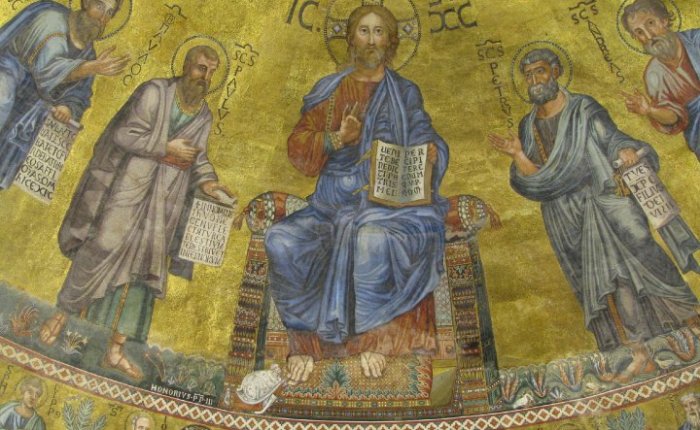
What if St. Paul didn’t respond to God’s call in his life?

Too often, I assume that the saints would, naturally, follow God’s will in their lives.  I mistakenly believe that it was easy for them–of course they responded correctly, they are saints.

Now we hold them to be saints, but they were not always so.  They had free will and probably had many compelling reasons for not following God.  It probably seemed just as inconvenient to them as it does for us at times.

St. Paul is bound for Damascus and Jesus intervenes into his life in a very dramatic way.  The bright light, the physical blinding, and the clear voice all point to a powerful divine intervention.  “Saul, Saul, why are you persecuting me?”  What if, after this encounter, Saul instead returned to his original mission of hunting down the Christians?  In many ways, it might have appeared to be a better life decision.  Or he stops pursuing the Christians, but he doesn’t start to follow Christ.

Following his conversion, Paul goes off to immerse himself in the study of the Gospel.  Then, he presented himself to the Apostles and they were hesitant to accept him.  For a while, he is then considered a traitor by the Jews and someone not to be trusted by the Christians.  When he goes on his journeys to preach the Gospel, riots will frequently spring up as he evangelizes.  At one point, they pick up stones and hurl them at Paul, intent upon killing him.  Dragging him outside the city, they leave him for dead.  When his disciples surround him, he gets to his feet and continues preaching the next day.  In the end, he will be beheaded in Rome, a death he underwent since he was a Roman citizen.

The Lord gave St. Paul the grace of an indomitable spirit, but that doesn’t mean that each movement was filled with absolute certainty.  Perhaps some mornings, Paul woke up and was tired, not wanting to preach and be ridiculed yet again.  Maybe as his feet pounded over miles and miles of Roman roads, his heart was constantly uttering, “Lord, come again.  Lord, end this suffering.  Lord, take me home.”  In the spirit of St. Teresa of Avila, maybe St. Paul experienced the pain of being pummeled with rocks and as he pulled himself to his feet said, “Is this how you treat your friends, Lord?  It is no wonder you have so few.”  St. Paul was a dedicated and faithful evangelist, but that doesn’t mean the Lord surrounded him in constant reassurance or prevented any doubts from entering his mind.  The beauty is that Paul chose Christ daily, even when it seemed foolish in the eyes of his friends and family.

These thoughts about Paul came to mind when I started to watch a video about him in preparation for one of my classes.  The movie opened proclaiming what a great evangelist he was after encountering Jesus and the thought came to mind, “What if he didn’t answer that call?”  The realization was similar to when I realized that perhaps in Old Testament times, God called other people, but it isn’t recorded because they didn’t say “Yes.”  St. Paul had a free choice.  Although God revealed Himself in an undeniable way, it didn’t require St. Paul to choose to follow Him.

My students received the assignment to write an imaginative story about either being a traveling companion of Paul or being a villager in one of the places Paul preached the Gospel.  The goal of the writing was to consider how they would respond to his preaching and to think about what it would be like to experience those events first hand.  Scripture isn’t a nice storybook about events from hundreds of years ago, but rather it is alive and applies to us right now.  So the underlying question to consider is: how am I now responding to the compelling, radical message of the Gospel?

Familiarity with the message of Christianity makes it appear dull and commonplace.  Yet it is anything but that.  We preach of a God who loved so much that He entered into humanity so that He might pay the price to reconcile all of humanity with Himself.  All of salvation history is God reaching out to humanity and working with our “Yes” to bring about transformation.  God knows how we will respond but He never takes away our free will in order to get a “Yes.”  And even if He knows we will refuse, He still asks and offers us a chance to follow Him.

The beauty of the life of St. Paul is not so much that God called him.  God calls each of us to a unique mission that leads us closer to His heart.  The beauty of St. Paul’s life is that he heard the voice of God and he responded with zeal.  His fervent “Yes” opened the pathway for others to hear the Gospel and commit their lives to Jesus.  May we, in this world that is thirsting for the Gospel in all of its truth and radicality, present the beauty, truth, and goodness found in the message of Jesus Christ.  One that is compelling enough to sacrifice home, family, social status, and all worldly goods to pursue.

St. Paul responded wholeheartedly to God’s call in his life.  What if we didn’t?       

A Lesson in Snow

A Lesson in Snow

The evening air is cool, but it feels nice as I lean on my shovel and survey the path ahead.  I’ve been outside for nearly forty minutes and the end is in sight, but not as close as I would have liked.  At my house, we take turns shoveling the lovely snow and I thought it was unofficially my turn to do the honors.  A corner lot with long, long sidewalks make for an impromptu workout and time to reflect.  The front sidewalk is easy and I simply slide the shovel along, emptying it every few feet.  I turn the corner and it gets progressively more difficult.  Finally, I’m looking up the path, realizing that the sidewalk is inches below, under freshly laid snow as well as snow that has been crunched underfoot for days.  So I forge a path of my own, seeking to find the trace of civilization beneath nature’s blanket.

I pause again and it pops into my head.

Shoveling snow is like sin/bad habits–it is easiest to get rid of it right away, rather than wait and do it later.

I smile, wondering if any of the other evening-snow-shoveling-folks are theologizing as they scoop.

Admittedly, I like the reflection, though.  The front sidewalk was easy because it had been maintained and all I needed to do was take care of the most recent snowfall.  But the back sidewalk had been a bit neglected and getting it to the same state as the other required far more work.  Ice needed to be chipped and compacted snow had to be disposed of.  It was work that wouldn’t have been needed if it had been taken care of the first snow.

The same thought can be applied to the spiritual life, particularly in regards to cultivating good habits.  What if when I noticed myself doing something I didn’t like or was bad or was not going to help me grow in my life, I would immediately correct it?  Instead, it is easy to say it isn’t that big of a deal and continue until it becomes a habit.  Then we realize we need to take action, but it is no longer just a tendency or inclination but an ingrained habit.  So we go to work: we chip away at it and look longingly down the path to the time when this flaw can be behind us.

What if we got to work on those little things right now so that later on we wouldn’t have to pour more energy into them?  What if we worked so that little things could simply stay little?  Makes a bit too much sense, probably.

It would mean combating laziness with productive work and using my time well.  Not planning to work on laziness later.  Instead of thinking, “Yeah, I probably should do something else rather than peruse Facebook (again) or watch another movie” and then justifying said behavior anyway, I would get up and go: pray, take a walk, go for a run, read a book, clean my room, lesson plan, grade papers, etc.  This goes back to the whole mentality of sacrificing the easy thing in the present to do what I actually want to do, things that bring me life and fulfillment.

Yet another goal and way to grow in my daily life discovered.  Instead of waiting to tackle little problems or flaws, I should enter into the skirmish now so there doesn’t need to be a full-out war later.

From one person on the frontlines to another: let’s get to work.

Not Too Holy

Not Too Holy

“I want to be good!  I want to be good!” my nephew exclaimed a couple years ago, near tears.  He had been caught, doing again, what we had recently instructed him not to do.

“Then be good!” I replied.

It seemed simple.  We were very specifically asking him to not do something and he would go and do it again.  It was amusing, though, to hear those words come from him–a proclaimed desire to be good while yet desiring to do the same things again and again.

Don’t we wish we could say that was a problem simply for the young?  Too often I am encountering the Lord saying, “I want to be good!” yet lacking the desire to do what is necessary to be good.

“If you will look into your own heart in complete honesty, you must admit that there is one and only one reason why you are not a saint: you do not wholly want to be one.” William Law

The first time I read this quote, I was a bit surprised.  I found myself wanting to argue but all arguments dying within myself.  It is true.  If I truly wanted to be a saint, I would be one, or at least I would be far closer to one than I am right now.  God’s grace is sufficient: what is lacking must be found in my own desire and willingness to receive His grace.

There is a healthy sadness within myself when I admit that the plan God has for my  life does not match up with my own desires.  I say I want to be a saint, but my actions have a voice that speaks to the contrary.  Because being a saint does not mean to strive to be better then most.  It doesn’t mean to work so that others think you are saintly.  The quest to become a saint is one of the few things in life that cannot be determined by your placement to others.  Even the witness of other saints, while inspiring, cannot tell you if you are the saint you are called to be.  If Bl. Teresa of Calcutta spent her whole life comparing her mission to that of St. Therese of Lisieux, she would have missed the mission to which God was uniquely calling her.  We, too, will get confused if we routinely use others as a measuring stick for our own holiness.

Unlike a credit score or an ACT score, being a saint isn’t boiled down to being in the top 10%.  In high school, it felt like I was one of the only ones who cared about my faith.  I would look at the choices my classmates were making and I would see the choices I was making.  I knew I wasn’t perfect, but I felt pretty good in terms of faith.  And people seemed to recognize that I valued my faith and thought of me accordingly.  When I got to college, I was surrounded by people who were deeply invested in their faith.  I had good formation from my parents, but I remember freshman year looking around and thinking, “Oh, no!  I’m way behind!”  While I was coasting in high school (feeling like I was the only one who cared), these people were going deeper in their faith.  It was a good wake up call, but I was still dealing with it in terms of where I ranked in comparison to others.

In many ways, I am still fighting that battle.  Sometimes I find myself wanting to not get too holy.  It honestly shouldn’t be a concern of mine, because that is a distant dream, but I understand why I think that way.  The closer one gets to Christ, the more one realizes the failings of this world.  The more we act like Christ, the more we run the risk of making others uncomfortable.  What if I get too holy and just being myself makes other people uncomfortable?  I bet some people left dinners early when Jesus would show up.  “Ah, there’s that guy.  Something about him makes me feel uncomfortable.”

Instead, I find myself wanting to be “just holy enough.”  Holy enough that I’m following God, but not so holy that others really notice.  Not so holy that I actually suffer for it.  I want to be called and chosen to live a life of sanctity, but one that makes me well-liked and a perfectly balanced introvert-extrovert.  Oftentimes I romanticize sanctity and assume it means that there will be no problems other than surrendering to God’s will.  People will be wonderful, beautiful beings and my encounters with them will be filled with a gushing of God’s love.  Isn’t that silly, though?  I seem to think holiness will make life easy.  Jesus, however, speaks of picking up a cross and following after Him.

I have several reasons that I am not yet a saint.  One of which is because I fear the persecution and loneliness that will come from selling all my pearls to buy the one of great price.  I worry that putting God in an undeniably central place in my life will make other people step away.  And if you ask me if I think Christ is sufficient, I will say, “Yes, Jesus will fulfill all my wants and desires.”  Yet if you ask if I live like I believe that, I must admit I do not.

I want to be good.  I want to be a saint.  But I do not want it entirely.  Otherwise, this holiness thing would be far closer to being a reality.  If I compare myself to others, I will always be able to find a reason to justify my present state, there will always be motivation to say I’m good enough.  But if I use the correct measuring stick, then I will always see the need for growth.  If I ask, “How closely do I conform my life to the cross of Christ?” I will see the areas of disparity.

Clearly, I am not “too holy.”

Litany of Humility
O Jesus! meek and humble of heart,
Hear me.
From the desire of being esteemed,

Deliver me, Jesus.

From the desire of being loved…
From the desire of being extolled …
From the desire of being honored …
From the desire of being praised …
From the desire of being preferred to others…
From the desire of being consulted …
From the desire of being approved …
From the fear of being humiliated …
From the fear of being despised…
From the fear of suffering rebukes …
From the fear of being calumniated …
From the fear of being forgotten …
From the fear of being ridiculed …
From the fear of being wronged …
From the fear of being suspected …

That others may be loved more than I,
Jesus, grant me the grace to desire it.

That others may be esteemed more than I …
That, in the opinion of the world,
others may increase and I may decrease …
That others may be chosen and I set aside …
That others may be praised and I unnoticed …
That others may be preferred to me in everything…
That others may become holier than I,
provided that I may become as holy as I should…

Hope’s New Life

Hope’s New Life

There is that lovely feeling rising up in my heart.  It is refreshing and enlivening.

What is it?

Hope.

The promise of something new.  The promise of change.  The desire for tomorrow to surpass what was done today.

Yet how quick I am to fade from hope back to disillusionment or despair.  The feelings I have that encourage change and a new direction are simply feelings: temporal, passing, ephemeral.  I made a list of dreams I want to have fulfilled in 2016 and get excited, yet within a couple days I’m ready to settle.

What I need instead is the virtue of hope, something that actually lasts.

“The virtue of hope responds to the aspiration to the happiness which God has placed in the heart of every man; it takes up the hopes that inspires men’s activities and purifies them so as to order them to the Kingdom of heaven; it keeps man from discouragement; it sustains him during times of abandonment; it opens up his heart in expectation of eternal beatitude.  Buoyed up by hope, he is preserved from selfishness and led to the happiness that flows from charity.”    –Catechism of the Catholic Church 1818

A few months ago, I had this intense feeling of hope.  It didn’t make sense logically because what I hoped for was nowhere in sight, nor did it seem to be soon in coming.  The feeling was so strong, though, that I knew it was from the Lord.  Yet I also knew, from past experiences, that sometimes the Lord will provide an abundance of something for me because in the near future, there will be a seeming lack of that very thing.

When I started sidewalk counseling outside an abortion clinic in Pittsburgh, I was filled with overwhelming joy and peace after the first three times.  It was strange because I had prayed there for a couple years and never felt those emotions so intensely while there.  The Lord was giving me the reassurance I would need when those feelings subsided.  And they did: when the joy and peace were absent, I felt the closest I’ve ever been to depression.  I ached and felt hollow within.  If it wasn’t for those weeks of intense joy when logically I should have felt sorrow, I might have quit sidewalk counseling.  I didn’t because I knew the Lord had convinced me of my course of action through consolation.

So a few months ago, when I felt this overwhelming sense of hope (or, as I called it at the time, “joyful anticipation”), I was thankful for that gift from the Lord, yet also a little concerned for what might be ahead.  “Thanks, Jesus, for this wonderful joyful anticipation.  I love this feeling.  But…what is going to happen later?”  The hope lingered and I basked in it.  I told myself to remember this intensity of hope because it would pass, as all feelings do.

And they passed.

I found myself wishing I could quit life for a while and simply step out of the day-to-day grind.  I wanted the Lord to deliver His promise now, because I wanted it now, not later.  With the feeling of hope absent, the future no longer seemed quite as bright and cheery.  I was left wondering if I hadn’t made it all up.  Yet when I thought about what I had felt, I could still feel this deep certainty that it was true.  The thing hoped for is not yet a reality, but I know the Lord will remain true to His promises, even if I must wait.

True hope is not a feeling that comes and goes, depending on the day.  It is steadfast and enduring.  Hope persists when logic and appearances suggest that it is fruitless.  It is what the Israelites depended on as they waited for their long-desired Messiah.  It is hope that led the three wise men to journey miles in anticipation of a king preceded by a star.  As the early Christian martyrs were led to their deaths, it was hope that enabled them to look with love at the very ones who wielded the sword or the stone or the nail.

Hope isn’t a different perspective to have on life: hope is to have a new life.

“The one who has hope lives differently; the one who hopes has been granted the gift of a new life.”   —Spe Salvi, Pope Benedict XVI

2016 will not be the year that my life becomes perfect or where I will magically change into the person I always wanted to be.  But I do want this year to be one where I am honestly pursuing the best for myself and where the Lord’s will for my life is done more completely than ever before.  I want to read twenty-five books, learn about the constellations, travel to two new states, and many more things.

Primarily, though, my hopes rest in the Lord.  I want to venture into 2017 knowing the Lord in a far deeper way than I do right now.  I want to enter tomorrow with a deeper knowledge and love for Jesus.  I am not promised tomorrow.  All the things I long for and hope for in the future, may never be mine because I may not live to see that day.  But I am here now, and that is where the Lord desires to meet me.

“Although I have lived through much darkness, under harsh totalitarian regimes, I have seen enough evidence to be unshakably convinced that no difficulty, no fear is so great that it can completely suffocate the hope that springs eternal in the hearts of the young.  You are our hope, the young are our hope.  Do not let that hope die!  Stake your lives on it!”   –St. John Paul the Great, WYD Toronto 2002

This year I am embracing this hope that springs eternal in my young heart.  I am taking this hope and letting it lead me into change (though it be difficult) and into newness of life.  Hope, for the Christian, isn’t optional, it is operative.

I need hope.  Not passing feelings, but real, life-sustaining, time-enduring, source from which my actions flow hope.  Anything less is insufficient.

“My soul is waiting for the Lord, I count on his word.  My soul is longing for the Lord more than watchmen for daybreak.  Let the watchmen count on daybreak and Israel on the Lord.”  (Psalm 130)